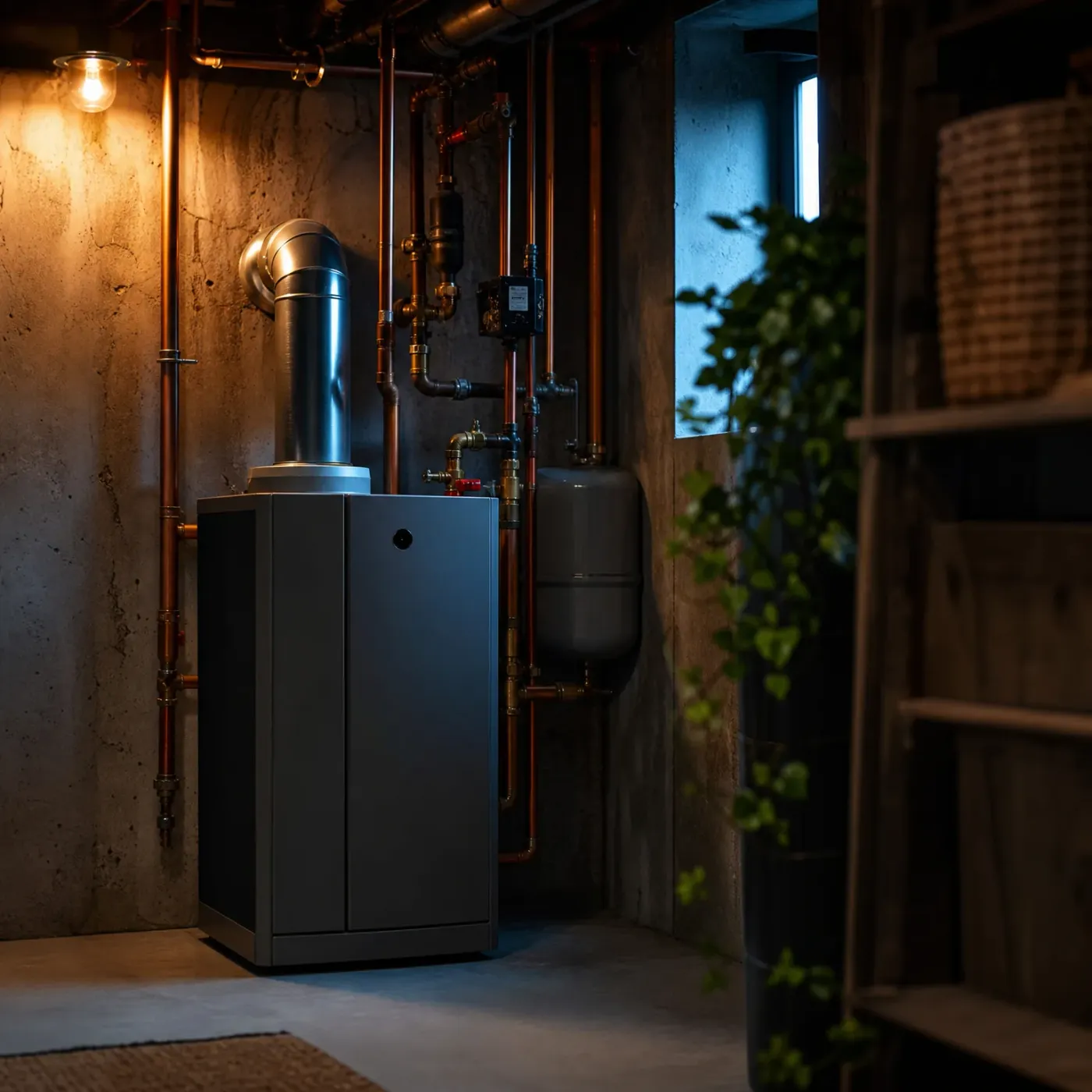
A dark grey floor-standing boiler with a metal flue stands against a concrete basement wall, surrounded by copper pipework, valves and a wall-mounted expansion tank, with ivy and a shelving unit at right.

Skip calling around

Why your boiler relief valve is leaking in Massachusetts

A relief valve lets go for a reason, usually too much pressure or water that's hotter than it should be, and this page walks through what sends it there. If your boiler needs a look, you could spend an afternoon calling around Massachusetts companies and explaining the same leak each time. Skip that and get matched with one local contractor who works on boilers all season and knows what to check first.

Skip the calls

A relief valve leaks because something upstream is pushing the boiler past what the valve is built to hold back. Most often it's pressure, the system has too much water in it, or the expansion tank has lost its air charge and can't absorb what the boiler heats up. Sometimes it's temperature, the boiler is running hotter than it should and the water itself is expanding with nowhere to go. The valve isn't broken when it does this. It's doing its job, opening to protect the boiler from building pressure that could split a pipe or worse. But a valve that opens once rarely seals back up clean. Grit gets caught in the seat, or the seat wears from the mineral content in Massachusetts water, and after that it drips even when pressure is normal. A dripping valve won't fix itself and it won't wait for a convenient week once the weather turns.

A smiling woman with dark shoulder-length hair in a cream V-neck sweater sits at a marble counter with a glass of red wine, with a kitchen and softly lit living room behind her.
A woman in a dark green sweater laughs while seated at a marble kitchen island with a glass of red wine, with open shelving, cabinets and a living room visible behind her.
A woman with long dark hair in a cream knit sweater laughs while looking off to the side, seated at a counter with a glass of red wine, in a dimly lit living room with a sofa, lamp, framed pictures and houseplant behind her.
A smiling woman with long dark hair in a beige sweater sits at a marble kitchen counter with a glass of red wine, with a dimly lit living room behind her.
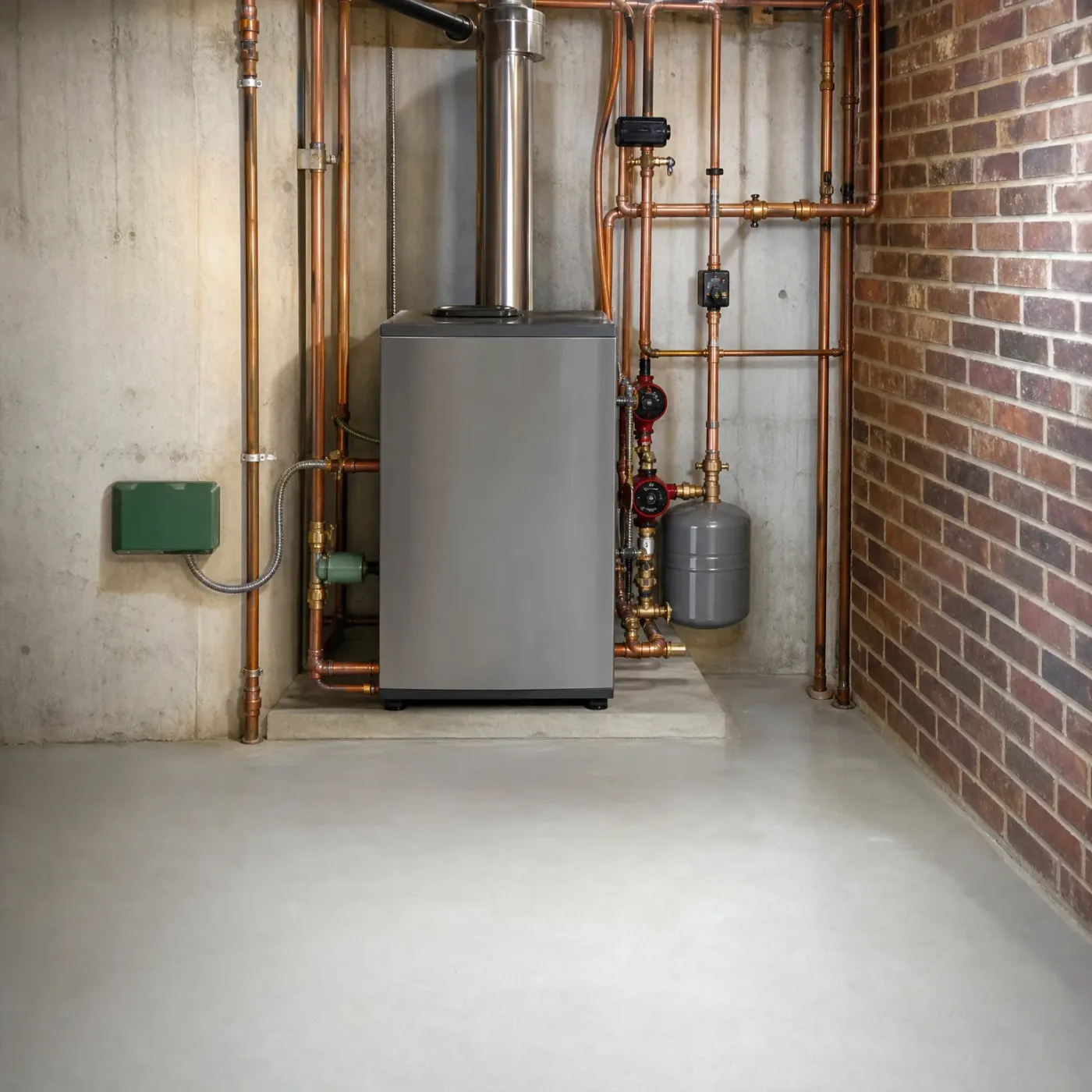
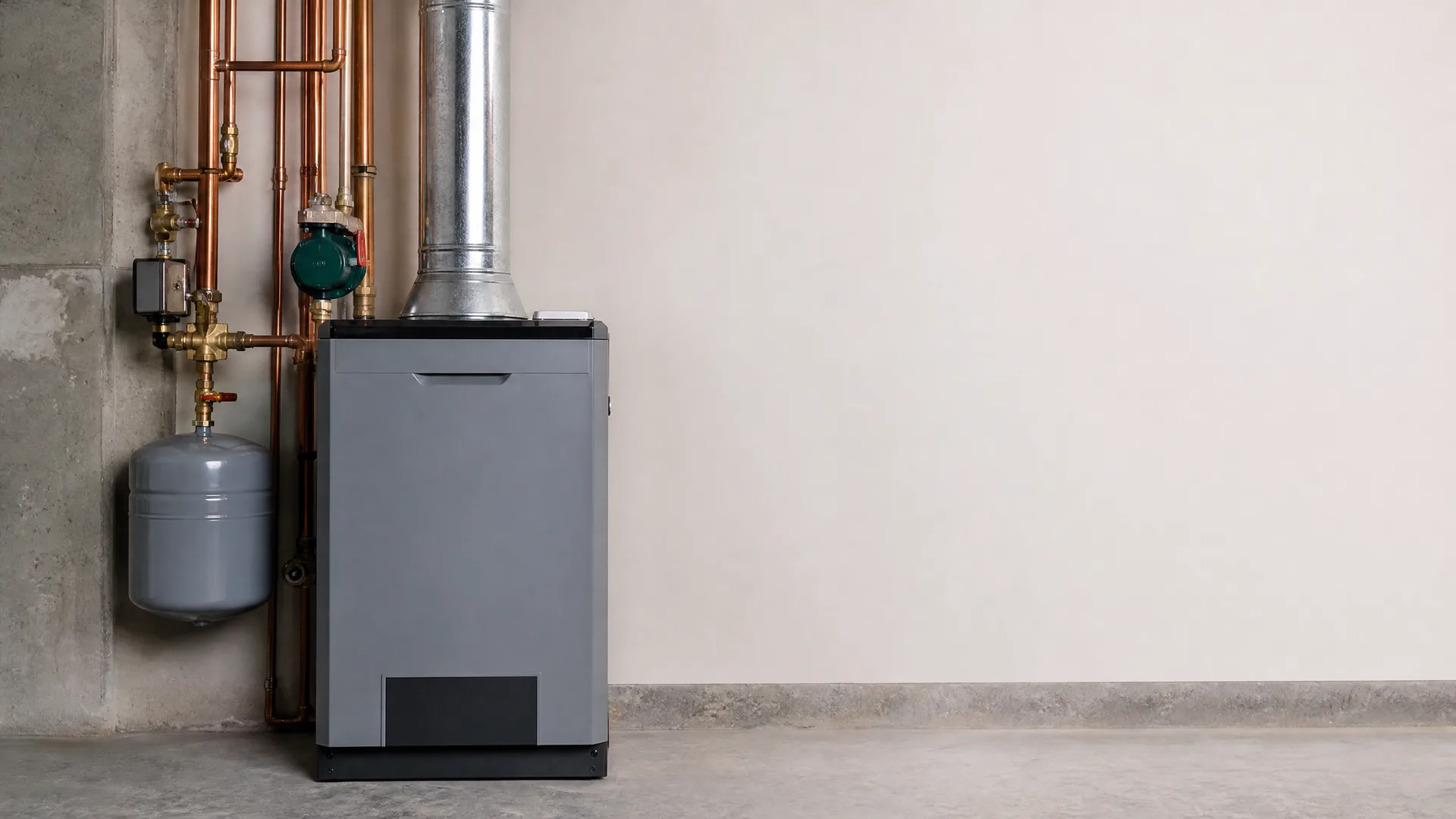
A dark gray floor-standing boiler on a concrete pad in a basement, surrounded by copper piping, brass valves, a gray expansion tank, a circulator pump, and a metal flue pipe against concrete block walls.
At the right pressure, this valve has nothing to do. Gauge steady, tank doing its job, no drip at the pipe.
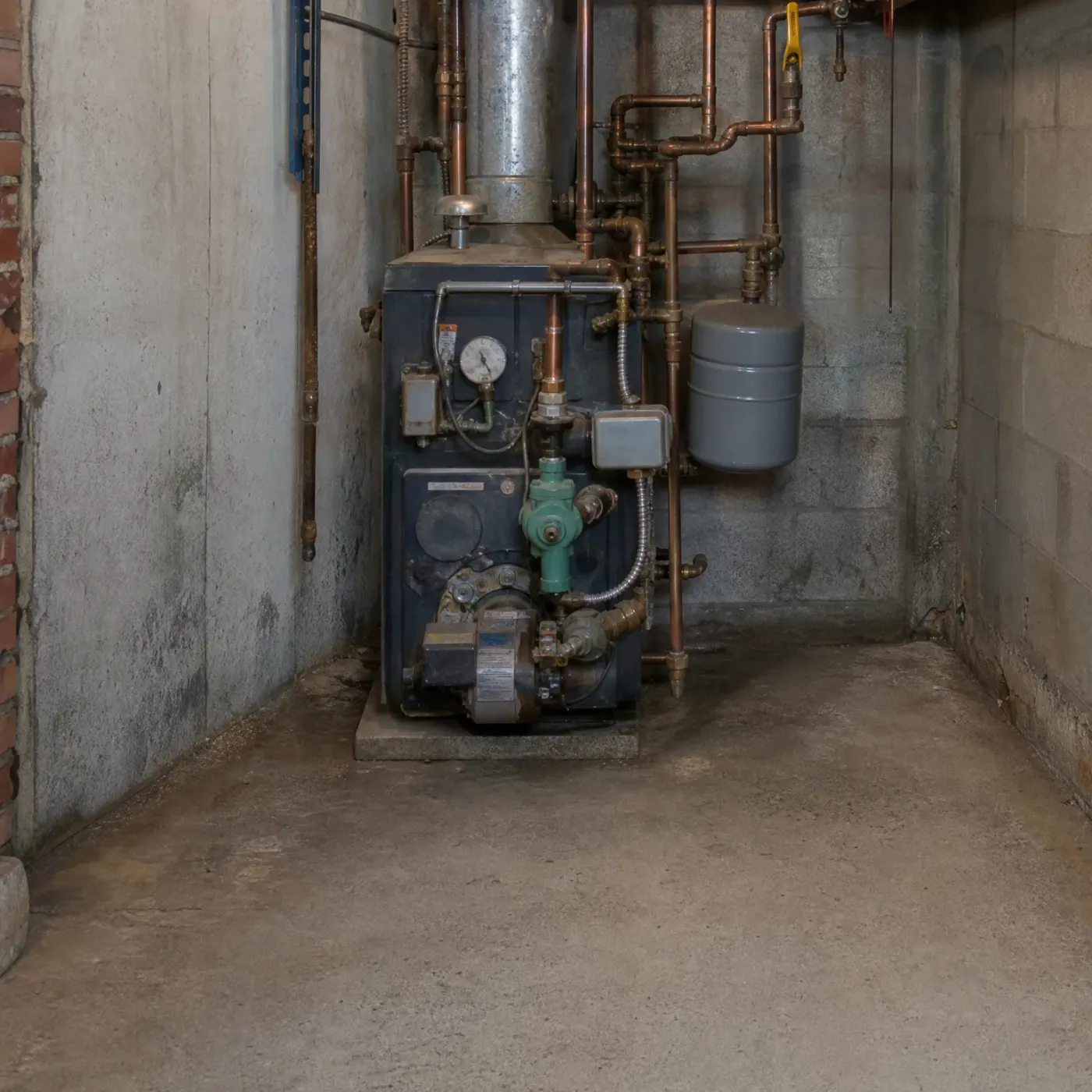
A blue boiler on a raised concrete pad in a basement corner, with copper and steel pipes, a gauge cluster, an expansion tank, and a metal flue running up the bare concrete walls.
At the wrong pressure, this valve is the only thing standing between a closed system and a basement floor.
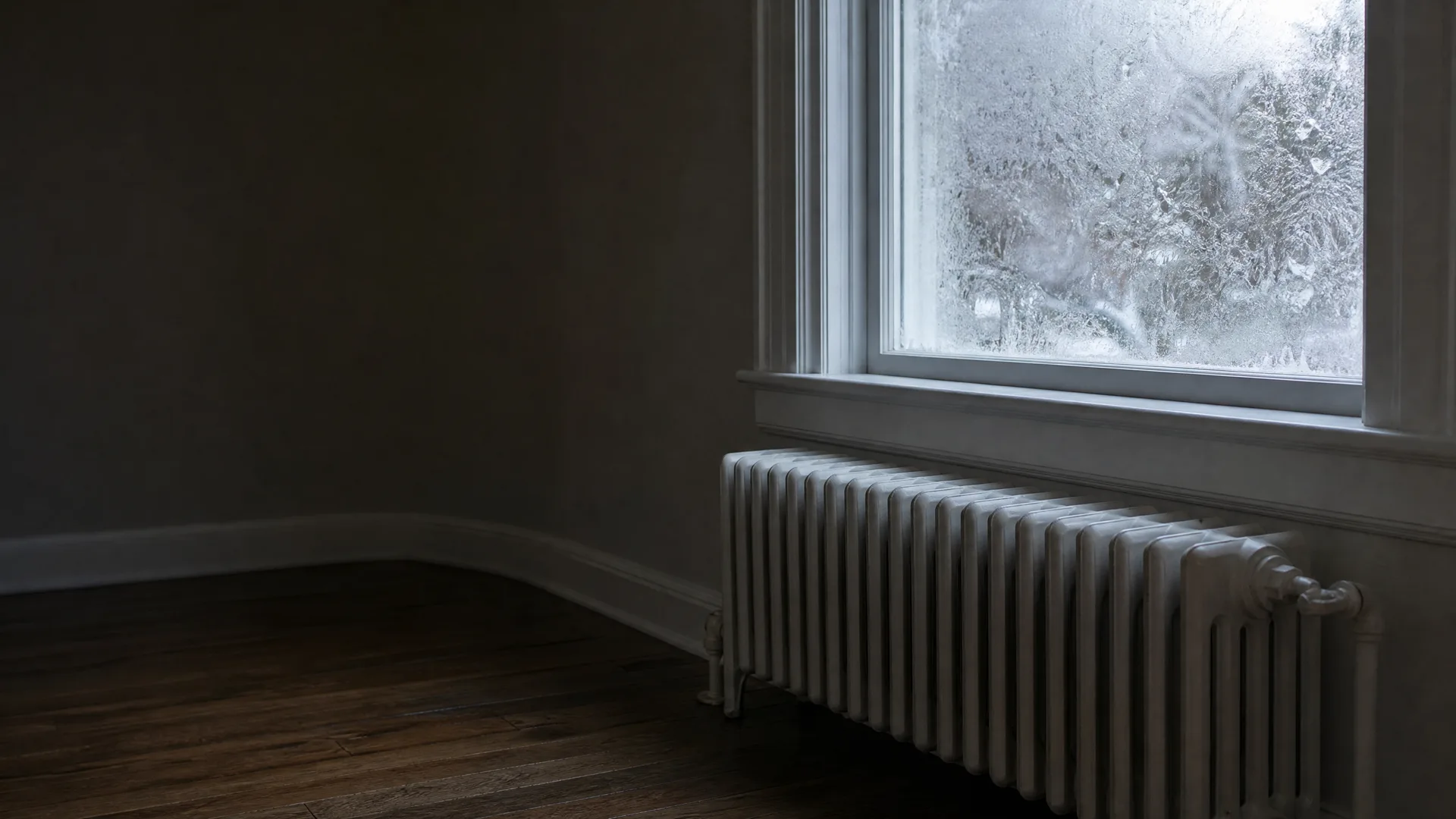
A white cast-iron column radiator under a frosted window in a dim empty room with dark walls and a wood floor, with snowy trees visible outside.

You come down before work and the radiator under the living room window is ticking, that faint metal sound it makes when the heat's been running hard all night. There's ice fogging the inside of the glass above it, the kind of morning where the cold presses right through the panes. You crouch down and see it, a thin line of water tracking down the side of the radiator valve and pooling on the floor below. You wipe it with your sleeve and it's back in a minute. Outside it's still dark, maybe ten degrees, and the boiler in the basement hasn't let up since midnight. You stand there in your socks, looking at the wet patch on the floor, trying to decide if this is something you can leave until the weekend.

A closed laptop and a cream mug of coffee on a coaster sit on a dark wooden table, with a potted plant at left and a kitchen counter, tiled backsplash and shelf of ceramics in the background.

The valve is set to open at 30 psi

That number is stamped right on it. A relief valve is a mechanical part, a spring holding a disc shut against the pressure under it. When the water pushes harder than the spring, the disc lifts, water escapes down the discharge pipe, and pressure drops back below 30. If the valve reseats clean, that's the whole job done right. If it keeps weeping afterward, the seat has grit on it or the spring has taken a set and won't close all the way anymore, and no amount of bleeding the system fixes that.

Figuring out which of those it is means getting eyes on the gauge, the expansion tank, and the valve itself, in that order, because the fix is different for each. You don't have to work out which on your own or spend your evening calling boiler companies around Massachusetts and repeating the story to each one. One licensed contractor who works on boilers in your area all winter gets the details once and takes it from there.

A gray upholstered sofa with a textured cushion sits beside a dark round side table holding a vase of green foliage, with a table lamp and sheer-curtained window behind.
A gray boiler unit on a concrete pad in a basement corner, connected to copper piping, circulator pumps, and a ceiling-mounted expansion tank against bare concrete walls.

Running as it should

Gauge sits where it belongs, pumps and fittings dry, no sound at the discharge pipe. The expansion tank is holding its charge, so the boiler has somewhere to send the water as it heats. Nothing here is asking the relief valve to do anything.

A blue oil-fired boiler with a pressure gauge, burner unit and metal flue sits on a concrete pad in a basement corner, surrounded by copper and black pipes against bare concrete walls.

Under too much pressure

That gauge on the front is climbing past where it should sit, and the valve has started weeping at the discharge pipe. Somewhere upstream, pressure built faster than the system could absorb it. Left alone, the valve keeps doing the only job it has, which is letting water out before something worse gives.

A dark cast-iron boiler with copper piping, pressure gauge, and a gray expansion tank sits on a concrete pad in a basement corner with concrete block and brick walls.
Before you get your boiler repair
A gray boiler on a concrete pad in a basement, connected to copper piping, valves, pumps and a gray expansion tank, with a concrete wall on the left and a brick wall on the right.
After you get your boiler repair
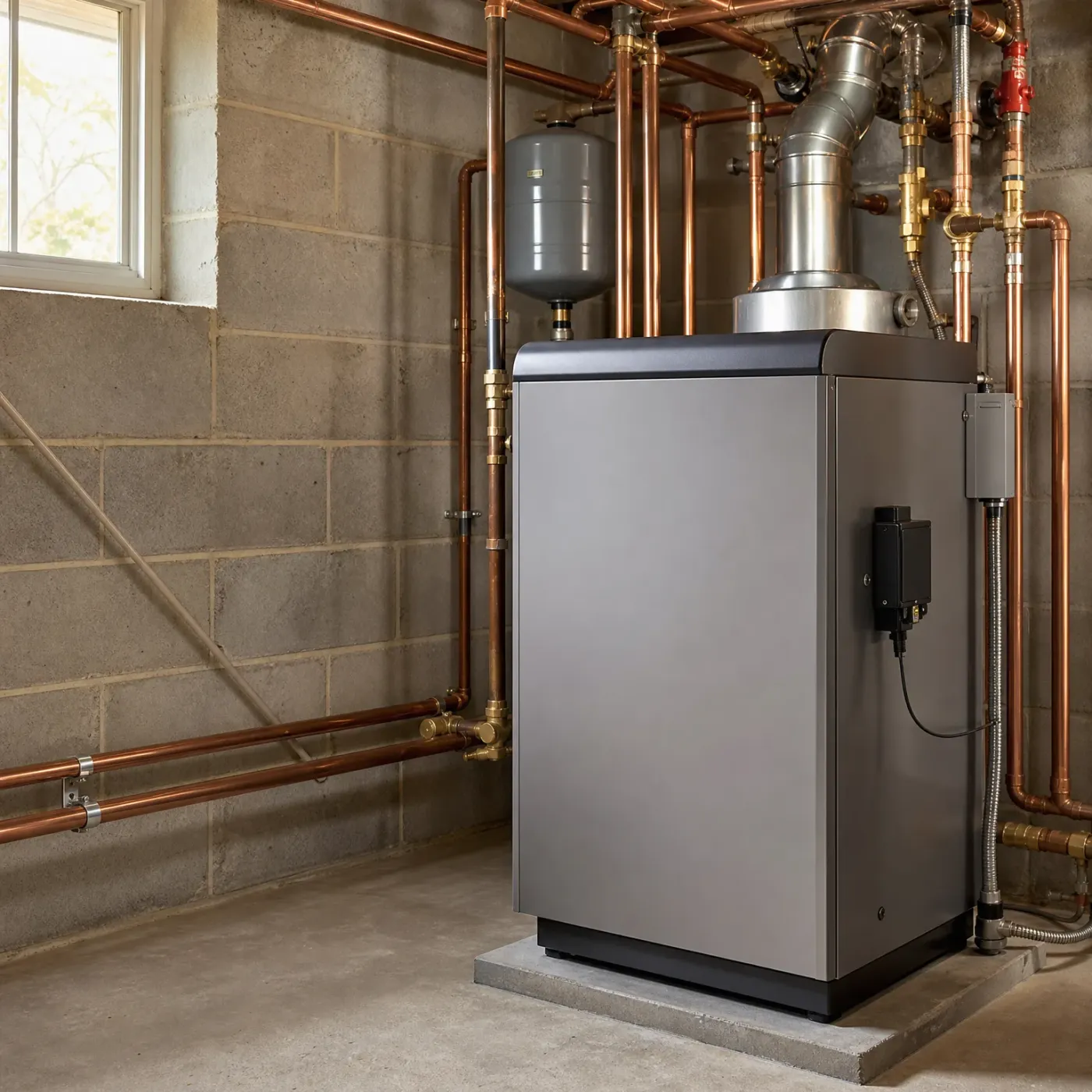
A gray floor-standing boiler on a concrete pad in a basement with concrete block walls, connected to copper piping, a flue vent, and an expansion tank.

Describe it once

The pro who reaches out is licensed in Massachusetts.

Answer a few questions instead of calling shop after shop.

Answer a few questions

It costs nothing to send, and you don't have to hire anyone.

What's that drip at the bottom of your boiler

You'll usually find it at the floor drain or the small copper pipe running down from the valve, a steady drip or a trickle of water that leaves a stain or a patch of mineral buildup where it lands. Sometimes it's quiet, just a wet spot you notice when you're down there for something else. Sometimes you'll hear it, a hiss or a faint running sound coming from the boiler itself. Left alone, that water adds up, and so does the pressure behind it. A valve that's working too hard can wear out and stop sealing even after the pressure drops back to normal, and a basement floor that stays damp near the boiler is its own problem.

A gray floor-standing boiler with a metal flue pipe, copper piping, a circulator pump and a gray expansion tank, installed against a concrete wall.

What the expansion tank does

A boiler heats a closed volume of water, and water takes up more room hot than cold. The expansion tank is where that extra volume goes. Inside it there's a bladder holding a charge of air, usually around 12 psi, that compresses as water pushes in. If that air charge bleeds out over time, the tank fills with water instead of absorbing it, and the boiler has nowhere left to send the expansion but out through the relief valve.

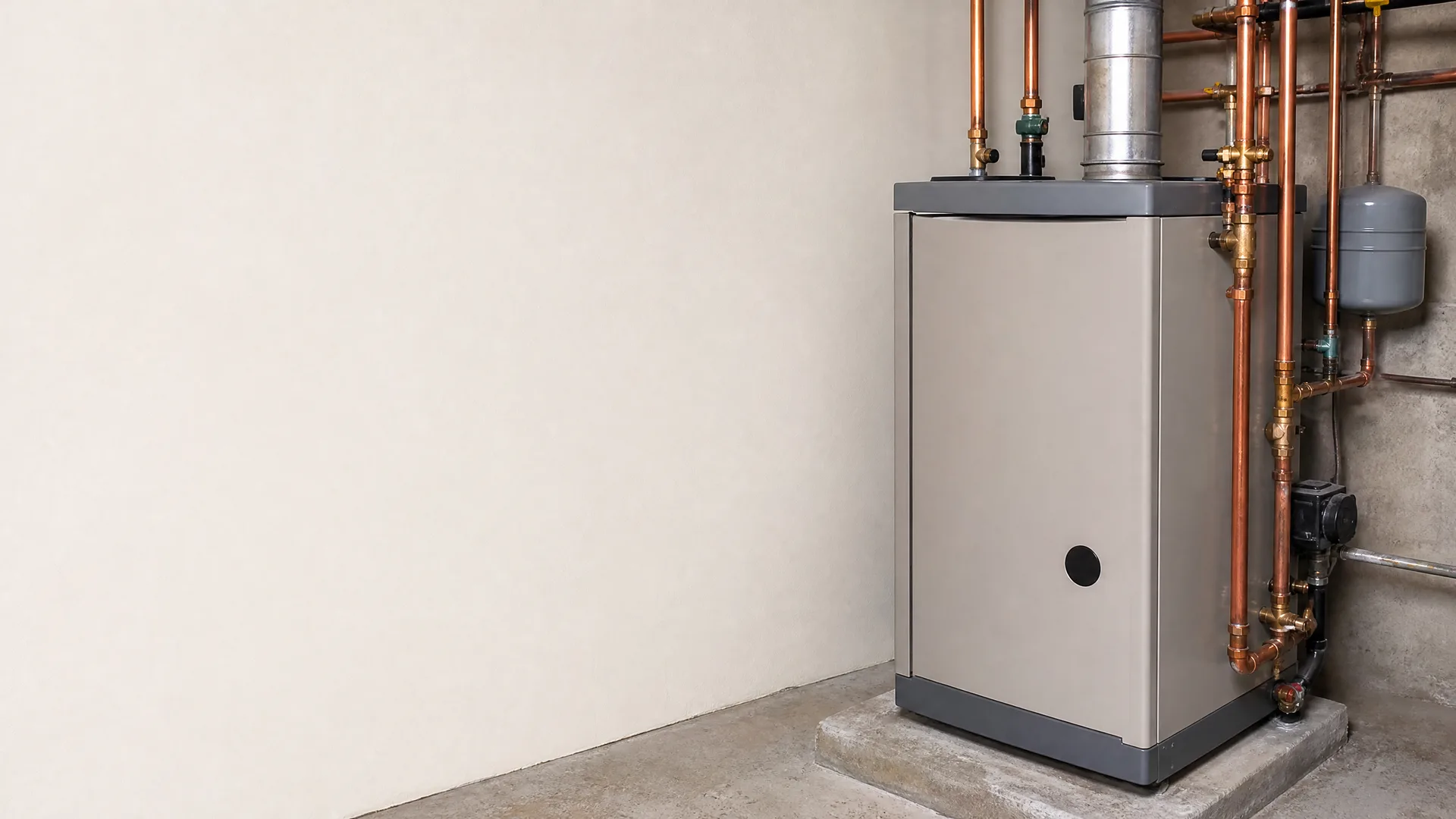
A tall grey floor-standing boiler on a concrete plinth in a corner of a room, with copper pipework, a flue, a circulator pump and an expansion vessel to its right, beside a plain cream wall.

Why a stuck gauge hides it

The pressure gauge on the front of the boiler is how you'd normally catch rising pressure before the valve does. But gauges fail too, and a needle that's stuck can read 12 psi for months while the actual pressure climbs well past 30. A plumber checking a leaking valve in Massachusetts will often test the gauge itself, not just the valve, because a bad gauge is what let the real problem go unnoticed.

Winter nights average 21°F statewide

A 21°F overnight is a long, hard run for your boiler, not a quick cycle and rest. That stretch of steady firing is what pushes pressure up and puts the relief valve to work if the expansion tank isn't holding its charge.

NOAA nClimDiv 1991-2020 county normals weighted by homes

What the leak is telling you

  • A leaking relief valve means something upstream is pushing the boiler past the pressure or temperature it's built to hold.
  • Most of the time the cause traces back to a waterlogged system or an expansion tank that lost its air charge.
  • A gauge sitting at 30 psi or higher means the valve is doing exactly what it's supposed to do.
  • A cold snap that keeps your boiler firing all night will expose a weak expansion tank faster than a mild one will.
  • The valve itself is rarely the problem; it's reacting to pressure it was never built to hold back.
  • A local, licensed contractor who services boilers all winter can trace the drip to its source without you explaining it twice.

The drip at the bottom of your boiler is the valve doing its job, not failing at it. Something upstream, usually too much water in the system or an expansion tank that's lost its air charge, is pushing past the point the valve is set to hold. Thirty psi is the number stamped on the valve, and the number on your gauge tells you where you stand against it. A tank holding its charge gives the boiler's heated water somewhere to go. One that's lost it leaves the relief valve to take the load instead, and a hard cold snap will find that weakness faster than a mild stretch would, because the boiler's running longer and the pressure's got more time to build. None of this means the valve needs replacing. It usually means whatever's upstream of it does, the tank, the fill valve, the pressure in the loop. A contractor who works on boilers all winter in Massachusetts has seen this exact drip before and knows which of those to check first, so you're not standing in the basement explaining the sound and the stain and the ice on the window twice before someone gets to the actual cause. Where you stand now is simple. The valve told you something was wrong upstream. What's wrong is usually traceable, usually fixable, and worth having someone local look at before the next cold stretch asks more of a weak tank than it can give.

A smiling bearded man in a navy sweater sits at a candlelit dinner table with a glass of red wine, a bowl of salad, and plates of food in the foreground.
A woman with dark hair in a bun reclines on a sofa with her eyes closed, wrapped in a cream fleece blanket, a closed blue hardcover book resting in front of her, with a lit lamp and a vase of dried flowers in the background.

Boiler Repair

No phone calls to make

Only one pro gets your request, so you hear from one company.

A black-framed smartphone standing upright against a plain white background, its screen filled with solid green.
RepairBoilerMassachusetts
Step 1 of 2

What ZIP code is the job in?