Describe your boiler job, and a local pro who handles it gets in touch.
A boiler that's venting carbon monoxide doesn't always announce itself. There's no smell, no smoke you'd notice walking by. What you might see instead is soot around the draft hood, a yellow flame where it used to burn blue, or a window that fogs up near the unit for no clear reason. If a CO detector in your house has gone off, or you or anyone home has had headaches or felt sick in a way that eases once you leave the house, that boiler needs to be looked at before it runs again.
Gas boilers heat most homes in Massachusetts, and a lot of them run for months without anyone checking the burner or the vent pipe. A cracked heat exchanger or a blocked flue can sit there quietly, producing CO a little at a time, through a whole winter. You don't need to diagnose which one it is. You need someone qualified to check the flue, the burner, and the exchanger, and tell you straight whether it's safe to keep running.
This isn't a repair to put off or shop around for slowly. Once you send your information through this page, the work of finding a licensed contractor who handles boiler issues like this one is off your hands. Someone who knows this equipment and takes CO seriously will be the one reaching out to you, not a general number you have to explain your situation to twice.
You don't have to know what's wrong before you ask for help. You just have to notice that something is off, and that's enough reason to get it checked. The next step isn't a bigger job on your end. It's a shorter one: tell the page what's going on, and let the right contractor take it from there.
A boiler making carbon monoxide usually shows it in small ways before anything dangerous builds up. Streaks of soot near the flue pipe or draft hood. A burner flame that's gone yellow or orange instead of steady blue. Rust or water stains on the vent pipe itself, since a boiler that isn't venting right often isn't draining right either. Some people notice a headache that shows up at home and goes away once they leave the house, or a pilot light that keeps dying. The cause is almost always the same: something is blocking the exhaust from getting outside, a cracked heat exchanger, a blocked flue, a vent pipe that's come loose or corroded through. Massachusetts winters mean that boiler runs for months without a break, so a venting problem has a lot of hours to do damage. A carbon monoxide detector near the boiler room catches what you can't see or smell, and it's worth having one regardless of what the boiler looks like right now.
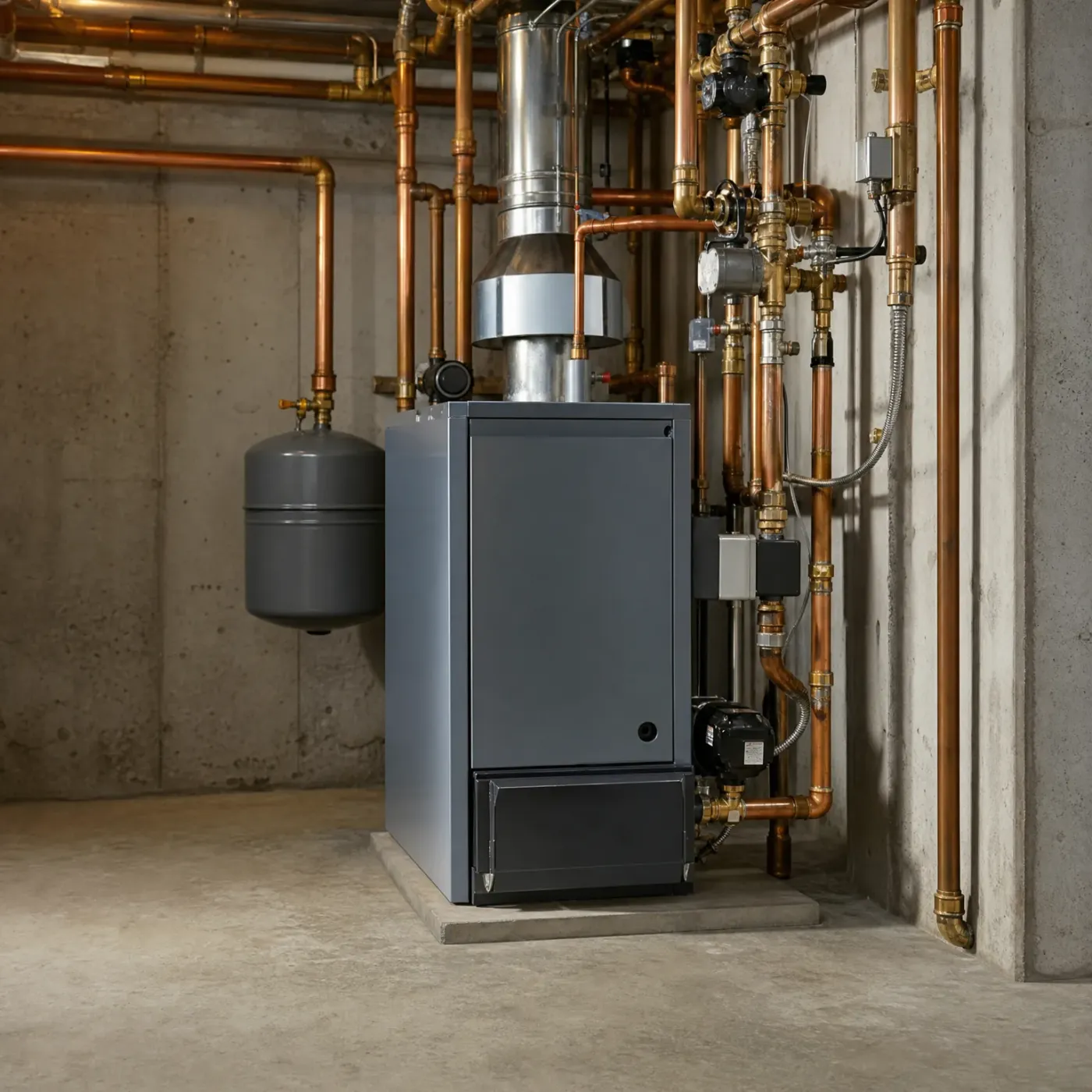
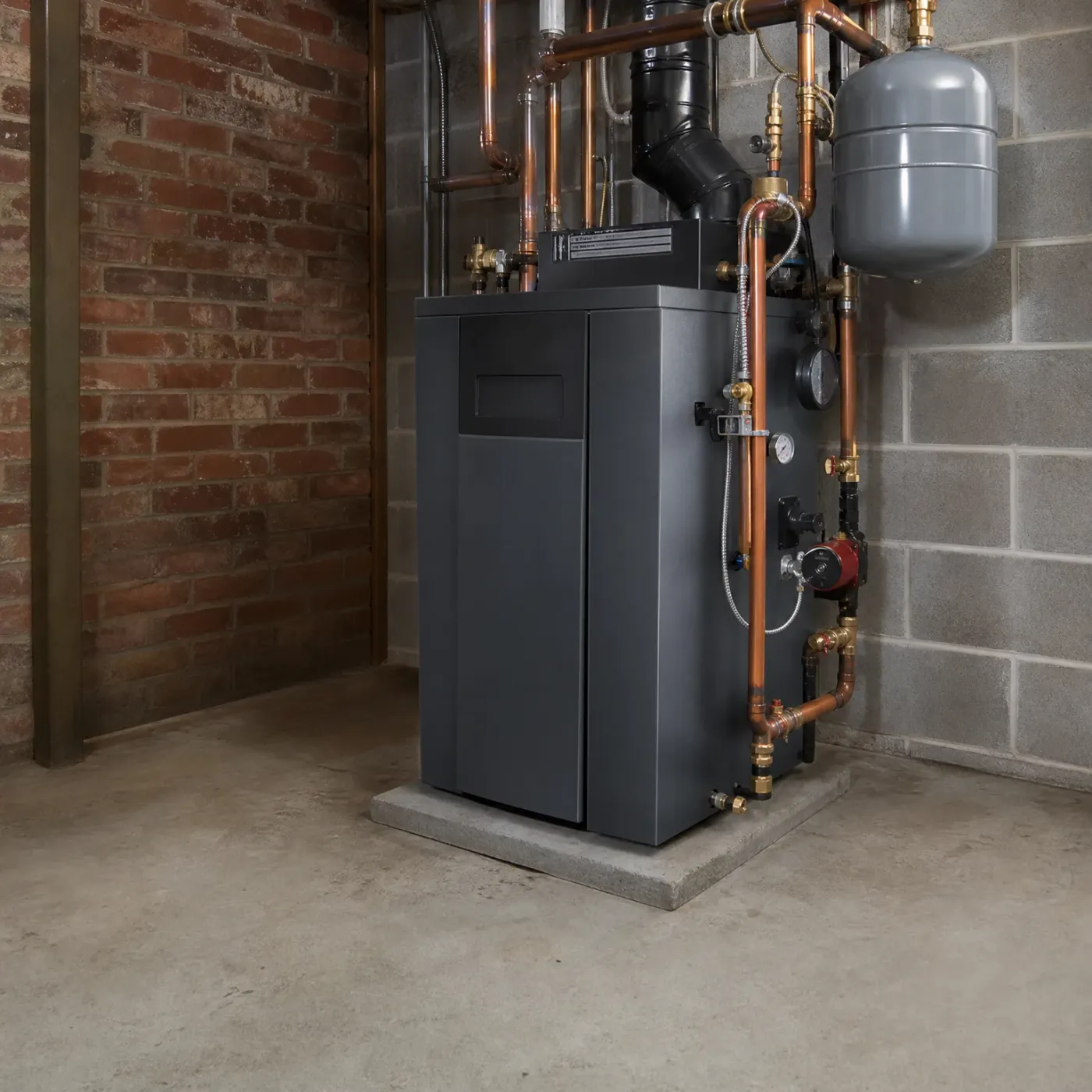
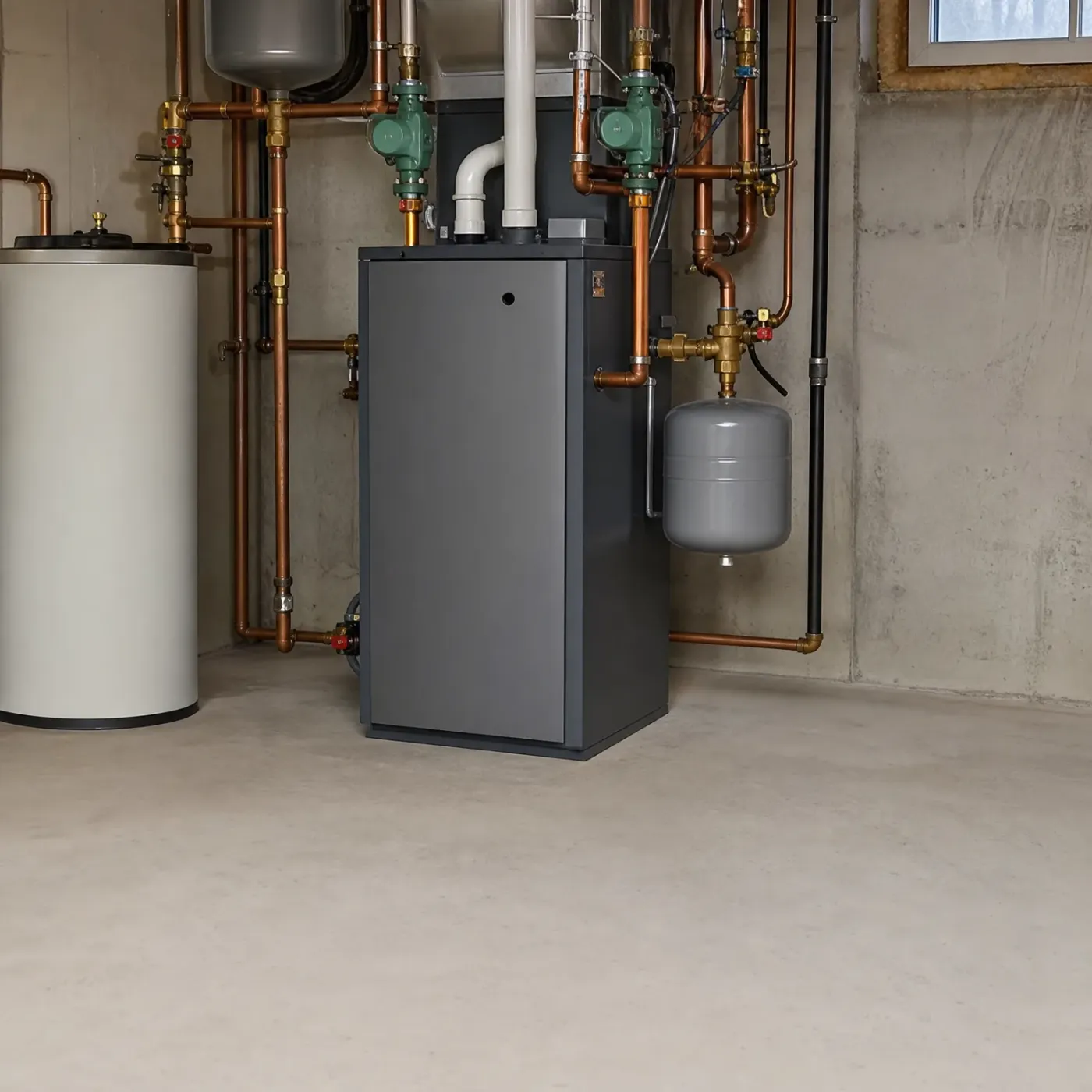
A boiler that's burning clean shows a steady blue flame and tight, soldered joints with no soot anywhere near the flue.
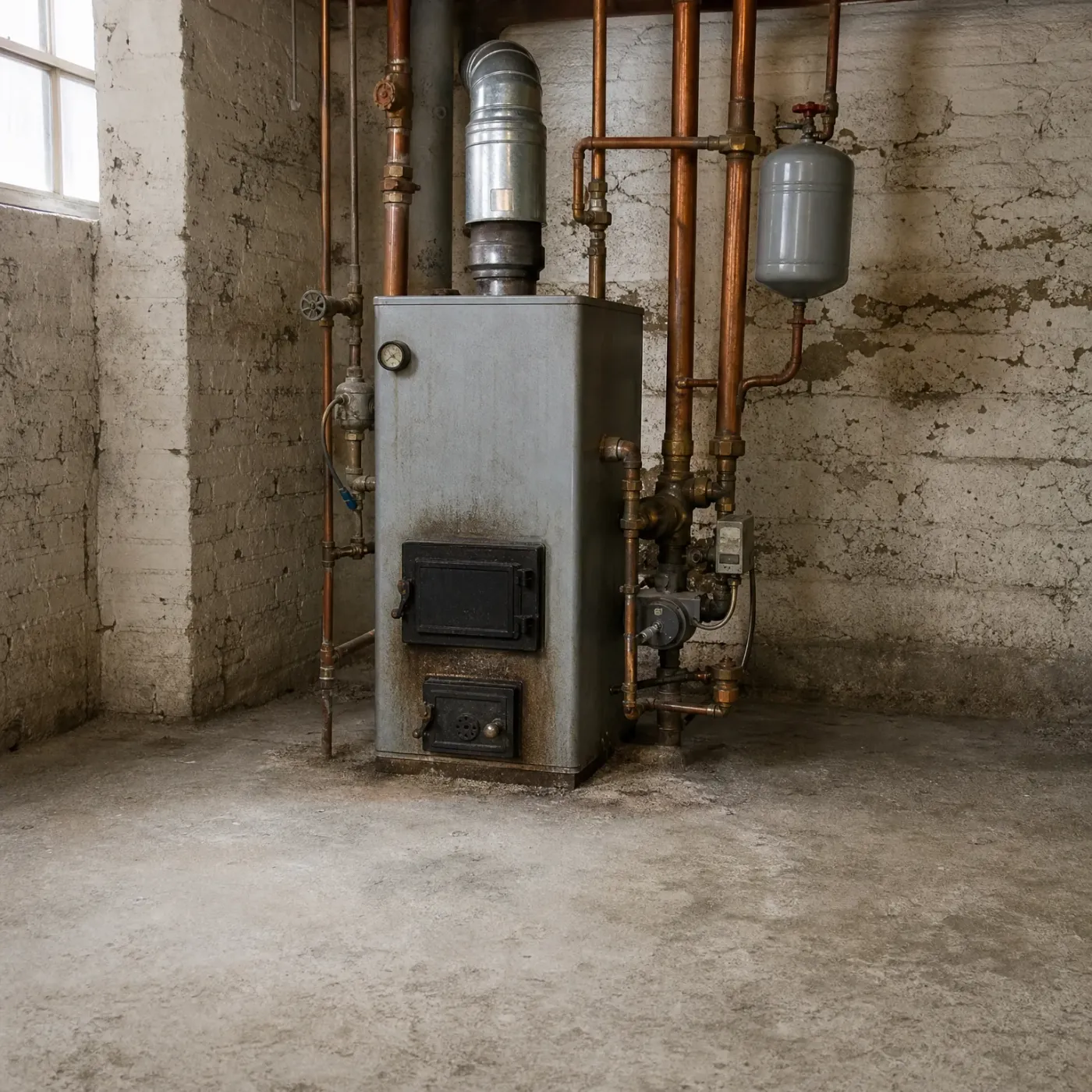
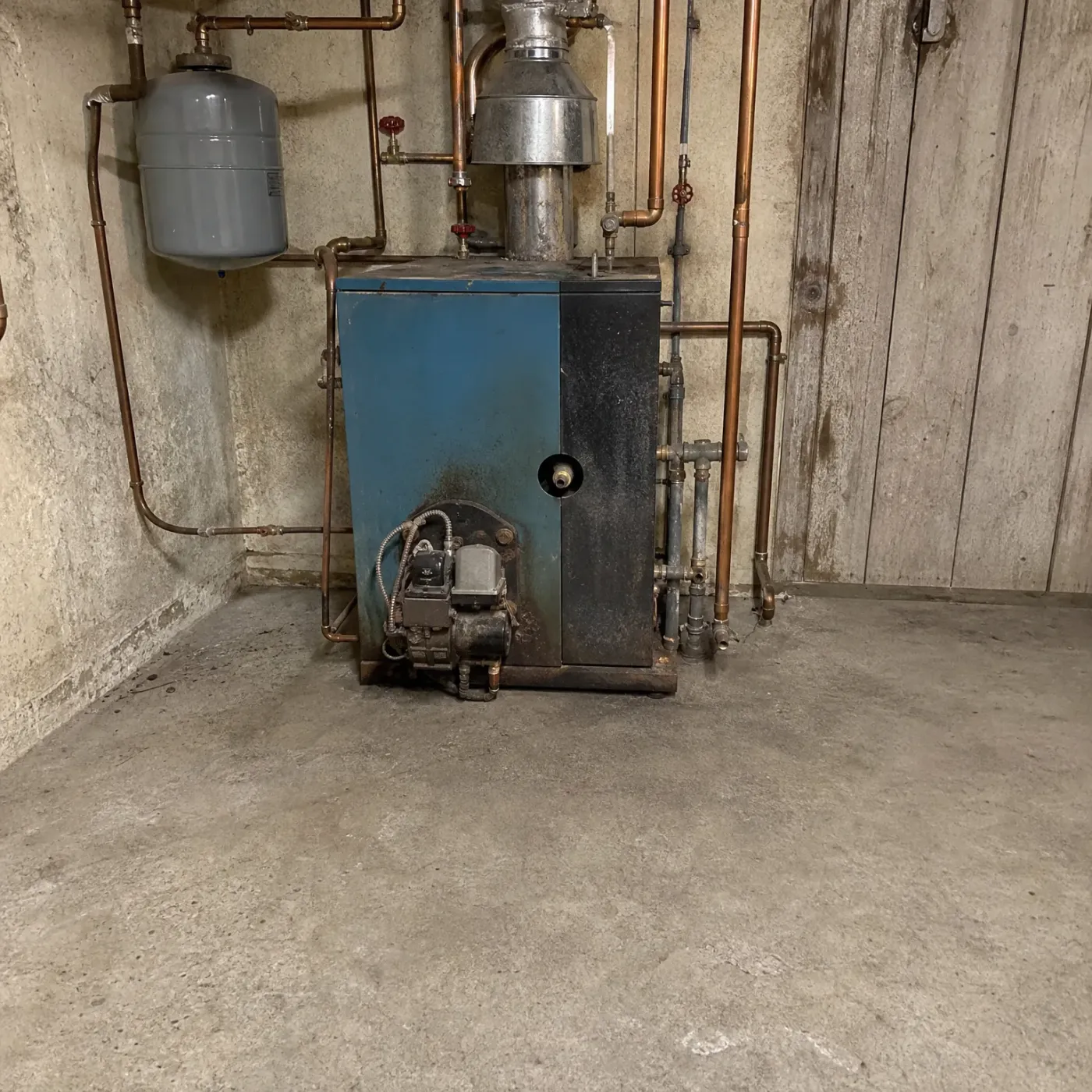
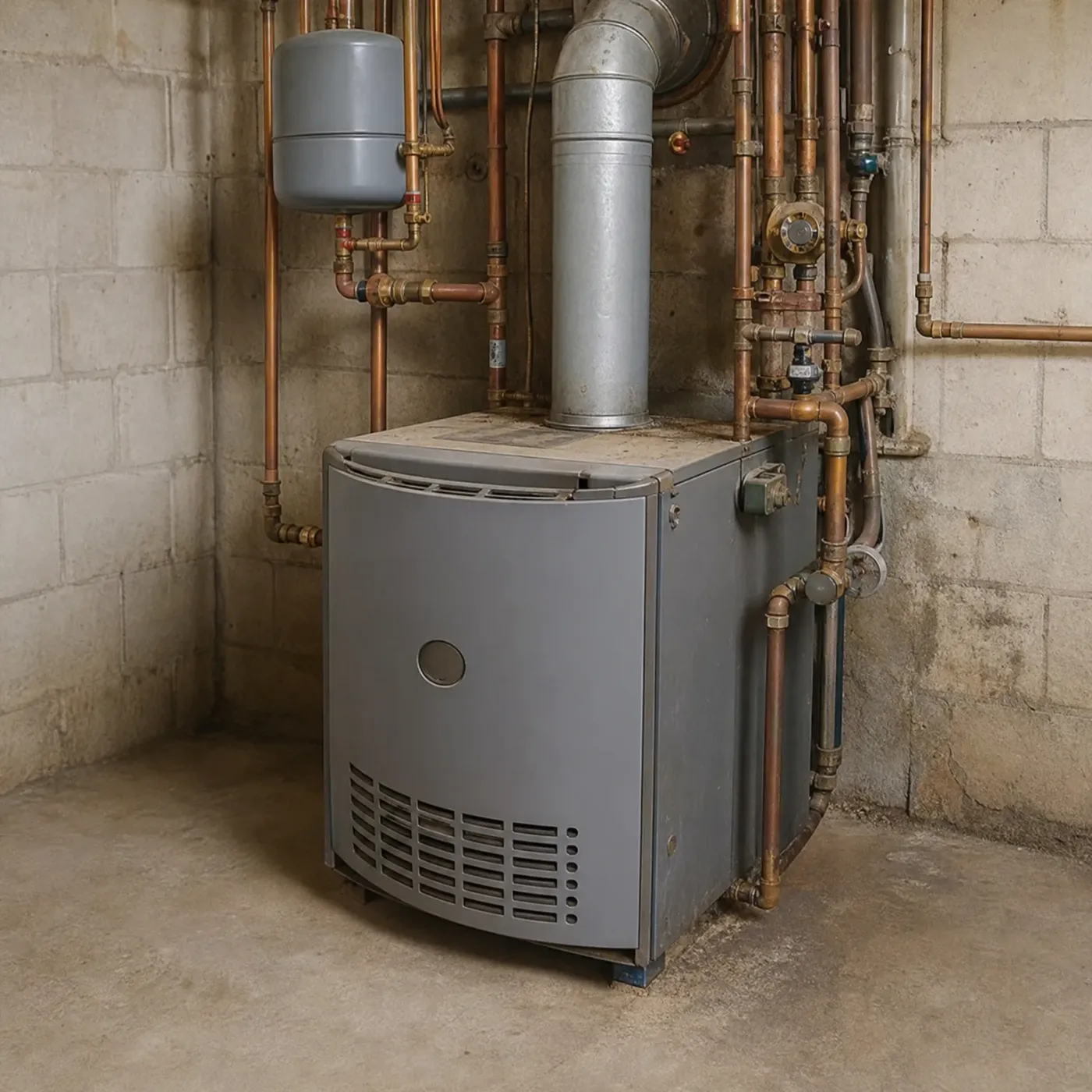
A boiler in trouble often sits near a bare flue with no draft hood and staining the wall or floor around it tells you it's been there a while.
Asking costs nothing, and the choice to hire stays yours.
Why the flame color matters
A gas burner draws the air it needs to burn clean. When the flue is blocked or the boiler isn't venting right, the flame starves for air and burns yellow instead of blue, and that's when carbon monoxide climbs. The color is a direct read on combustion, not a guess. A steady blue flame means it's getting enough air and burning the gas fully. Yellow, orange, or a flame that flickers and lifts off the burner means something's off with the air supply or the burner itself, and it's worth having a contractor look before the next cold stretch.
What the soot is telling you
Soot forms when combustion isn't complete, and it settles on whatever's closest to the flue, the draft hood, the nearby wall, sometimes the floor underneath. It's black or dark gray and it builds up slowly, so a little dust near the vent one month can turn into a visible streak the next. Finding it doesn't mean the boiler is actively dangerous right now, but it means combustion has been off for some stretch of time. In a Massachusetts winter, with the boiler running for months straight, that stretch adds up fast.
Before you get your boiler repairAfter you get your boiler repair
One detector, whole house
A CO alarm near the boiler only catches what reaches that spot. Bedrooms and living areas need their own detectors, since the gas settles differently room to room.
If someone's closed off vents or added weatherstripping near the boiler for warmth, that's less air for the burner. Less air means a yellow flame and more carbon monoxide.
A boiler room with no carbon monoxide detector at all is flying blind. Massachusetts law has required one in any home with a boiler since 2006, and most towns won't sign off on a repair without one in place.
A detector with a dead battery is the same as no detector. If yours hasn't chirped a warning in years, that's not good news. Check it tonight, and if your boiler needs a look, get matched with a contractor who can check that too.
Winter nights average 21°F statewide
At 21°F, your boiler is firing most of the night, every night, for months. That kind of steady run time is exactly when a cracked heat exchanger or a blocked flue turns from a minor fault into a real carbon monoxide problem.
NOAA nClimDiv 1991-2020 county normals weighted by homes
The pipes are tight and the room is dry
Copper lines and brass fittings run clean to the boiler, no staining on the floor or the wall behind it. The expansion tank and the water heater sit where they always have. Nothing's been patched or rerouted to get around a problem.
The flue tells a different story
A bare galvanized flue pipe runs straight up from the unit with no draft hood catching what comes off it. Corner placement against concrete block gives it less room to draw air. If that pipe is rusted or disconnected at a joint, the gas has somewhere else to go.
The signs are small until they aren't
Soot by the flue, a yellow flame, rust on the vent pipe, a detector that's missing or dead. Any one of those is reason enough to get the boiler looked at. None of them tell you how far along the problem is, and that's not something to guess at with a Massachusetts winter ahead and the boiler running most nights.
A contractor who sees the flame color and the flue in person can tell you what's actually happening and what it takes to fix it. Send in what you've noticed and a contractor who takes on boiler repair in your area will reach out to go over it with you. From there it's off your plate, and you can stop wondering whether what you saw by the draft hood means something.
A pro who works on boilers
Send the request today and let a boiler pro reach out to you.