How to restart a boiler after a Massachusetts power outage
Send the request today and stop worrying about who to call.
The power comes back on and the house is cold. You check the thermostat, nothing happens. You go down to the boiler and the display is dark, or it's lit but nothing is firing. This happens after outages because a boiler doesn't always just pick back up where it left off. Some need to be reset by hand. Some have a pilot that went out and needs to be relit. Some have a control board that didn't survive the power dropping out mid-cycle.
Most Massachusetts homes heat with gas, and a gas boiler sitting cold is a different problem than a furnace doing the same thing. There's a pilot or an igniter involved, a gas valve, sometimes a circulator pump that needs power to push hot water through the system. If the reset button on the front doesn't bring it back after a try or two, that's usually not something to keep pushing on. Pushing it repeatedly can make a safety switch lock the system out entirely.
With power costing what it does here, you're not going to want this to drag on, and in a Massachusetts winter a cold boiler isn't a one-night inconvenience you can put off. The usual next step is finding someone who works on boilers, calling around to see who answers, explaining what happened and what you've already tried, then doing it again with the next one, and waiting to hear back on a quote before you know who's even available.
This page skips that part. Send the form and the job of finding a licensed contractor who works on boilers stops being yours to do. No more calling shops one by one, no more repeating the same story about the outage and the reset button that didn't work. That search gets handed off the moment you submit it, and it stays off your plate from there.
What's below walks through the actual restart, what the reset button does, when a pilot needs relighting by hand, and the signs that mean it's past the point of trying it yourself.
Why won't my boiler restart after the power came back on?
The power is back and the house is cold. You've checked the thermostat and gone down to the boiler, but the display is dark or it's lit with nothing happening. After the outage you were expecting heat to just come back, and it hasn't, so now you're standing there wondering if something tripped, broke, or just needs a nudge.
Most boilers need to be manually reset after a power outage
A boiler's control board doesn't always pick up where it left off once power returns. If the outage hit while the burner was firing or mid-cycle, the board can lock out as a safety response and sit there waiting for a reset, usually a button on the front of the unit held for a few seconds. Low water pressure from the outage, a tripped switch, or a pilot that went out can do the same thing. None of that means the boiler is broken. But if the reset button doesn't bring it back, or it fires and shuts off again, that's usually a sign something needs a closer look, not another reset.
Running the way it should
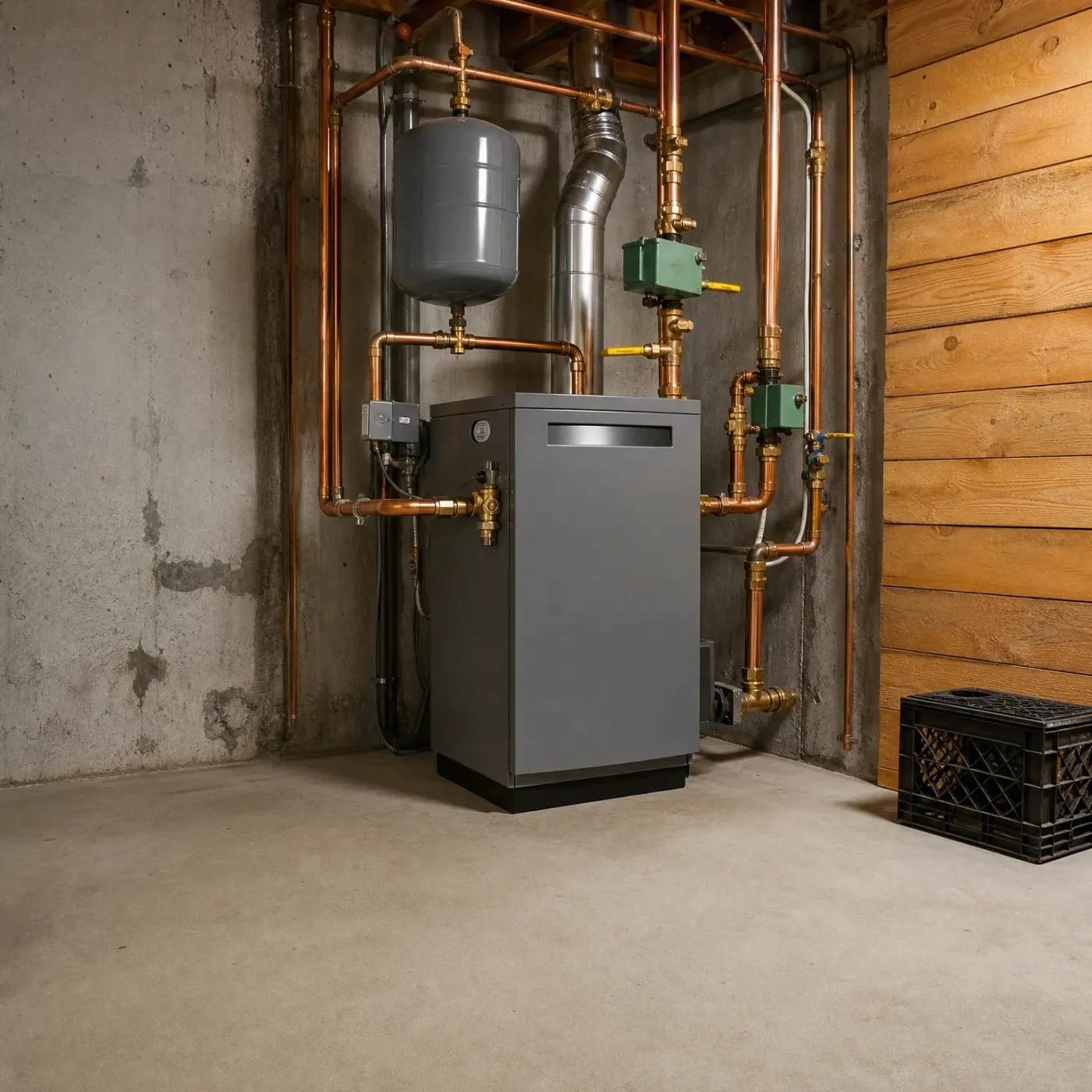
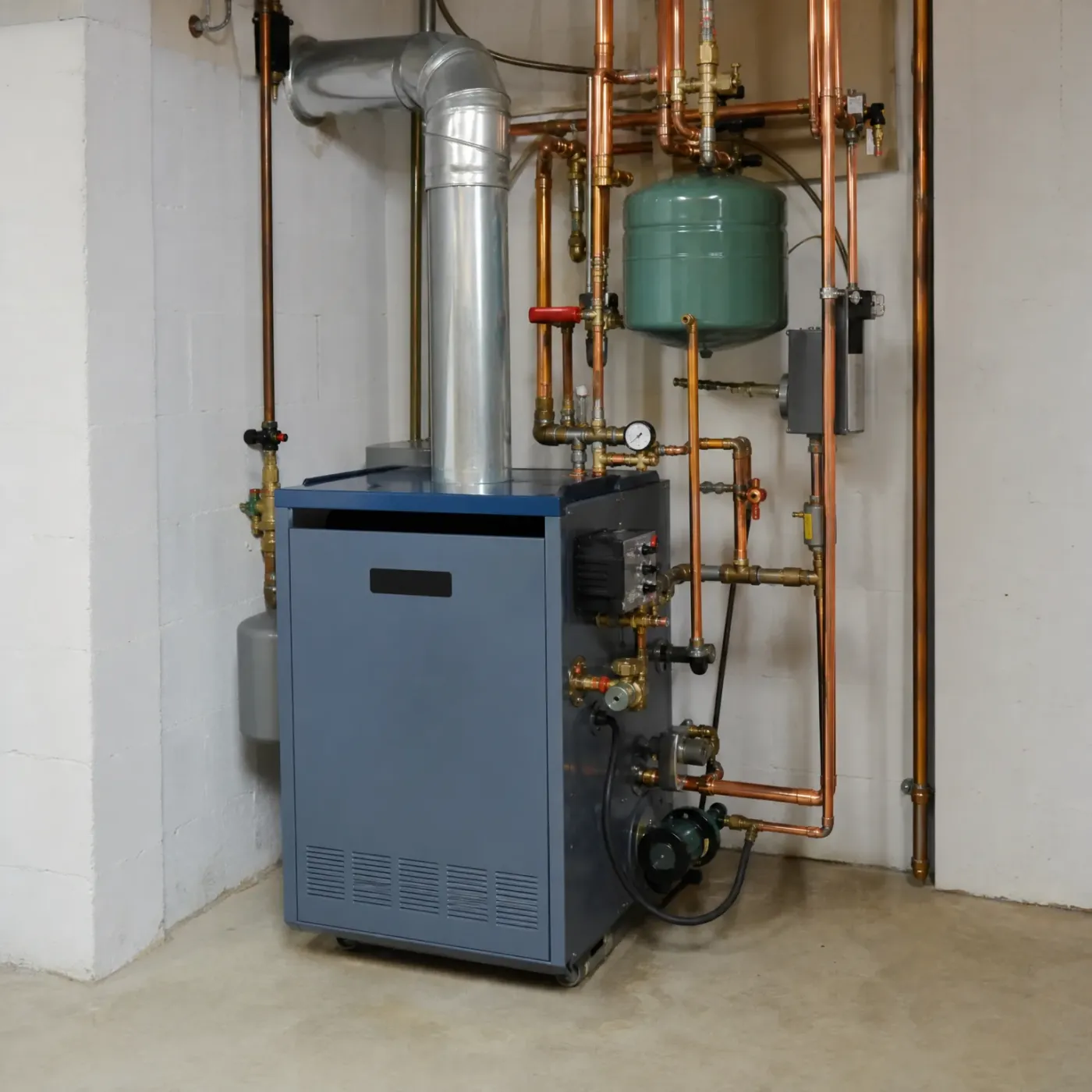
This is a boiler that's firing normally. The zone valves open and close as each thermostat calls, the circulators push hot water through the copper lines, and the pressure on the expansion tank holds steady. Nothing here needed a hand after the power came back.
Stuck after the outage
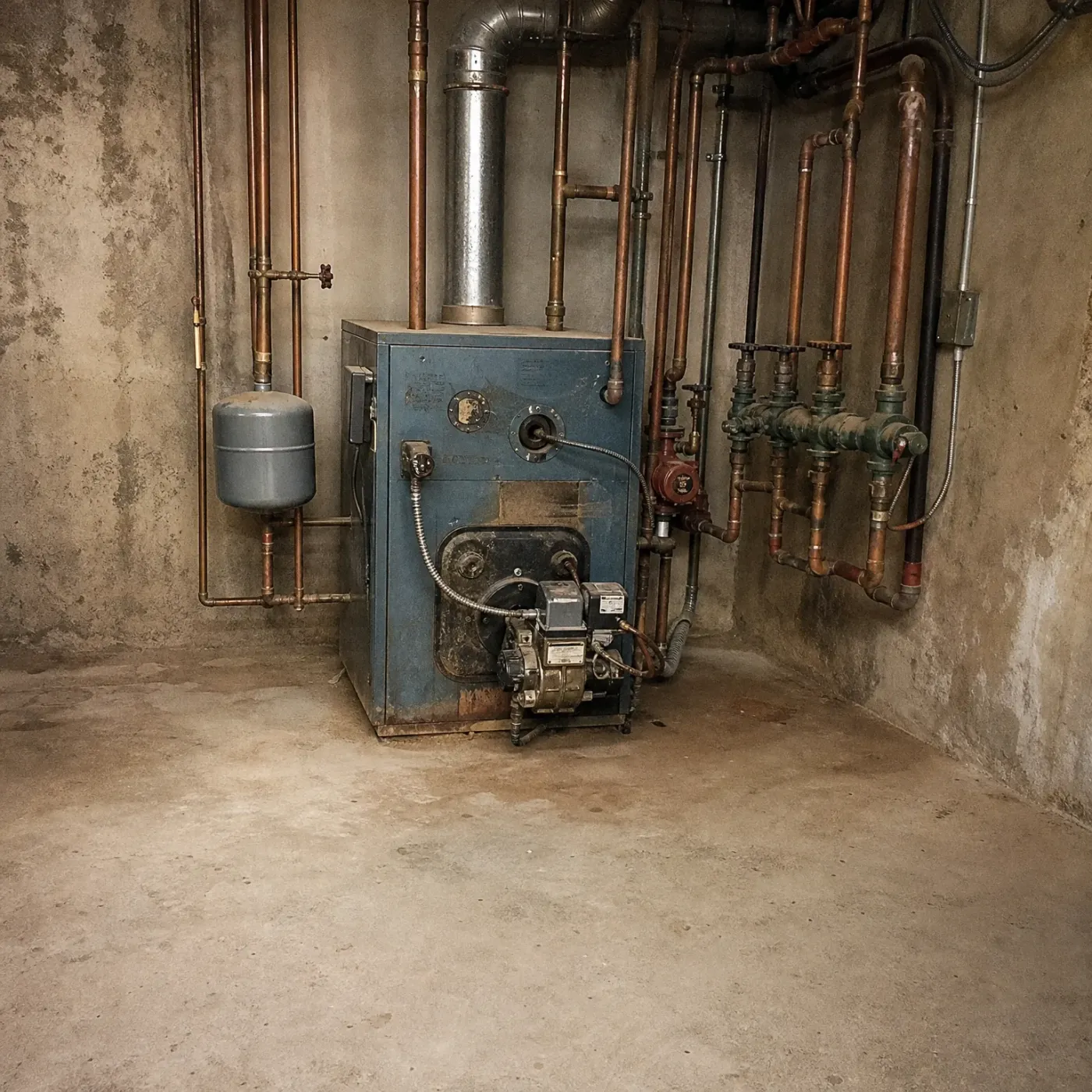
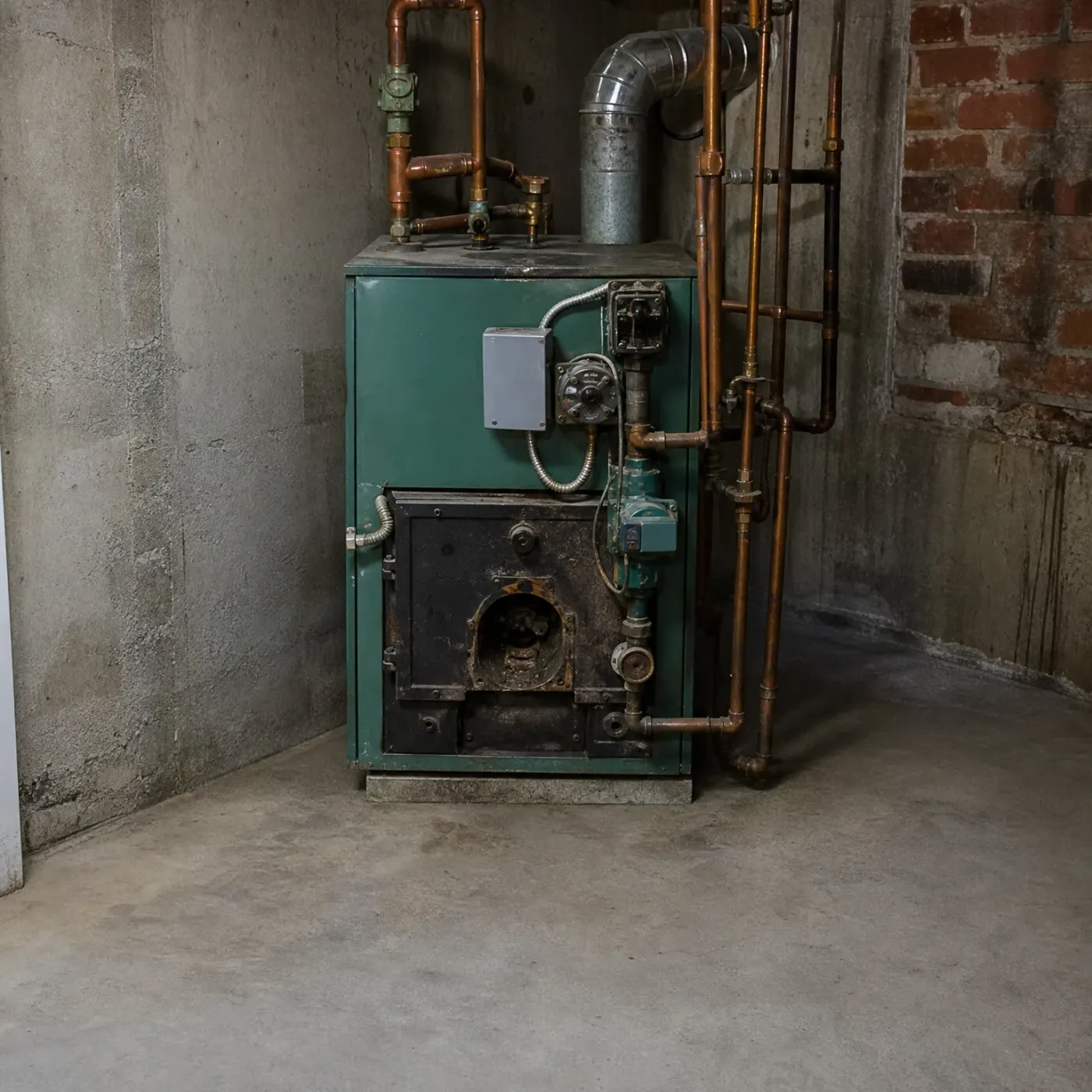
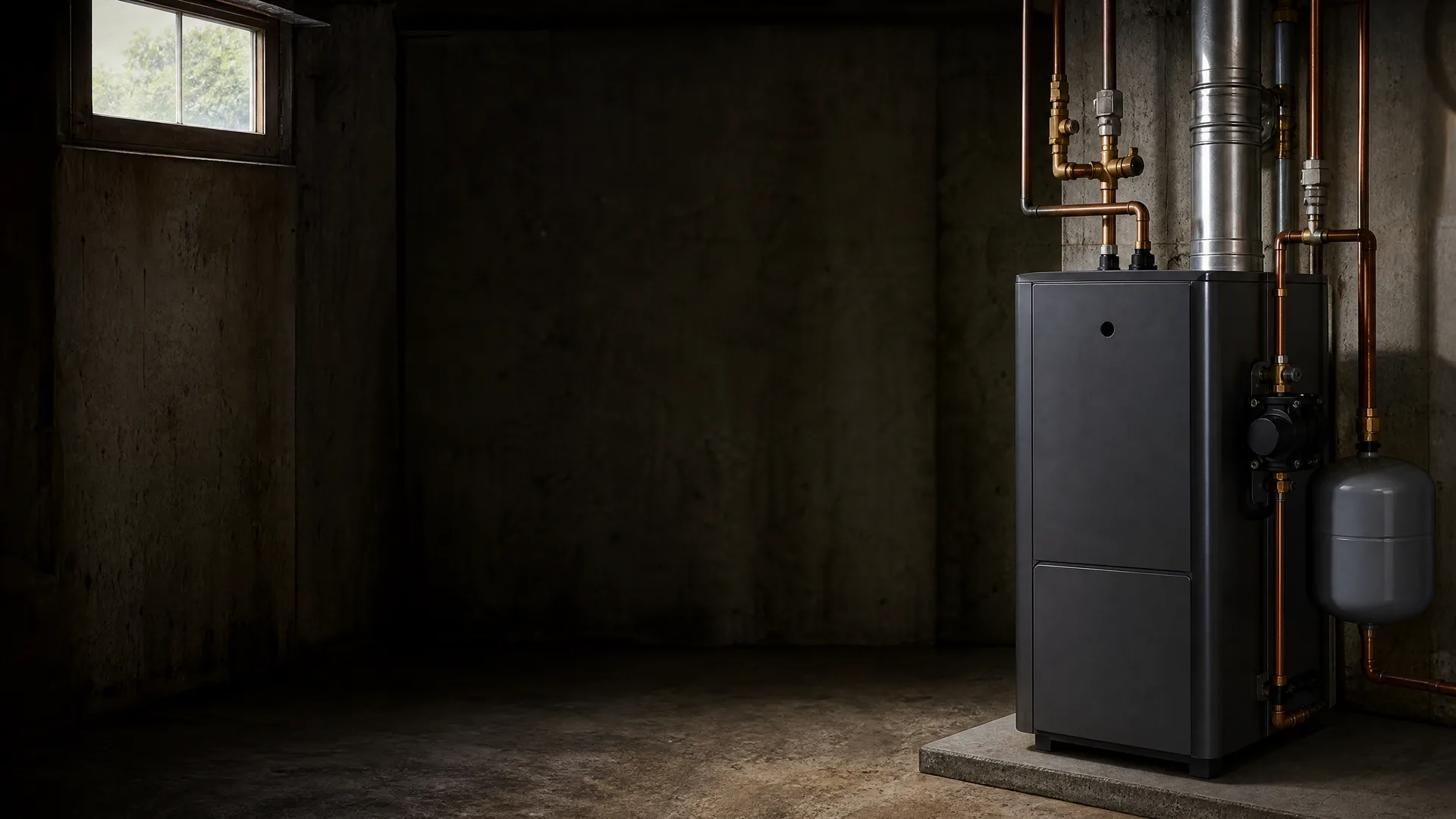
This boiler came back with no heat. The flue is cold, the circulators aren't turning, and the zone valves along the manifold sit idle no matter what the thermostat asks for. Somewhere between the switch and the burner, the restart didn't take, and it won't fix itself.
Reset It, or Call for the Fix
Try yourself
Check that the switch on the wall near the boiler, the one shaped like a light switch, is flipped on, since this cuts power to the boiler and gets bumped during a restoration.
Look at the pressure gauge on the front of the boiler and see if it reads near zero, which can trip a low water cutoff after an outage.
Press the reset button once if the boiler has one, usually a small red button behind a cover, and wait a few minutes to see if it fires.
Check the breaker for the boiler in the electrical panel, since a surge when power returns can trip it separate from the rest of the house.
Look for a service switch or float switch near the floor if the boiler sits in a basement that floods, since those cut power on their own.
Call a contractor
The reset button has been pressed more than once and the boiler still won't hold a flame or shuts off again within minutes.
The pressure gauge reads low and stays low after you've tried to add water through the feed valve near the bottom of the boiler.
You smell gas near the unit, in which case the gas gets shut off at the valve and the call happens from outside the house.
The ignition clicks but never catches, which points to a part inside the boiler rather than anything a reset will fix.
There's water on the floor around the boiler, which means something failed and needs to be looked at before it runs again.
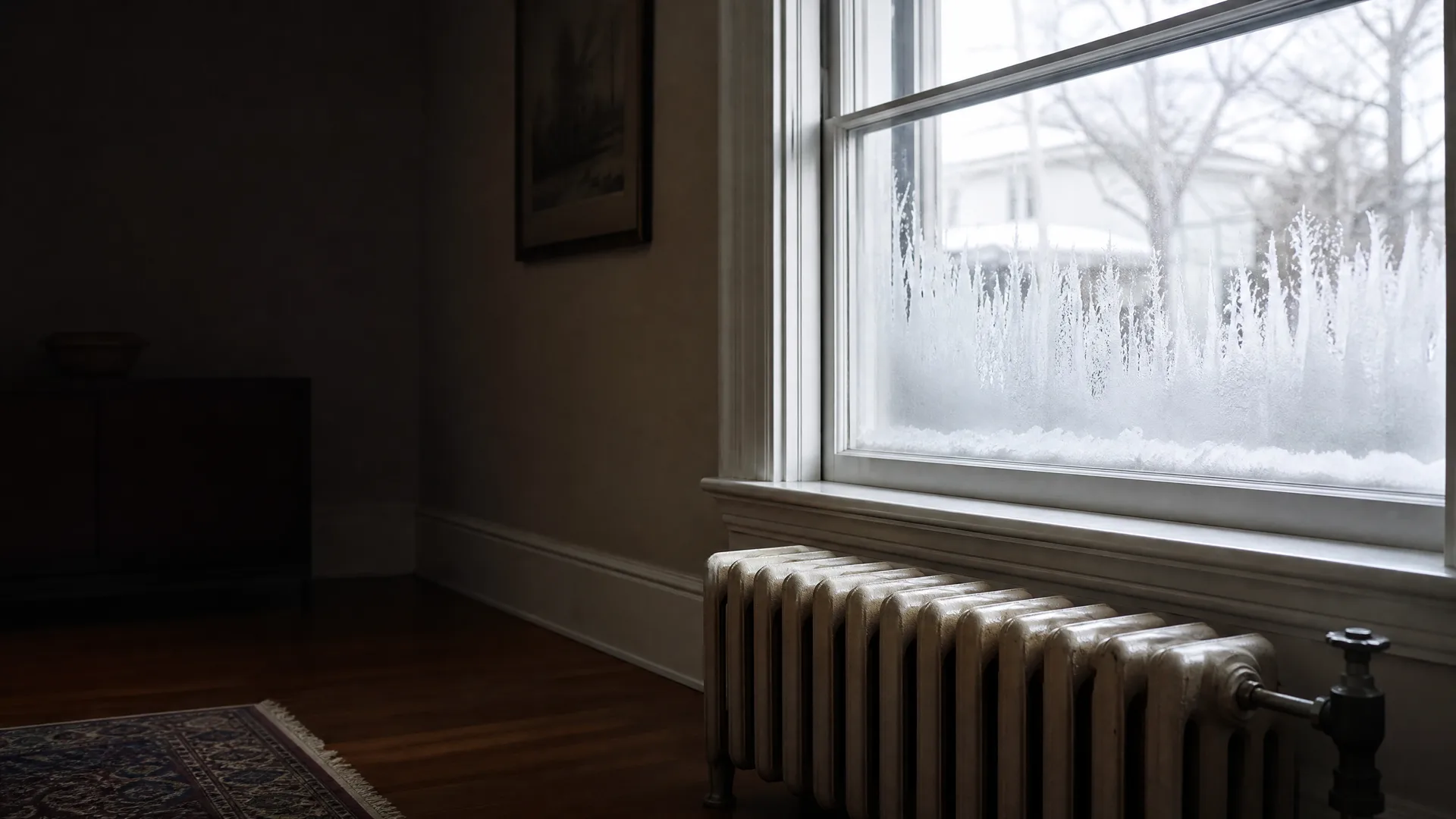
You're up before the rest of the house, and the living room is colder than it should be. Frost has crept across the inside of the window above the radiator, a thin white film you can scrape with a fingernail. You put your hand on the cast iron and it's dead cold, not even the memory of warm. Outside it's still dark, one of those January mornings Massachusetts gives you a run of every winter. You head for the basement stairs in your socks, half expecting what you'll find: a dark display, or a lit one doing nothing. The outage knocked something loose that coming back on didn't fix by itself.
Describe what your boiler is doing once, in one form.
Sending the form costs nothing.
What happens inside the boiler
The control board runs a power-up sequence and a brief lockout is normal if it senses a flame failure from before the outage.
Most gas boilers need the igniter or pilot to prove flame within a few seconds or the board shuts the gas valve and stops the cycle.
A low water cutoff sits in the sequence too, and it will hold the burner off if the boiler lost pressure or the feed valve didn't keep up.
The circulator pump has its own relay, so power can be live at the board while the pump itself never gets a signal to start.
Some boilers show a blinking or coded light on the panel, and that code tells you which step in the sequence failed, not just that something's wrong.
A reset button exists for a reason, but pressing it more than once or twice in a row can lock out the board entirely until it's cleared by hand.
When power comes back, the board doesn't just fire the burner. It runs through a sequence, checking the low water cutoff, confirming the circulator has a signal, waiting for the igniter or pilot to prove flame. Each step has to pass before the next one starts. If the boiler lost pressure during the outage, or the flame failed right before the power went out, the board can read that as a fault and hold itself in lockout rather than risk running the burner with no water or no flame. That's the display you're looking at. It's not broken, it's stopped itself on purpose.
Some boards show this plainly, a blinking light with a pattern that corresponds to whatever step failed. One blink might mean low water, three might mean ignition failure. The pattern is worth writing down before you reset anything, because it tells a technician where the sequence broke rather than leaving them to start from zero. The reset button clears the lockout and lets the board try the sequence again, but it's not meant to be pressed repeatedly. Hit it two or three times with no result and most boards will lock out harder, sometimes requiring a manual reset at the board itself rather than the button on the front.
The circulator is worth knowing about separately. It runs off its own relay, so the board can be powered and cycling through its checks while the pump that actually moves hot water through the system never gets told to start. A boiler can look like it's working and still leave every radiator cold.
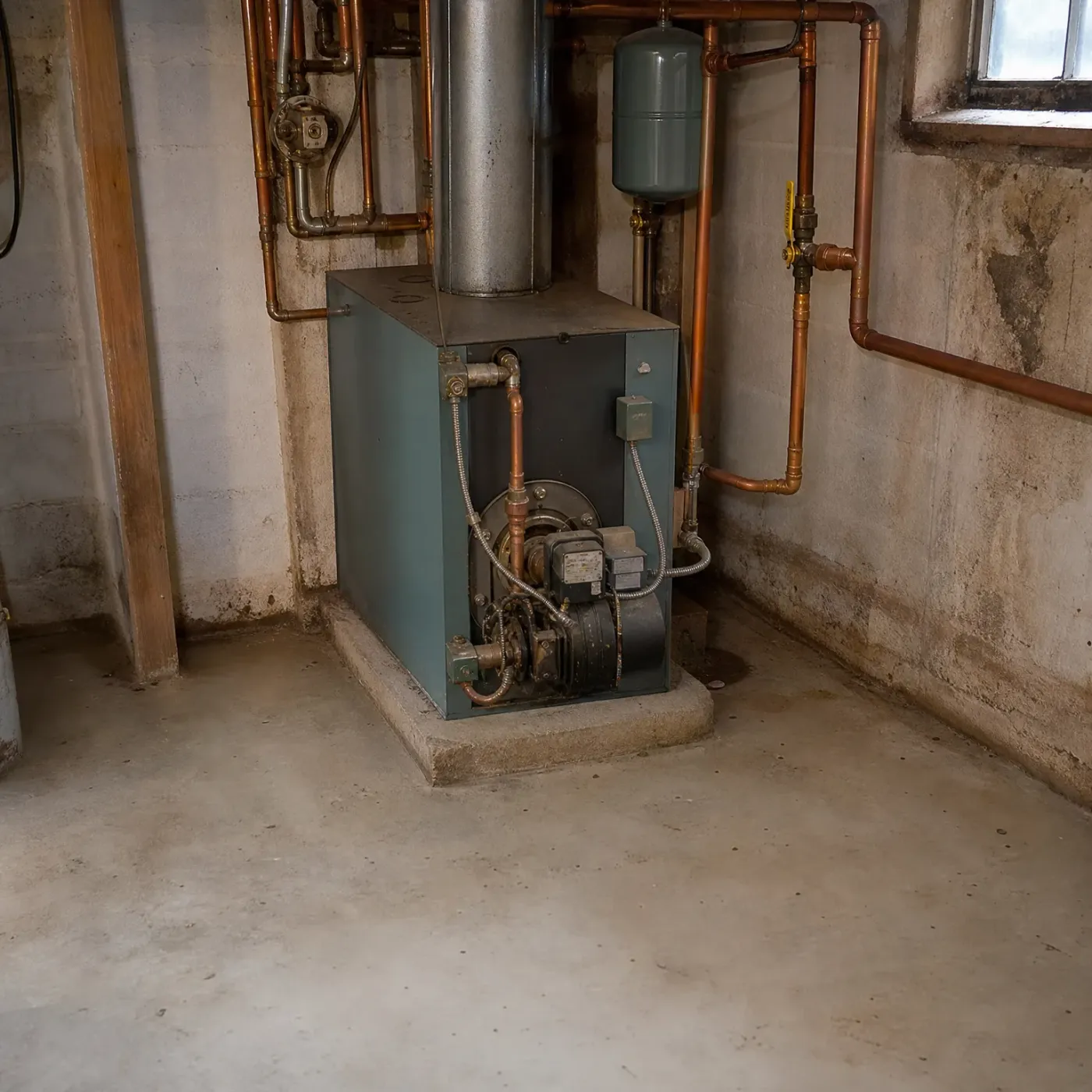
This boiler is firing the way it should: the gauge sits steady, the pipes running to the expansion tank are dry, and the burner responds as soon as the thermostat calls.
This oil-fired boiler won't start after the outage, and the flue pipe and pad around it are worth a look for soot or a smell before you try again.
A boiler restart isn't one switch flipping, it's a sequence, and any link in it can hold the whole thing up. The low water cutoff checks the sight glass before it lets the gas valve open at all. If the primary control already tried once and locked out, that red reset button only fires the sequence again on its first press, not the second. Oil boilers add a cad cell watching for flame through a small window, and if it doesn't see light fast enough it shuts the burner down rather than risk flooding the chamber with oil. Even past ignition, the circulator pump runs off its own relay, separate from the burner, so a boiler can be making hot water that never reaches a single radiator. Some aquastats hold the circulator off until the water itself climbs past a set point. And the transformer that steps household power down to the 24 volts the thermostat runs on on can fail on its own during a surge, with nothing else on the boiler wrong at all.
What's happening inside the boiler
The low water cutoff sits in the circuit between the thermostat and the gas valve, so it can block the whole startup if the sight glass reads low.
A reset button on the primary control, usually red, only works once; pressing it a second time in a row doesn't restart the sequence, it just clicks.
Oil-fired boilers add a cad cell sensor that watches the burner flame through a small window, and it locks out the burner if it doesn't see light within seconds of ignition.
The circulator pump has its own relay separate from the burner, so a boiler can fire and heat water that never reaches the radiators.
Some aquastats need the boiler water to climb past a set temperature before they'll let the circulator run at all, which delays heat even after ignition succeeds.
A transformer inside the control board steps household voltage down to the 24 volts the thermostat wiring uses, and a surge during restoration can take that transformer out on its own.
Before you get your boiler repairAfter you get your boiler repair
1
Power returns and the control board starts its power-up sequence.
2
The board checks the low water cutoff before it does anything else.
3
The circulator and igniter or pilot wait for the thermostat to call.
4
The igniter or pilot must prove flame within seconds of the gas valve opening.
Winter nights average 21°F statewide
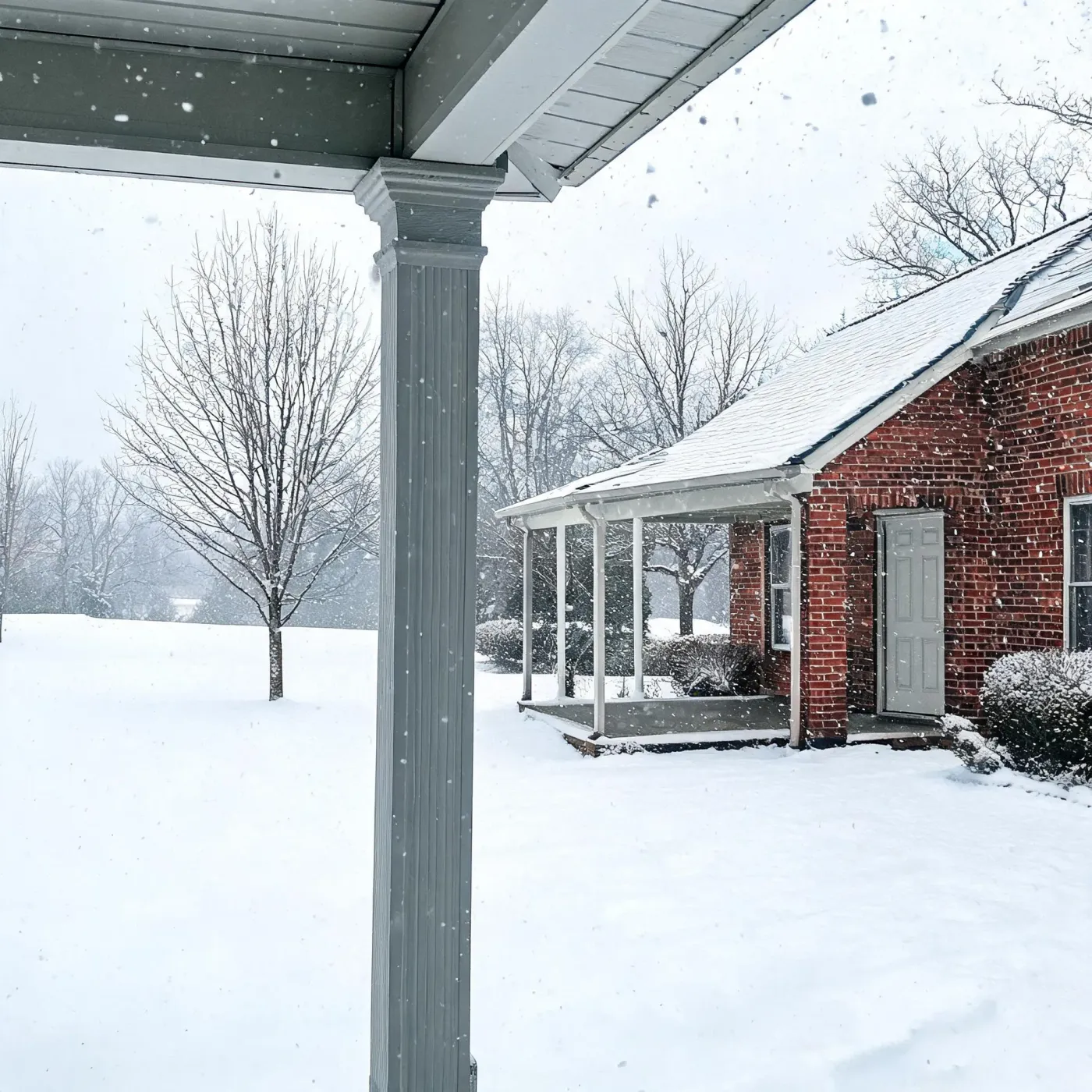
Winter nights here average 21°F, and that's the stretch when a boiler that won't restart matters most. A cold house can drop fast at that temperature, especially overnight while everyone's asleep and nobody notices the radiators have gone quiet.
NOAA nClimDiv 1991-2020 county normals weighted by homes
A boiler that won't restart doesn't just sit there doing nothing. It keeps losing heat to a house that's already working against it. Statewide, winter nights average 21°F, and at that temperature a cold house doesn't level off, it keeps dropping. Cast iron radiators cool fast once the burner stops firing, and the water in the pipes follows. Pipes along outside walls or in an unheated basement are the first to feel it. The longer the boiler sits dark, the more ground there is to make up once it does fire, and the more exposed those pipes are in the meantime.
NOAA nClimDiv 1991-2020 county normals weighted by homes
A boiler that won't restart after an outage usually comes down to a handful of things: the power switch on the wall, the pressure gauge, the low water cutoff, or a flame that failed to prove in time and tripped the lockout. Some of that you can check yourself. When it turns out to be the control board, the gas valve, or something in the wiring, that's a repair, not a reset. You don't have to spend the morning calling boiler companies, waiting on hold, explaining the same cold house and dark display to three different people, then sitting with quotes trying to guess who's worth trusting. Send the form and that part is done. You still have a cold house and a boiler that needs a licensed hand on it, and nothing changes that. But the search for who does the work, the part that eats your morning while the radiators sit cold, is off your plate. What's left is getting someone there to look at it.
Hand off the search today
Answer a few questions instead of calling shop after shop.