Profile view of a bearded man wearing a dark green baseball cap and a dark gray T-shirt against a plain light background.

How to keep boiler pipes from freezing in Massachusetts

Tune-up, service, or cleaningBoilerMassachusetts
Step 1 of 2

What ZIP code is the job in?

How do I keep my boiler pipes from freezing in the winter?

A hard freeze in a Massachusetts winter can hit a boiler system in the pipes that run through an uninsulated basement, a crawl space, or along an outside wall. You keep the house warm but worry about the one loop of pipe that never seems to get the heat. If that section freezes, you could be looking at a cracked pipe and water damage on top of a heating system that stops working right when you need it most.

Keep heat moving to every part of the system and seal off the cold reaching those pipes

Boiler pipes freeze when a section of the loop sits in a space that doesn't get warm air, like a crawl space, an uninsulated basement wall, or a run along the rim joist. Water sitting still in a cold pipe drops in temperature until it freezes, and unlike a dripping faucet trick for plumbing lines, you can't just run water through a closed heating loop to keep it moving. What protects those pipes is insulation on the pipe itself, sealing the drafts that let outside cold into the space around it, and keeping the boiler's circulator running so heated water keeps passing through. A thermostat set too low overnight, or a boiler that's losing pressure or short-cycling, gives a vulnerable pipe more time at a dangerous temperature. In a Massachusetts winter, that risk runs from December into March, longer than most homeowners expect it to.

A gray-haired, bearded man in a dark coat dusted with snow stands smiling in a dimly lit room with a lamp, mirror, framed art, and a sofa in the background.
An older man with white hair and a beard, wearing a dark snow-dusted coat and scarf, stands in a warmly lit interior hallway with a framed landscape picture, a table lamp and a potted plant behind him, and a snowy view through a window at left.
An older man in a dark snow-flecked overcoat and scarf stands smiling in a warmly lit home entryway, with a glass-paned door showing darkness outside and a lamp-lit room visible through a doorway behind him.
An older man with gray hair and a beard, wearing a dark snow-dusted jacket and scarf, stands smiling in a warmly lit interior hallway with a lit table lamp, a vase of dried branches, and a framed picture in the background.

Why does that one pipe always feel the coldest?

Walk your basement on a January morning and you'll feel it before you see it: one stretch of pipe colder than the rest, maybe near a rim joist or where the foundation wall meets the outside. If the boiler has been cycling but a radiator upstairs stays lukewarm, or you hear banging and gurgling in the line that runs along that outside wall, the water in that section is struggling to circulate. Left alone through a hard stretch of cold, that water can freeze in place. Pipes crack from the inside as ice expands, and you may not find the split until a thaw sends water through your ceiling or wall. A system that was circulating evenly before the cold snap is the one worth a second look now.

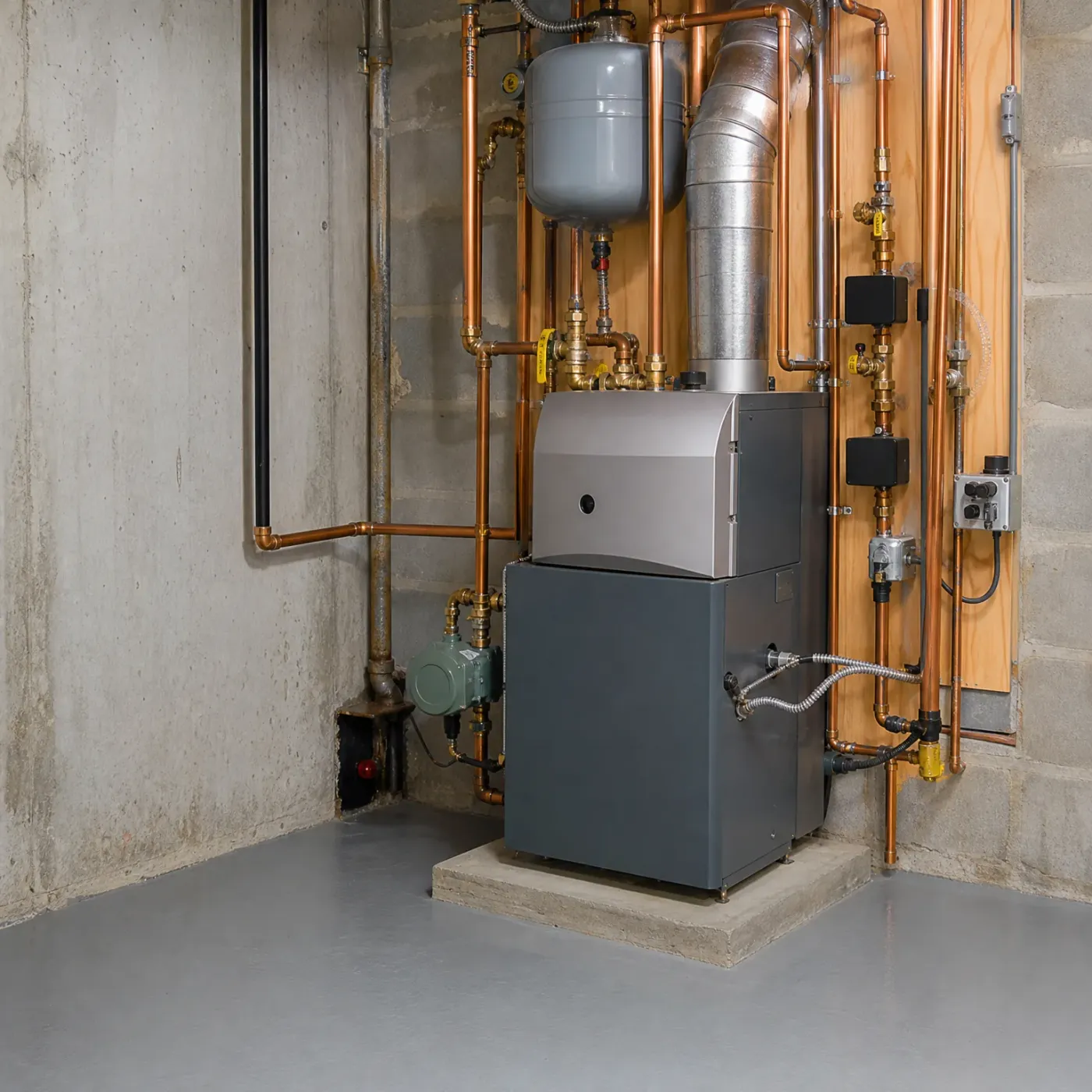
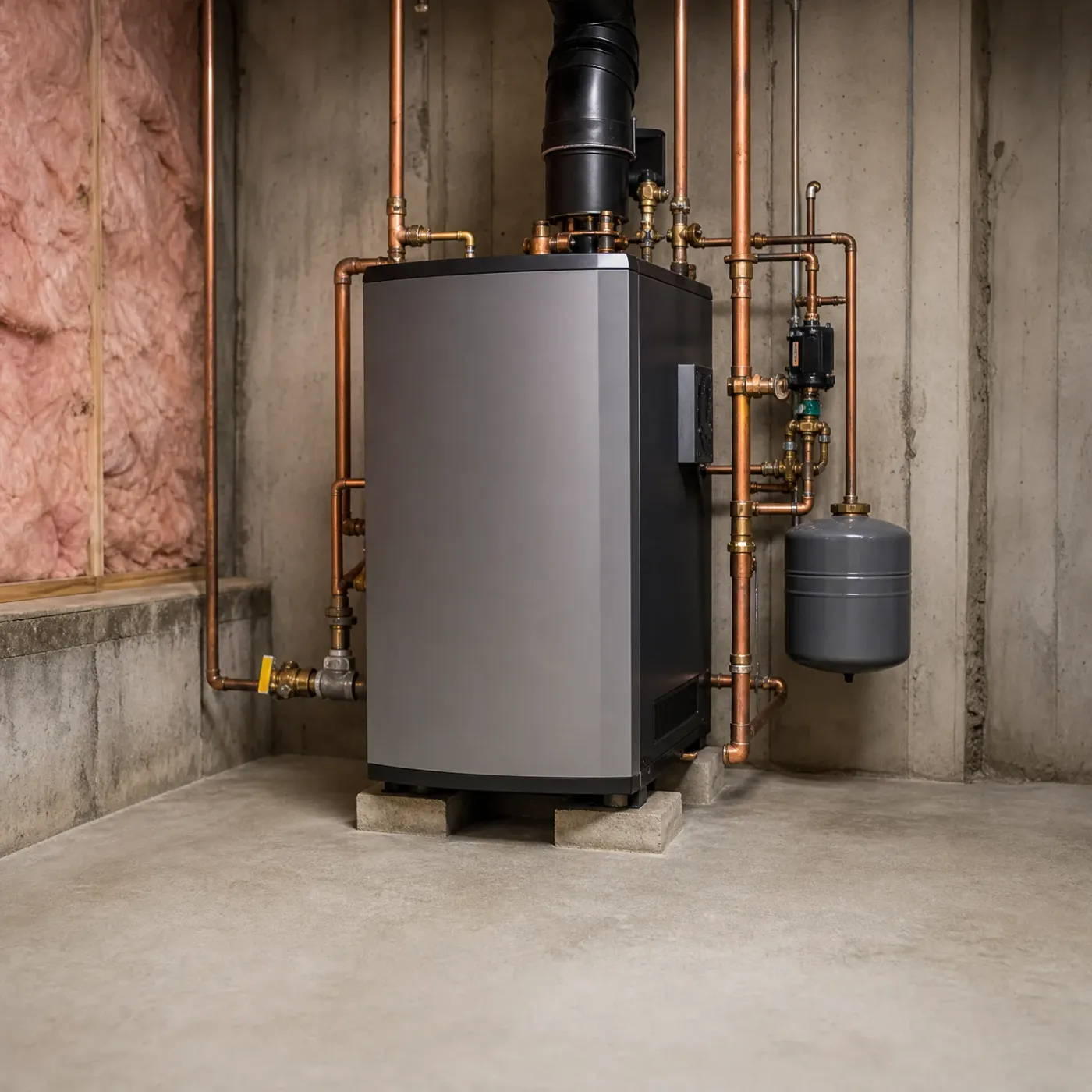
A gray and black boiler unit sits on concrete blocks in a basement corner, connected to copper piping, valves, a black flue duct, and a gray expansion tank, with bare concrete walls and exposed pink insulation at left.

Piping that stays above freezing

The pipes here run close to the boiler, through a heated part of the basement, with the insulation on the wall doing its job. Water keeps moving through the loop and nothing sits still long enough to drop near 32 degrees.
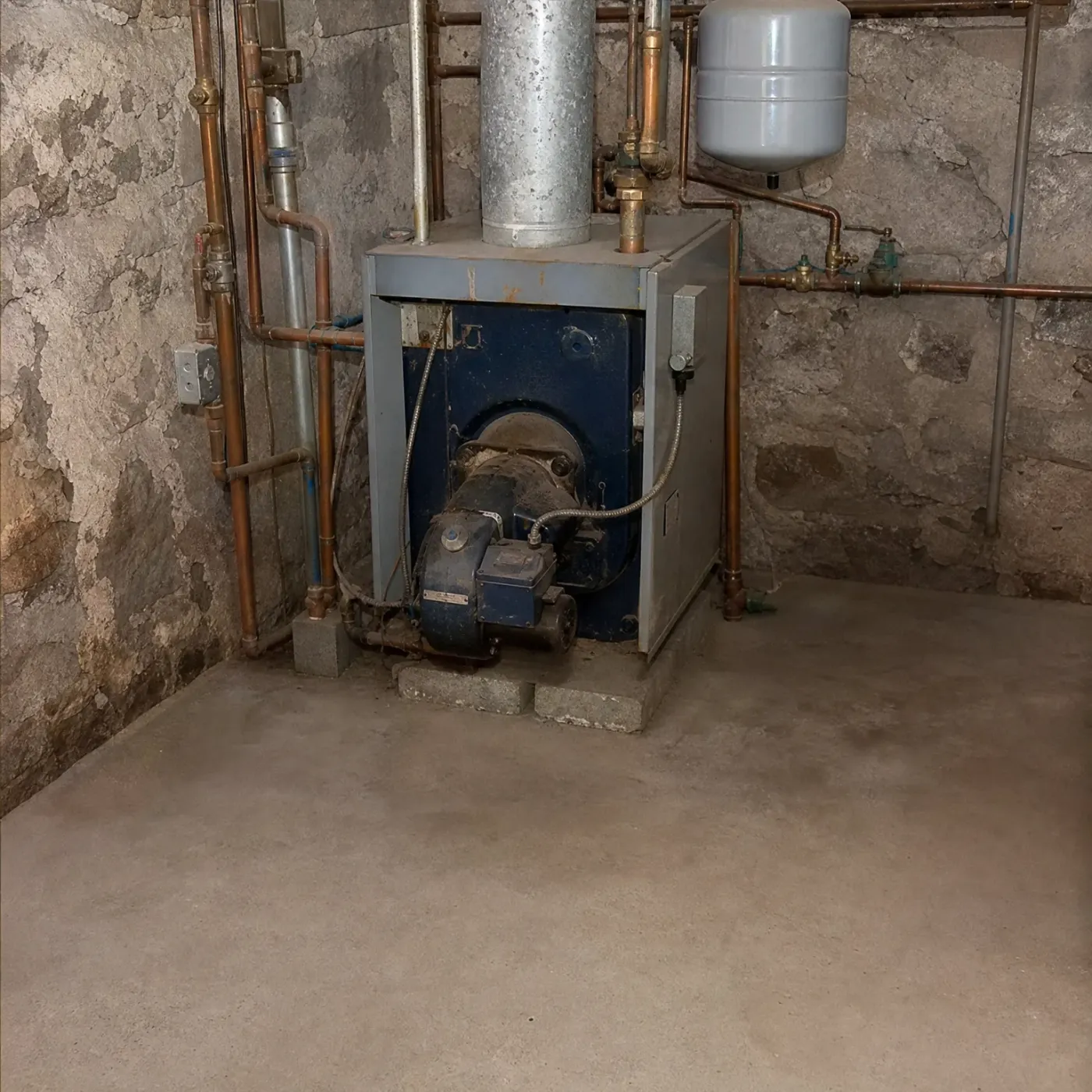
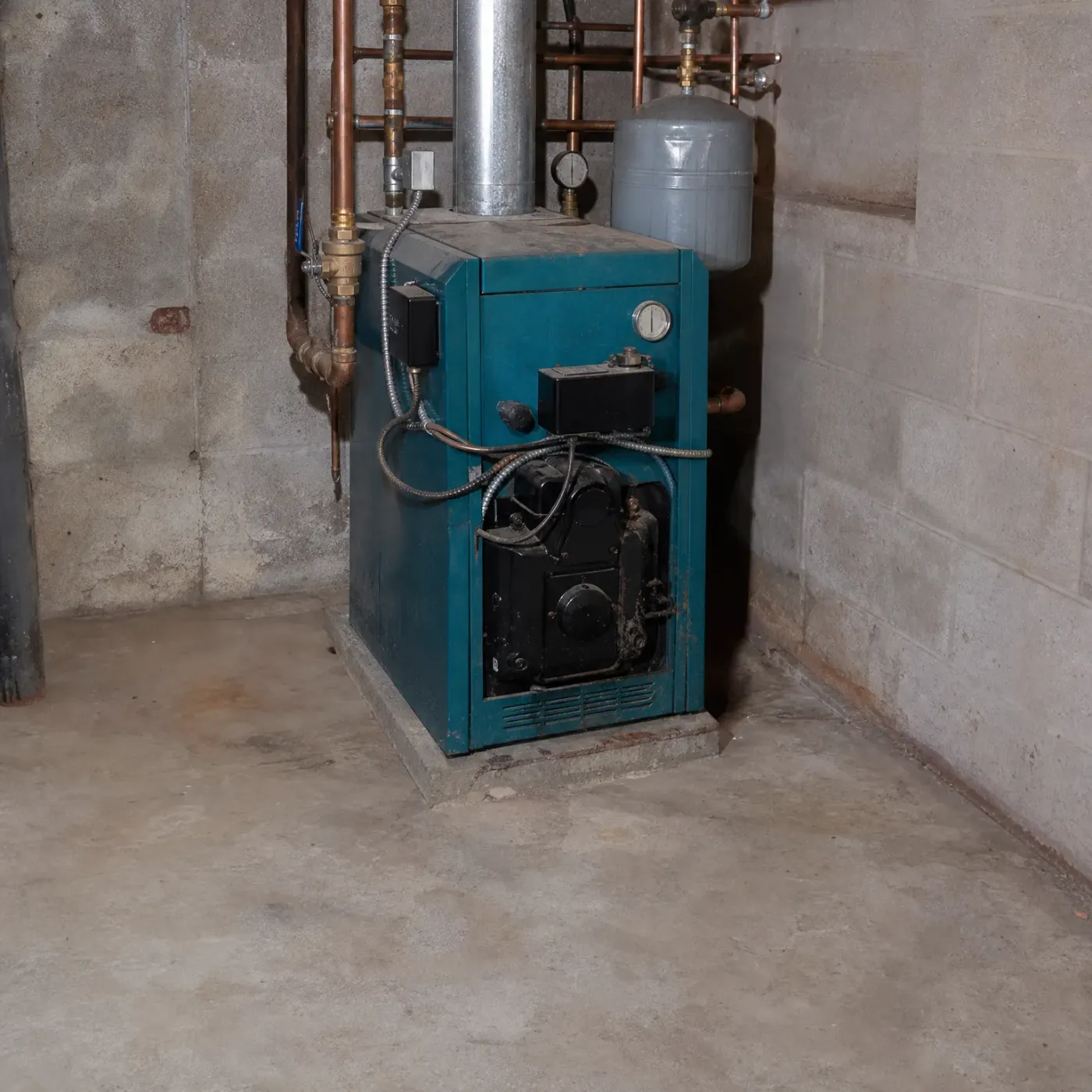
An oil-fired boiler with a blue and gray cabinet and burner sits on concrete blocks in a basement corner with stone walls, connected to copper pipes, a metal flue, and a wall-mounted expansion tank.

Piping exposed to the cold

Set on blocks in a stone-walled basement, this boiler feeds pipes that likely run along the foundation before reaching the rest of the house. Stone walls hold less heat than poured concrete, and a run like that is the one worth checking on the coldest nights.

Leave It Alone or Check It Now

Letting it ride

  • A pipe along an outside wall or in a crawl space can sit still for hours if nobody runs water or the heat drops at night.
  • Once water stops moving in that loop, it tracks the cold air around it instead of the warmth coming off the boiler.
  • A section that freezes can split without warning, and you won't know until the thaw brings water through the ceiling or wall below it.
  • Massachusetts winters bring stretches of single-digit nights, and a basement with no insulation on the rim joist loses heat fast during those.
  • Skipping a look at the exposed runs means the first sign of trouble is often a wet floor, not a cold pipe.

Checking it before the cold sets in

  • A contractor can find the runs most exposed to outside air, the ones near a rim joist, a crawl space, or an uninsulated wall.
  • Insulating sleeves or heat tape on those specific sections keep the water moving above freezing even when the air around the pipe isn't.
  • Circulator pumps and zone valves that aren't cycling right can leave a loop sitting still, and that's worth catching before January.
  • A boiler that's heating the water fine but not pushing it through every zone evenly leaves some pipes colder than others for no clear reason.
  • Getting ahead of it means skipping the work of searching out a contractor, calling around, and explaining the same cold pipe problem more than once.
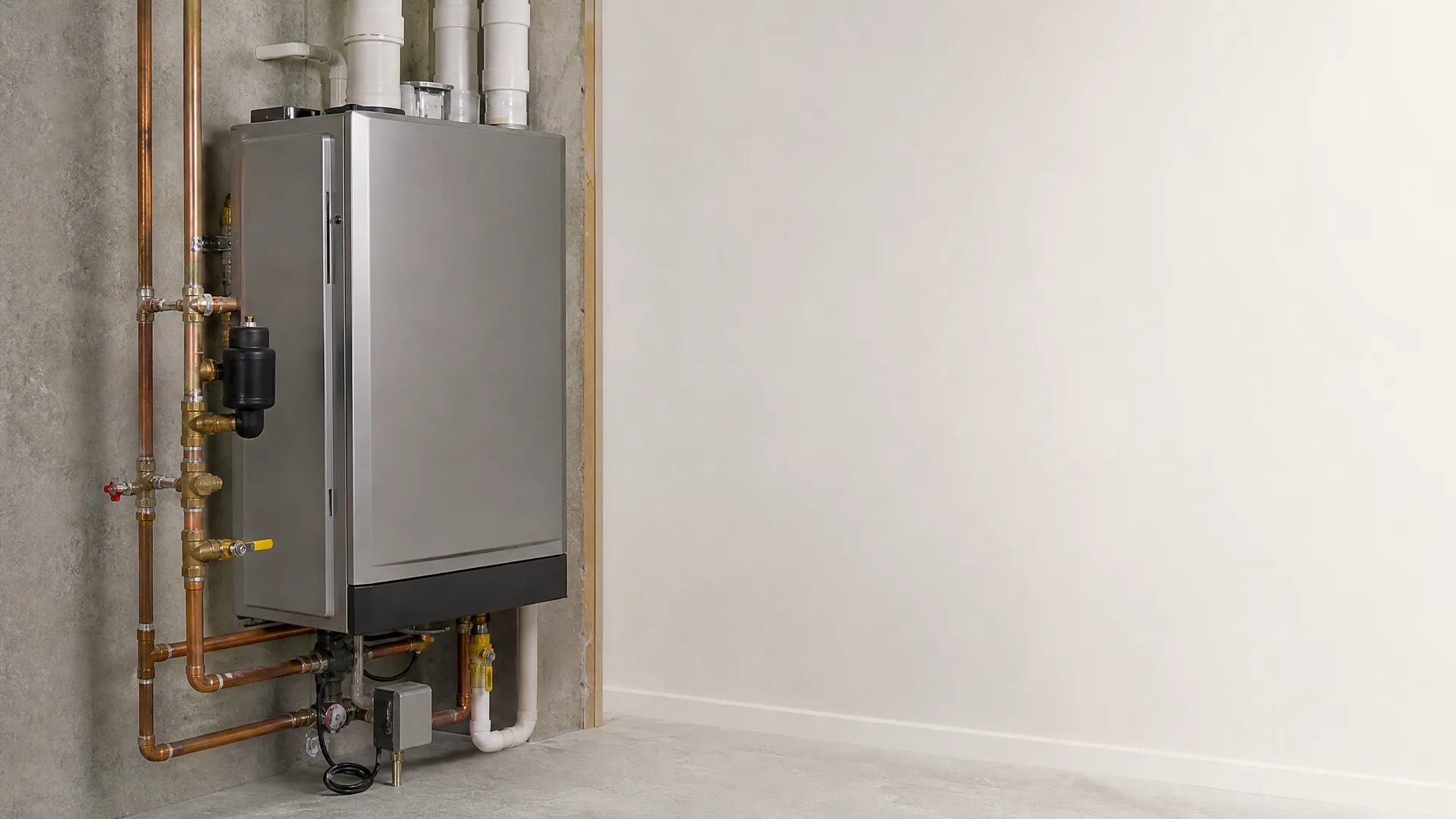
A wall-mounted grey boiler with copper pipework and white flue pipes installed against a concrete wall in an empty room with a plain pale wall to the right.

Water moving beats water sitting still

A boiler loop only freezes where the water stops circulating. A circulator pump that's failing or a zone valve stuck shut can leave a section of pipe without flow for hours while the rest of the system runs fine. That's why two pipes a foot apart can test differently on a cold morning, one warm to the touch and the other close to the temperature of the basement air around it.

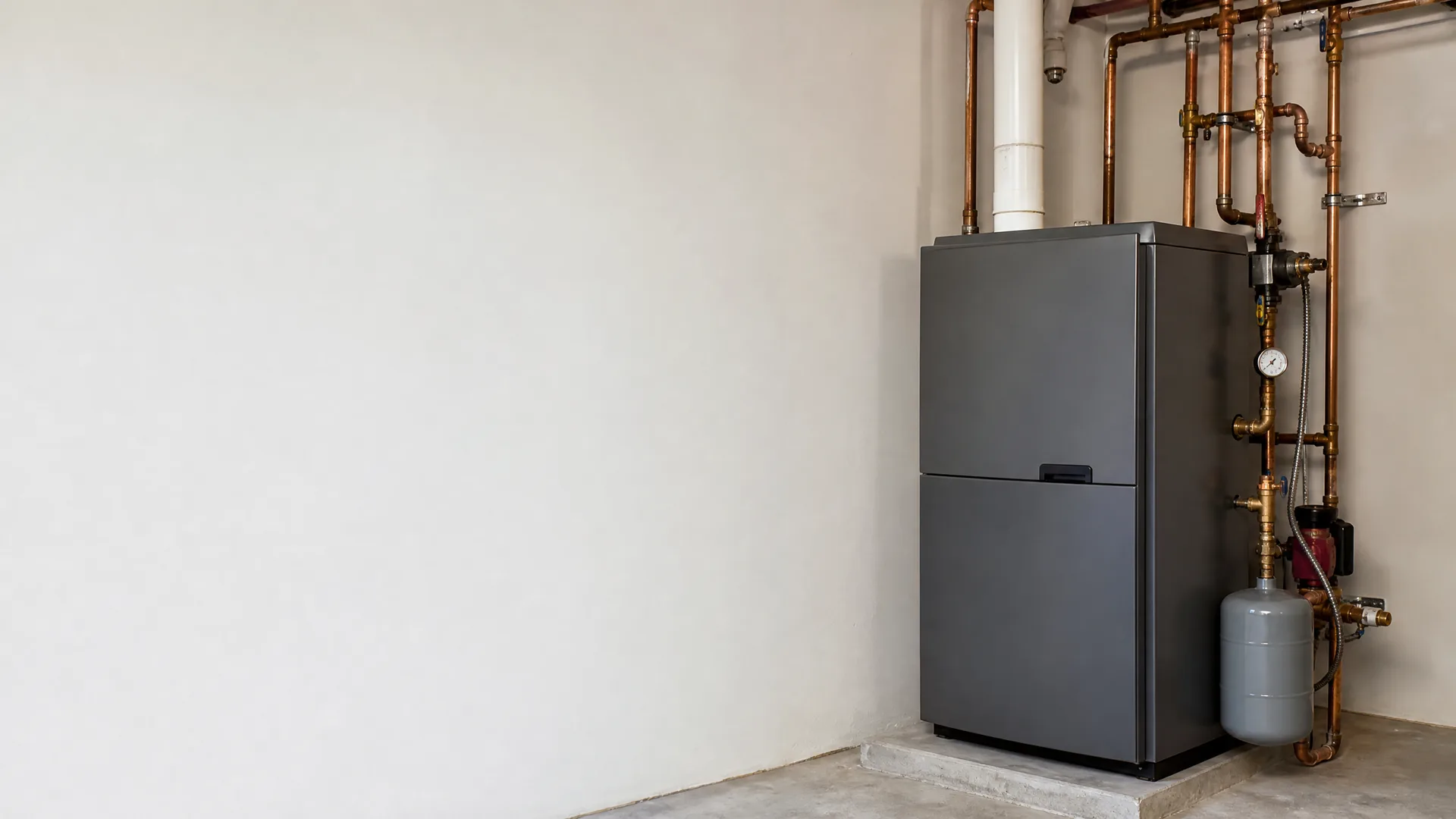
A dark grey boiler unit stands on a concrete pad against a plain light wall, connected to copper pipes, a pressure gauge, a pump and a grey expansion tank.

Where the heat actually stops

Pipe insulation slows heat loss, but it can't add heat that isn't there. Along a rim joist or where a sill plate meets the foundation, outside air gets in through gaps that were never sealed, and insulated pipe sitting in that draft still cools faster than pipe in a closed, heated room. A contractor checking for freeze risk is looking at those gaps and the water flow together, not the pipe alone.

A man in a dark blue shirt stands in an open front doorway of a stucco and wood-clad house, facing a blond woman seen from behind in the foreground on a stone walkway.

What a tech checks before the cold sets in

A boiler system holds pressure as a closed loop, usually between 12 and 15 psi on the gauge near the expansion tank. If that number has drifted low, air can work into the piping and collect at the highest point, and a loop with air in it won't push water the way it should. That's one more way a stretch of pipe can end up still instead of moving on a cold night.

The expansion tank matters too. It gives the heated water somewhere to go as it expands, and a tank that's waterlogged can't do that job, which throws the pressure off everywhere downstream. Checking the tank, the pressure, and the automatic feed valve is routine work for someone who knows this system, but it's not something most homeowners have opened up before. If you'd rather have someone who works on boilers look at yours before winter, you can get matched with a contractor who takes it from there.

A living room corner with a beige sofa and cushion, a round wooden coffee table holding a pale ceramic vase of eucalyptus stems and a wooden bowl, and a curtained window with a potted plant above a latticed radiator cover in the background.
A woman wrapped in a cream textured blanket sits in an armchair beside a lit lamp and a dark window, with an open book in the foreground.
A bearded man in a blue and brown plaid flannel shirt stands indoors looking out a window at snow-covered trees, with a ceramic mug on the windowsill.

A local pro for your boiler maintenance

You could spend an evening going through old receipts for who worked on the boiler last, calling a few companies, waiting on hold, explaining where the cold pipe runs and what the pressure gauge reads, then doing it again with the next company because the first one can't get out before the weekend. A Massachusetts winter doesn't wait for that. A loop that's lost circulation can go from cold to frozen in a night, and by the time a pipe splits you're not scheduling a checkup, you're dealing with water damage on top of everything else. Handing this off means you explain your basement, your pressure gauge, your one cold stretch of pipe, once, to the contractor who actually shows up, not to five answering services first. That's the piece worth giving up, not the work itself, just the part where you're the one tracking it down while the temperature keeps dropping outside.

Why one loop freezes and others don't

  • A boiler's circulator pump pushes hot water through a closed loop, and that loop includes piping for every zone in the house, not just the ones calling for heat.
  • A zone valve stuck shut can cut flow to one loop while the rest of the system keeps circulating normally and the gauge still reads fine.
  • Air trapped near a high point in the piping can block water from moving past it, and a coil feeding an unused room is a common spot for that to happen.
  • Aquastat settings control when the boiler fires, but they don't control whether water is actually moving through a specific run of pipe.
  • A pipe that freezes usually isn't the longest run in the house, it's the one with the least flow through it.
  • Backflow at a check valve can let water settle in a branch line even while the main loop stays warm.

A boiler doesn't heat the house directly. It heats water, and a circulator pump moves that water through a closed loop of piping that branches off to every zone, whether or not that zone is calling for heat right now. As long as water keeps moving through a given run of pipe, it stays close to the temperature of the water leaving the boiler, even in an unheated basement corner. The trouble starts when something blocks flow to one branch while the rest of the system runs normally. A zone valve that's stuck shut will cut off an entire loop, and the gauge on the boiler will still read correct pressure because the rest of the system is fine. Air pockets cause the same problem on a smaller scale. Air works its way to the highest point in a run of pipe and sits there, and water can't push past it, so a coil feeding a guest room or a finished attic can go without flow for days without anyone noticing. A check valve that's letting water back up can leave a branch line stagnant too, even while the main loop stays active. None of this shows up on the aquastat, which only controls when the boiler fires, not whether water is actually reaching every pipe it's supposed to. That's why the pipe that freezes is rarely the longest one in the house. It's the one that stopped moving.

Winter nights average 21°F statewide

Twenty-one degrees is the average low, not the coldest it gets. Some nights drop well past that, and that's when a pipe that's been running a little cold all week finally freezes solid. If yours runs through an unheated part of the basement, those are the nights it can't ride out on its own.

NOAA nClimDiv 1991-2020 county normals weighted by homes

A gray residential boiler on a concrete pad in a basement corner, connected to copper piping, an expansion tank, circulator pumps and insulated flue ducting against concrete and plywood walls.
A system that's been serviced holds its pressure and keeps every zone circulating, including the ones not calling for heat.
A teal boiler with a pressure gauge and black burner unit sits on a concrete pad in a basement corner, with copper pipes, a flue vent, and a gray expansion tank above against concrete block walls.
A boiler running on old fittings and a setup nobody's checked in years is the one where a stuck zone valve goes unnoticed until a pipe freezes.
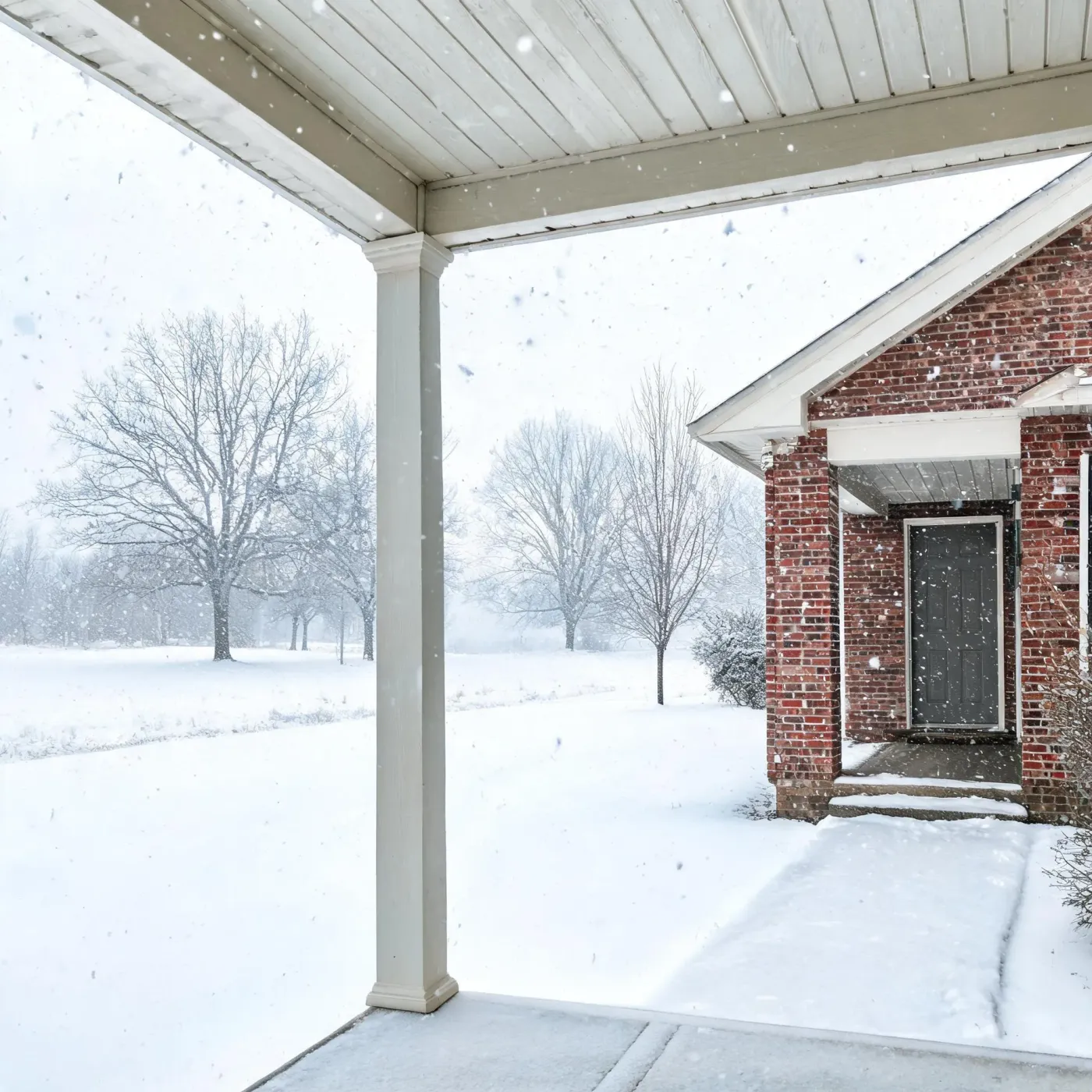
View from under a covered porch with a white column toward a red brick house with a dark door, with falling snow, snow-covered ground and bare trees in the background.

Statewide, winter nights average 21°F, according to NOAA climate data. That's the average, so plenty of nights in Massachusetts drop colder than that, and those are the nights that matter for your boiler. A pipe running through an unheated basement or along an outside wall loses heat to that cold air faster than the boiler loop can push warmth back into it, especially if flow through that section has already slowed. You might not notice anything from upstairs. The rooms stay warm, the thermostat reads fine, and the only sign is a pipe in the basement that feels colder than the rest when you walk past it.

NOAA nClimDiv 1991-2020 county normals weighted by homes

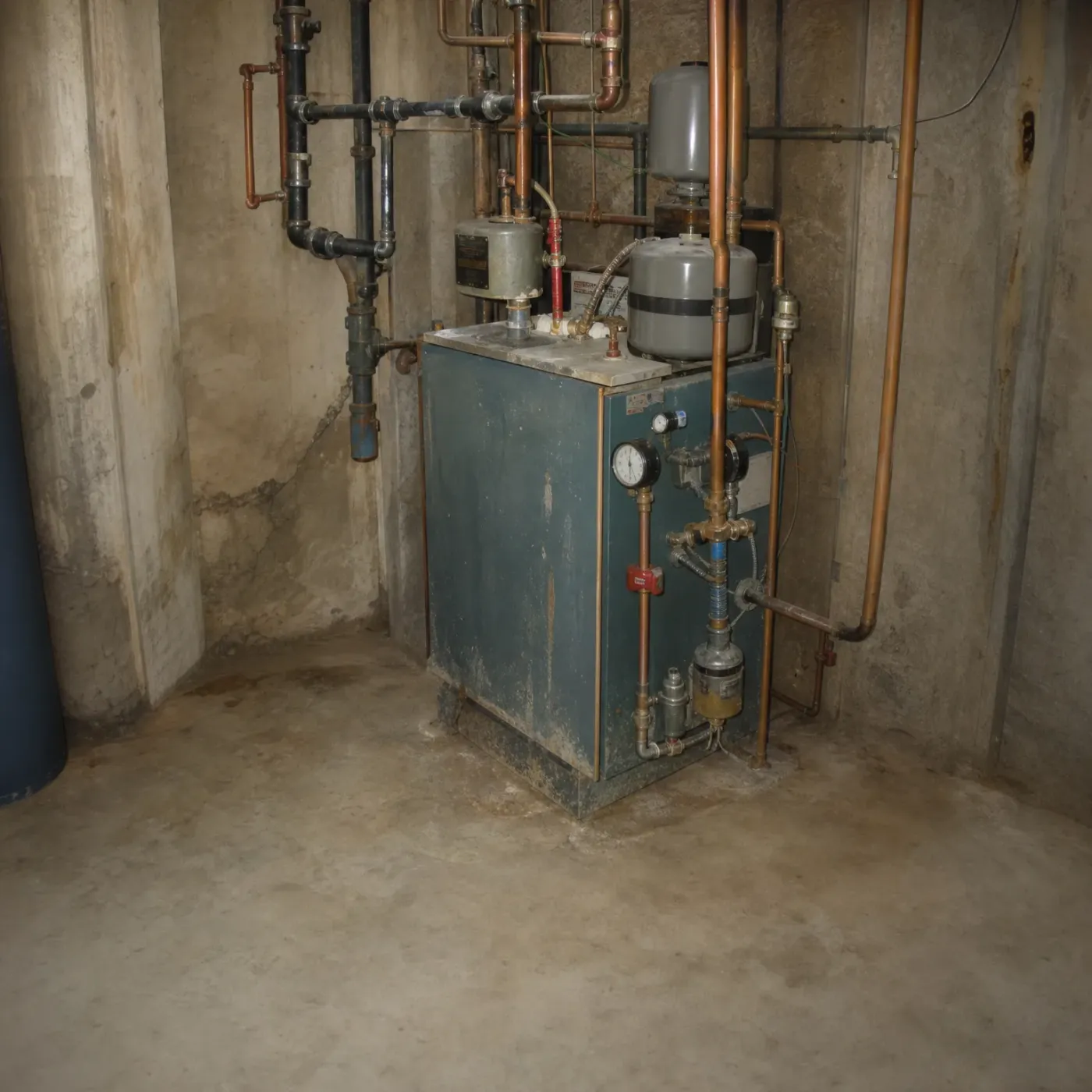
A green metal boiler with pressure gauge stands in a concrete basement corner, surrounded by copper and black iron pipes and two tank-shaped vessels.
Before you get your boiler maintenance
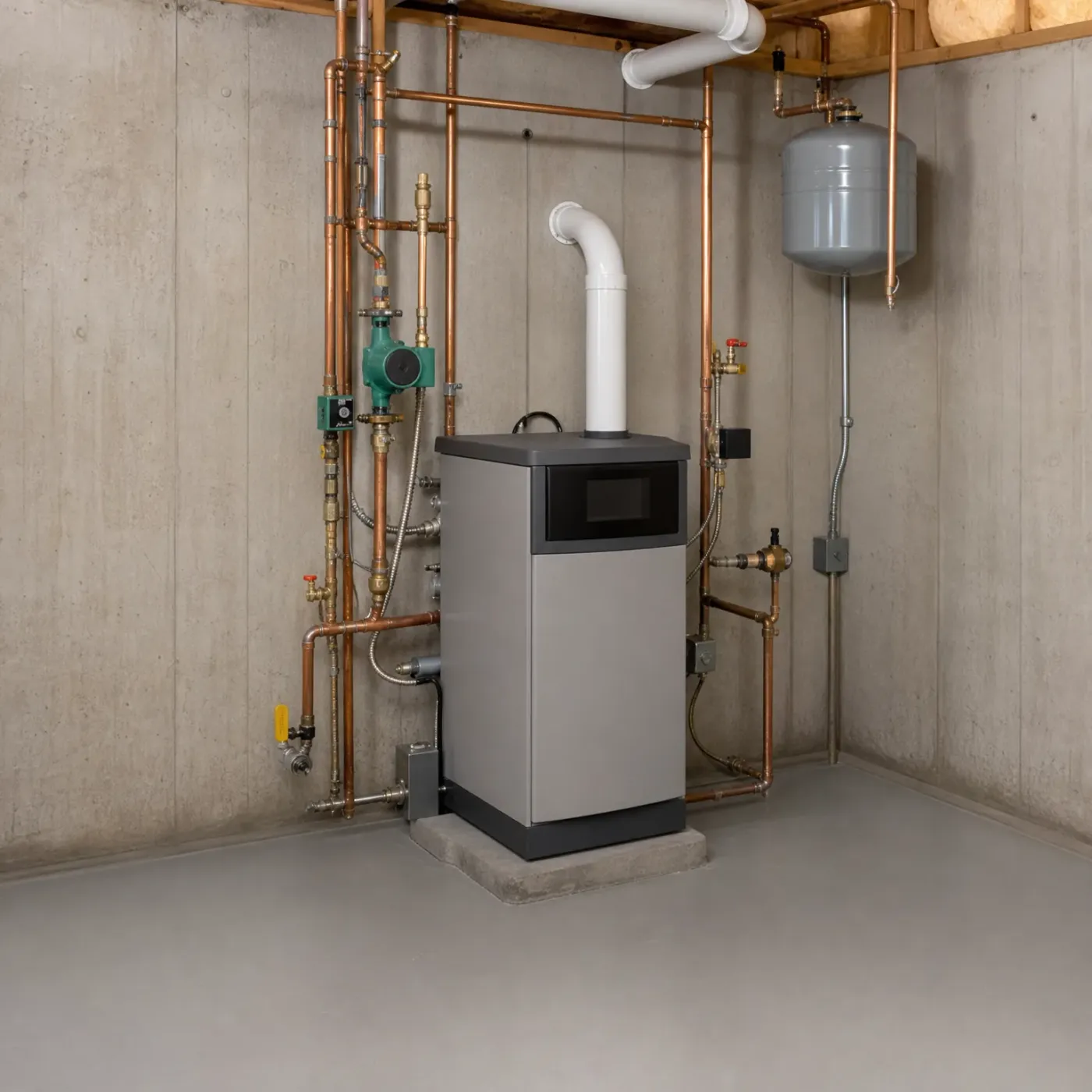
A gray floor-standing boiler on a concrete pad in a basement corner, with copper piping, a circulator pump, a white PVC flue, and a gray expansion tank mounted on the wall.
After you get your boiler maintenance

The cold doesn't freeze every pipe in your basement, just the one loop where the water stopped moving. Keeping that from happening on a January night comes down to pressure that holds steady, zone valves that open when they should, and a circulator that keeps running on the zones nobody notices. That's what maintenance checks before the cold finds the weak spot for you. Short of doing that yourself, the slow part is usually finding someone to look at it: digging up who serviced the boiler last, calling around to see who's taking new customers, explaining where the cold pipe runs and what the gauge reads, then repeating all of it with the next company because the first one never called back. Getting matched with a contractor who knows boiler systems and has them reach out skips that part. The pipe along your outside wall or through the crawl space stays exactly as cold as it's always been. What changes is you're not the one tracking down who's going to check it.

A wooden front door with six small glass panes and a narrow sidelight, set in a shingled house entry with white trim, reached by stone steps flanked by a planted urn with purple flowers and leafy branches in the foreground.
Exterior corner of a house with beige horizontal lap siding and a black-framed window, with white hydrangeas, ornamental grasses and low plantings along a flagstone patio.
Corner of a house with tan lap siding and a window, a brick step edge, flowering white hydrangeas and green shrubs beside a flagstone walkway leading to a white picket fence and a tree in backlit sunlight.
House exterior with cream horizontal lap siding, a dark-framed window, a black wall lantern beside a wood door, potted shrubs on stone steps, and white and pink hydrangeas in the foreground garden.
Corner of a cream lap-sided house with a white-framed window and dark shingled roof, beside a white-flowering hydrangea shrub, a clipped hedge, mulched bed and lawn.

Get the right pro for your boiler

Skip calling around to set up a boiler tune-up.

Skip the search

Sending the form costs nothing.