A row of similar gray and white wood-sided houses with gabled roofs behind a white picket fence, with a mowed lawn in the foreground and dense green trees behind.

Furnace Repair in Worcester, MA

Tell us about the job

Takes about a minute. No obligation.

RepairFurnace or heatingWorcester County, MA
Step 1 of 2

What ZIP code is the job in?

The igniter wears out first

Most no-heat calls trace back to the igniter. It's a thin element that glows hot enough to light the gas, and that cycling on and off eventually cracks it. Once it's cracked, it either won't glow at all or won't hold up long enough to catch the flame. A furnace that tries to start, clicks, and shuts back down is usually telling you this part has failed.

A dirty flame sensor mimics a bigger problem

The flame sensor checks that gas is actually burning before it lets the gas valve stay open. Soot builds up on it over time and the sensor stops reading the flame, so the furnace shuts itself off a few seconds after starting even though everything else is working fine. Cleaning that rod often solves what looks like a serious breakdown.

8 months
October through May, your furnace is on duty
18°F
the average winter night it heats against
71 winter storms
in ten years, the nights a failure hurts most
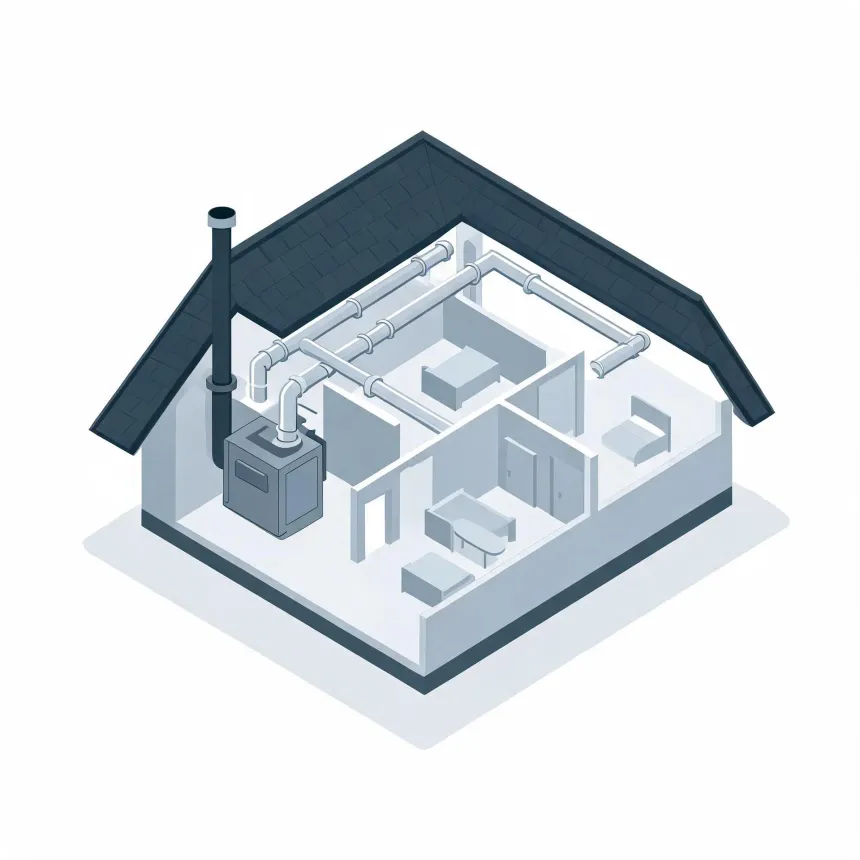
Isometric illustration of a cutaway house showing a dark furnace unit with a flue pipe and branching ductwork running through rooms with simple furniture under a dark gabled roof.
Your furnace works hardest from November through March.

NOAA nClimDiv, 1991–2020 normals

Furnaces in Worcester County start running in October.

A furnace that sat idle since spring often shows its weak points in the first cold weeks.

Worcester County loses power like anywhere else. This is still an igniter problem.

592 severe weather events from 2015 to 2024
10% of homes statewide lost power a day or more in 2024
427 damaging wind events from 2015 to 2024

Half the homes in Worcester County were built in 1967 or earlier. If your furnace came with the house, and the house falls on that older side, it may be on its second or third furnace by now, or still running on one that's well past the age most contractors expect from this equipment. An older furnace isn't automatically a bad one. But before you commit to a repair, it's worth asking a contractor how much life the unit likely has left, not just what's wrong with it today. That answer should come before the fix, not after.

A furnace that's struggling costs you every month it runs

Oil ran $23.29 per million Btu in Massachusetts in 2024. A furnace that's short-cycling or struggling to light is burning fuel without heating the house the way it should. The longer that goes on, the more it shows up on the bill. Worth having someone look at it now, while the fix is still small.

Find a contractor
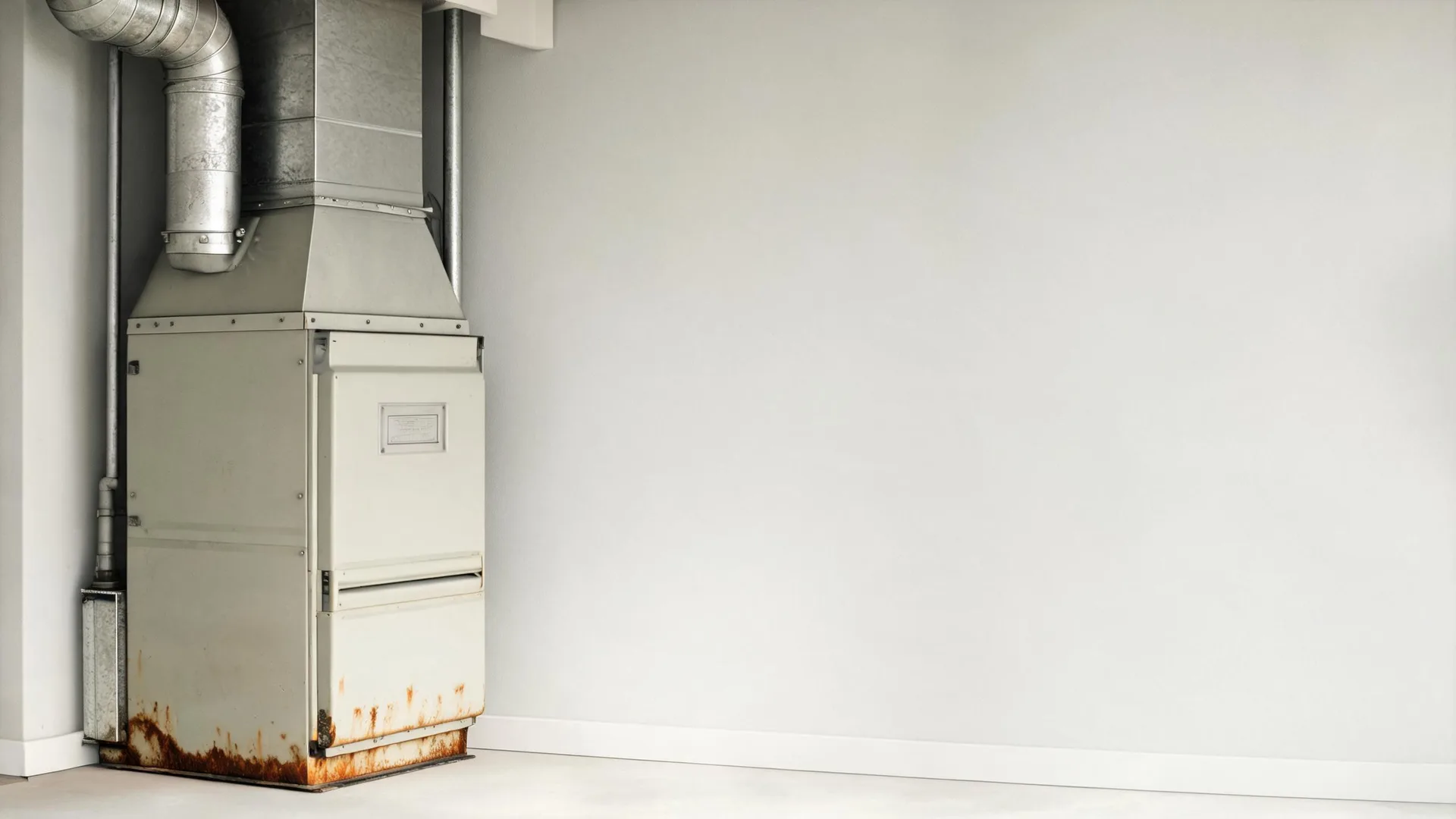
A gray residential gas furnace installed in an unfinished basement, connected to sheet-metal ductwork and PVC pipes.

What a diagnostic visit actually covers

A tech starts by asking what the furnace was doing right before it quit. That narrows things down before a panel ever comes off. From there it's a set order. Check for power and thermostat signal. Check that gas is reaching the valve. Check for a flame. Check that the flame sensor sees it. Each step rules something out. Pulling the igniter or the flame sensor for a look is routine, not a sign of a bigger teardown. Most of the time the cause shows itself in the first few checks. The rest of the visit is confirming it holds under a full cycle, not just a single start.

Short cycling wears on everything else

A furnace that fires, runs a minute, and quits is doing that over and over all day. Each restart puts a load on the igniter and the blower motor that a full, normal cycle doesn't. Left alone, a short-cycling furnace tends to take other parts down with it.

A cold house isn't always a dead furnace

Sometimes the furnace is running fine and the air coming out just isn't warm enough, or isn't reaching every room. That points to the blower, the ductwork, or a clogged filter choking airflow, not the burner itself. Tell the tech exactly what you're feeling. No heat at all is a different problem than heat that isn't keeping up.

A furnace that's cracking its flame sensor code or struggling to light rarely fixes itself by running longer. Every failed start puts a fresh load on the igniter and the gas valve, and a part that's already weak gets weaker with each cycle. Heat exchangers are the real concern. A furnace that keeps firing while something downstream is off, a blocked flue, a dirty burner, can crack the exchanger from the stress, and that turns a small repair into a replacement. Shutting the furnace off and calling someone when you first notice trouble protects the parts that are still fine. Letting it limp along just picks which one fails next.

A repair makes sense when the rest of the furnace is sound and one part failed on its own. An igniter or a flame sensor can be swapped without touching anything else, and the furnace runs like it did before. Replacement starts to make more sense once the heat exchanger is in question, since that part isn't sold on its own and isn't worth forcing a furnace to keep running around. Age matters less than pattern. A furnace that's needed a few different repairs over a few different years is wearing out generally, not failing in one spot, and the next part to go is rarely the last. If a contractor finds the cause fast and it's one part, fixing it is the right call. If they're having to chase it, or the fix they're describing is really a workaround, that's worth asking about directly.