Two white multi-story colonial houses with lit windows and black shutters photographed at night, fronted by a stone wall.

Furnace Repair in New Bedford, MA

Tell us about the job

Takes about a minute. No obligation.

RepairFurnace or heatingBristol County, MA
Step 1 of 2

What ZIP code is the job in?

Eight months is a long season

Furnaces in New Bedford run from October through May. Overnight lows average 23°F in December, January and February, so the burner is cycling on through most of the night for the coldest stretch of the year. A furnace carrying that kind of season doesn't get much of a break.
Age it before you fix it

An igniter, flame sensor or blower motor wears out sooner on a furnace that runs eight months a year than on one that sits idle most of the time. Before paying for a repair, it's worth finding out how old the furnace is and how many winters like this one it's already been through. That's what decides whether the fix is worth it.

8 months
October through May, your furnace is on duty
23°F
the average winter night it heats against
57%
of homes here heat with gas, so most furnaces here burn gas
36 winter storms
in ten years, the nights a failure hurts most
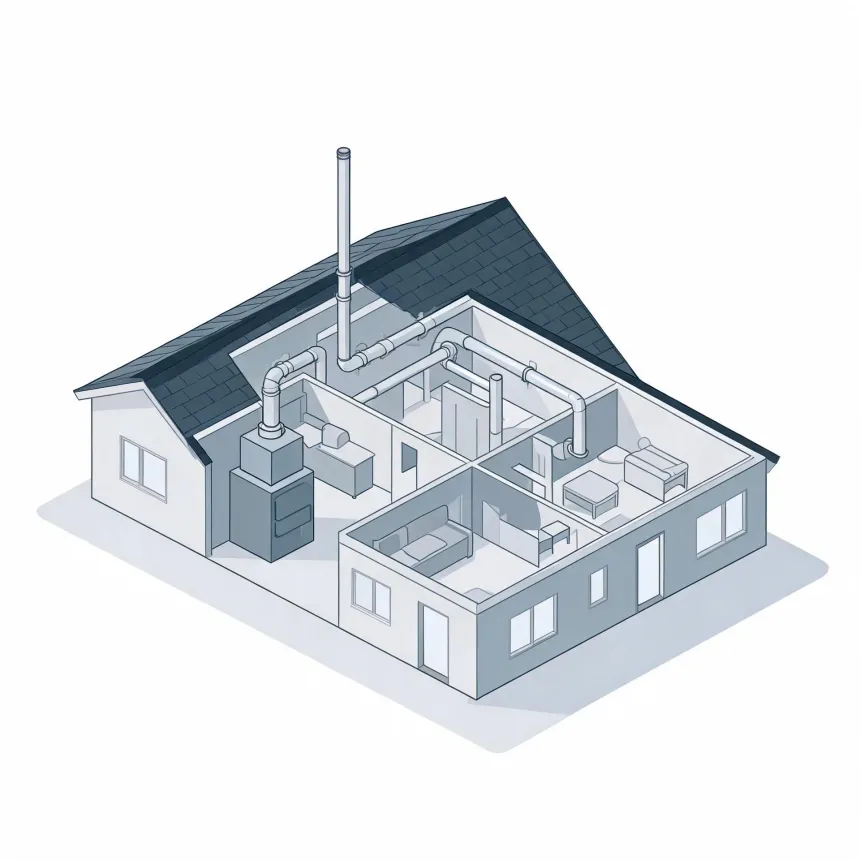
Isometric cutaway illustration of a single-story house showing interior rooms with furniture, a furnace unit connected to ductwork and a tall flue pipe extending through the roof.
Your furnace works hardest from November through March.

NOAA nClimDiv, 1991–2020 normals

Half the homes in Bristol County were built in 1964 or earlier.

A furnace that came with a house that old has likely already had one replacement, maybe two.

Nothing unusual here, just a long winter doing what it does

Heat runs October through May
Winter nights average 23°F
36 winter storms from 2015 to 2024
Nothing here breaks a furnace faster. The winter just doesn't let up.36 winter storms hit Bristol County between 2015 and 2024. The cold in between is what wears a furnace down.

September is worth paying attention to here. Heat comes on in October and runs through May, and whatever was already marginal in the furnace tends to show itself in those first cold weeks, not months into the season. A cracked igniter or a flame sensor coated with residue can sit fine all summer and then fail the first time the burner has to cycle for real. Getting a furnace looked at before October, rather than after it quits on the first cold night, is the difference between a scheduled repair and an emergency one.

Get it diagnosed properly

Your furnace works hard here, and that's usually what's behind the problem. Have it diagnosed properly so the fix lasts.

Find a contractor
A man in a cap, navy T-shirt and brown work pants walks up concrete steps toward a blue front door, carrying a worn canvas tool bag with a hammer inside, beside a potted shrub in a blue planter.
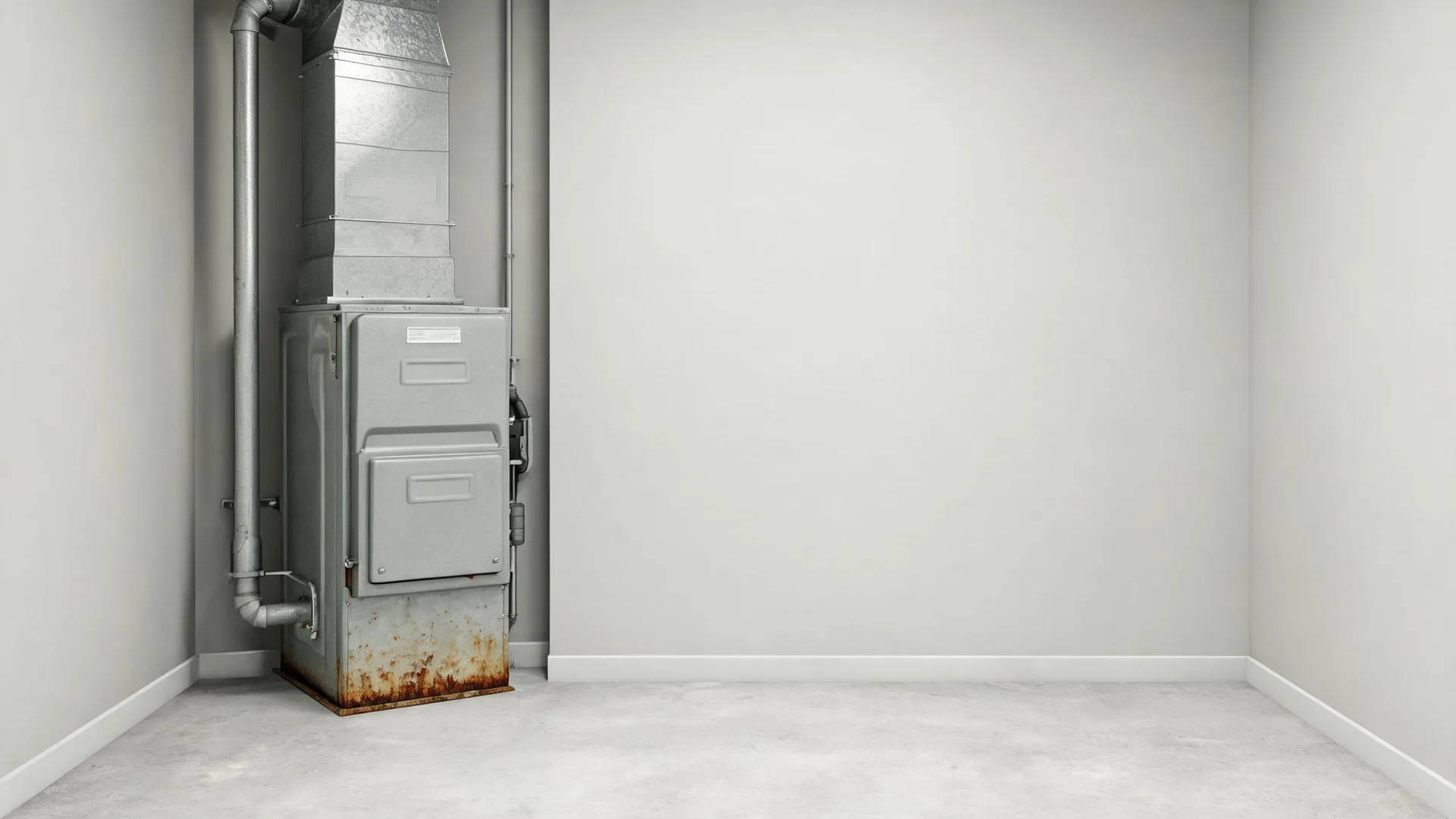
A gray residential gas furnace installed in an unfinished basement, connected to sheet-metal ductwork and PVC pipes.

Watch how little rest it gets

Watch the time-lapse and the burner is barely off from December through February, with overnight lows averaging 23°F. That's the stretch where a marginal part usually finishes failing. If this furnace has already been through a few winters like that one, the question isn't just what's wrong now. It's whether the next cold snap finds another weak spot. Worth asking before paying for the repair.

What you can check yourself

Look at the furnace filter first. A filter clogged with dust chokes airflow and can shut the burner down or make it short-cycle. Check the thermostat batteries and the setting, make sure it's calling for heat and not set to fan only. Check that the switch on the furnace itself, and the one that looks like a light switch near it, are both on. If the furnace is in a closet, make sure nothing's blocking the vents on the door.

Where to stop and call

If the burner won't light, if it lights and then shuts off again, or if the blower runs but no heat comes out, that's a repair, not something to keep tinkering with. Any smell of gas means turning off the furnace at the shutoff valve and calling before doing anything else. A furnace that trips its breaker repeatedly or smells like something's burning needs a technician before it runs again.

A gray forced-air furnace with metal ductwork stands in an unfinished basement with exposed wooden joists, concrete walls, and a single hanging light bulb.

A new furnace would cut about $190 a year off heating for a typical Bristol County home.

  • A new high-efficiency furnace$780 a year
  • An older furnace$970 a year

Estimates for a typical Bristol County home, compared with an older unit built to the previous federal minimum, from EIA household energy data, Massachusetts fuel prices and NOAA climate normals. Your home will differ.

Repair makes sense when one part has failed and the heat exchanger is sound.

Replacement makes sense when the heat exchanger is cracked or the furnace keeps needing parts.

A diagnostic starts before any panel comes off. The technician asks what the furnace is doing, when it started, and whether it happens every cycle or just sometimes. That narrows things down before a single tool comes out. Then the panels come off and the burner gets watched through a full cycle, from ignition through flame to the blower kicking in and shutdown. A multimeter checks the igniter for resistance and the flame sensor for the signal it sends back, because a sensor can look clean and still read wrong. Static pressure gets checked too. A blower straining against blocked airflow wears out early, and that points back to the ducts or the filter, not the furnace itself. By the end the technician can usually say which part failed, why, and whether anything else is close behind it.