Eight months of real work
A furnace here runs from October through May. Overnight lows average 28°F in December, January and February. That is a long, steady season of use, not just a few cold snaps.
Takes about a minute. No obligation.
A furnace here runs from October through May. Overnight lows average 28°F in December, January and February. That is a long, steady season of use, not just a few cold snaps.
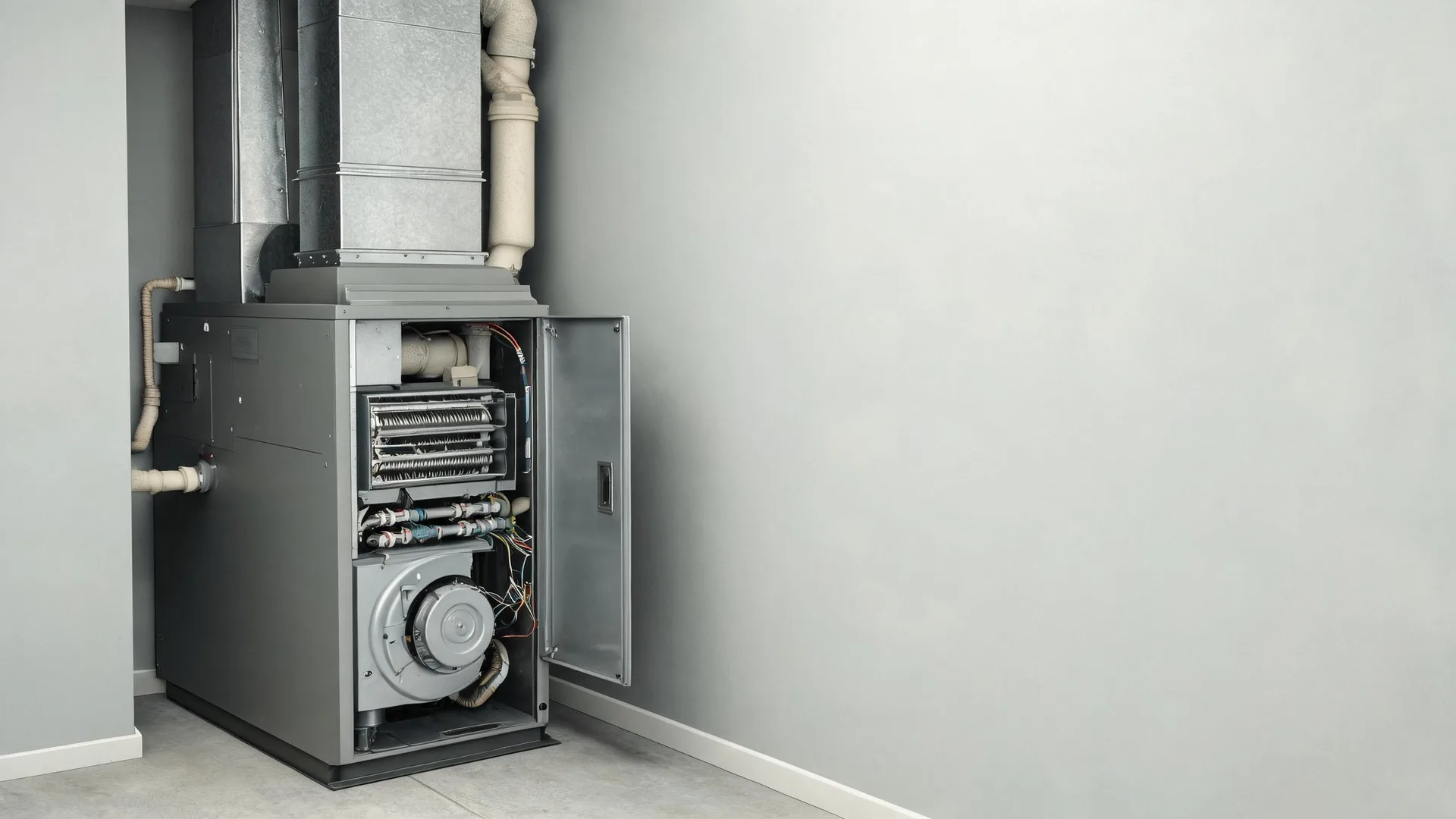
Nothing about Nantucket wears a furnace down in some special way. When one starts short-cycling, blows cold air, or won't light, the cause is almost always a dirty flame sensor, a failed igniter, or a clogged filter choking airflow. Find which one it is and the fix is straightforward.
NOAA nClimDiv, 1991–2020 normals
A cracked heat exchanger gets worse every hour the furnace keeps firing.
Shut it down and get someone out before that crack turns into a carbon monoxide risk.
If your furnace came with the house, ask a contractor to repair it before anyone brings up replacement. A furnace from a newer build is still well inside the range where parts are worth fixing. An igniter or flame sensor swap doesn't care how old the rest of the system is, and most furnace problems come down to one of those small parts, not the furnace itself. Ask what they find before agreeing to anything bigger.
Nothing about this area is especially hard on it. It's most likely the usual problem with the usual fix.
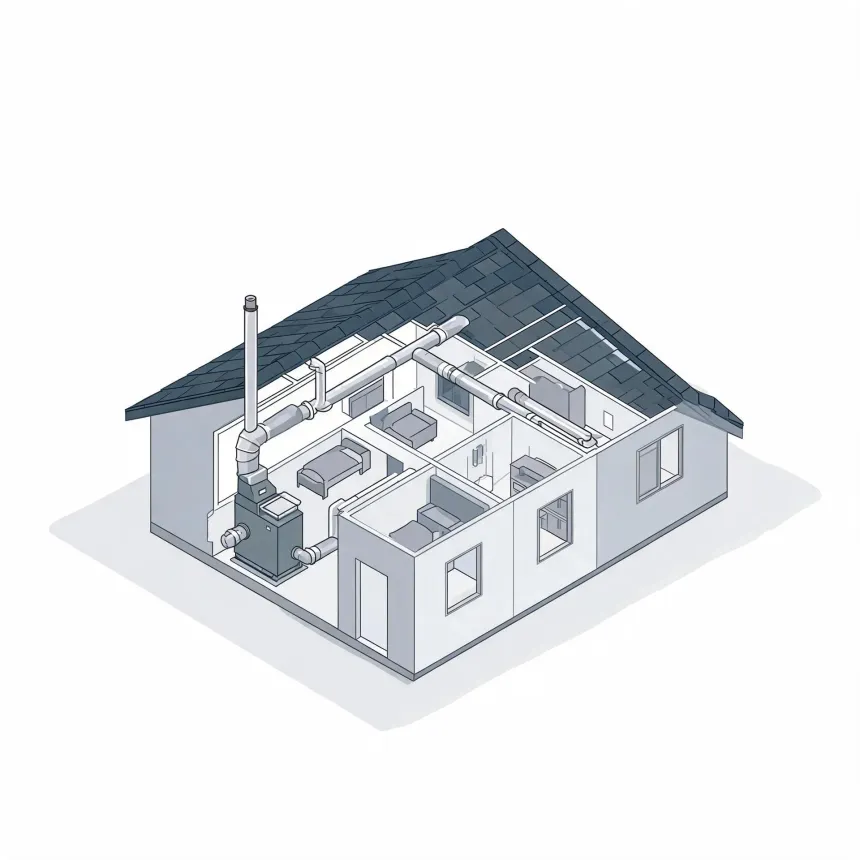
Find a contractorA furnace that runs for months straight is either kept up or it isn't, and that shows by spring. One that gets a new filter on schedule and a yearly look at the burner and flame sensor tends to fail small, a part worn out and swapped. One that never gets touched tends to fail big, because a choked filter or a dirty flame sensor left alone puts strain on everything downstream of it, including the heat exchanger. The furnace itself doesn't know the difference between a cold snap and a long season. It just keeps lighting, running, and shutting off, the same cycle every time, and whatever in it is going to wear out does so a little more with each one.
A clogged filter starves the furnace of airflow, and that shows up as short-cycling, a hot furnace that shuts off early, or a cracked heat exchanger down the road from overheating. It's the cheapest possible cause and the easiest to rule out before anyone opens the cabinet.
An igniter that's cracked either won't glow at all or glows weak and can't light the gas. A dirty flame sensor still lets gas through, the burner lights, then the furnace shuts it back off within seconds because the sensor can't confirm a flame through the buildup on it. Both look like a furnace that won't stay running, but one needs a part replaced and the other sometimes just needs a cleaning.
A few things are worth a look before anyone comes out. Check that the thermostat is set to heat and the temperature is actually above room temperature, since a bumped setting causes plenty of no-heat calls. Go to the furnace itself and see that the switch on or near it, which looks like a regular light switch, is in the on position. If it's a gas furnace, make sure the gas valve is open. Pull the filter and hold it up to a light. If you can't see light through it, that's airflow being choked off, and that alone can cause short-cycling. Check that supply and return vents around the house aren't blocked by furniture or rugs. None of this requires opening the furnace cabinet or touching anything electrical. If all of that checks out and the furnace still won't run right, the cause is inside the cabinet and it's time to call someone.
A tech starts by asking questions. When does it act up, every time it runs or only sometimes. Does it fail to light at all or light and then quit a few seconds later. Those answers point toward different parts before the cabinet ever comes off. Then they watch it try to run, because a furnace that won't light looks different from one that lights and shuts itself back down. Expect the igniter and flame sensor checked by sight and with a meter, and the filter pulled to see what shape it's in. On a gas furnace the flame itself gets watched directly, since its color and shape tell a tech things a meter won't catch. Most of this goes quickly. The ways a furnace fails are well known, and the parts that cause it are easy to get to.