



Why winter here decides this
Your heat runs eight months a year here, October through May. That is the real question. Whatever you install spends most of the year working, so it has to be good in the cold, not just able to handle it.
The overnight low here averages 28°F across December, January and February, and it drops to freezing or below on about 90 nights a year. Both numbers sit past the point where a standard heat pump starts to struggle. Below 40°F a standard heat pump puts out less heat than its rating says. Below about 35°F it often needs backup heat to make up the difference. An average winter night here is below both marks, and so is every one of those 90 freezing nights.
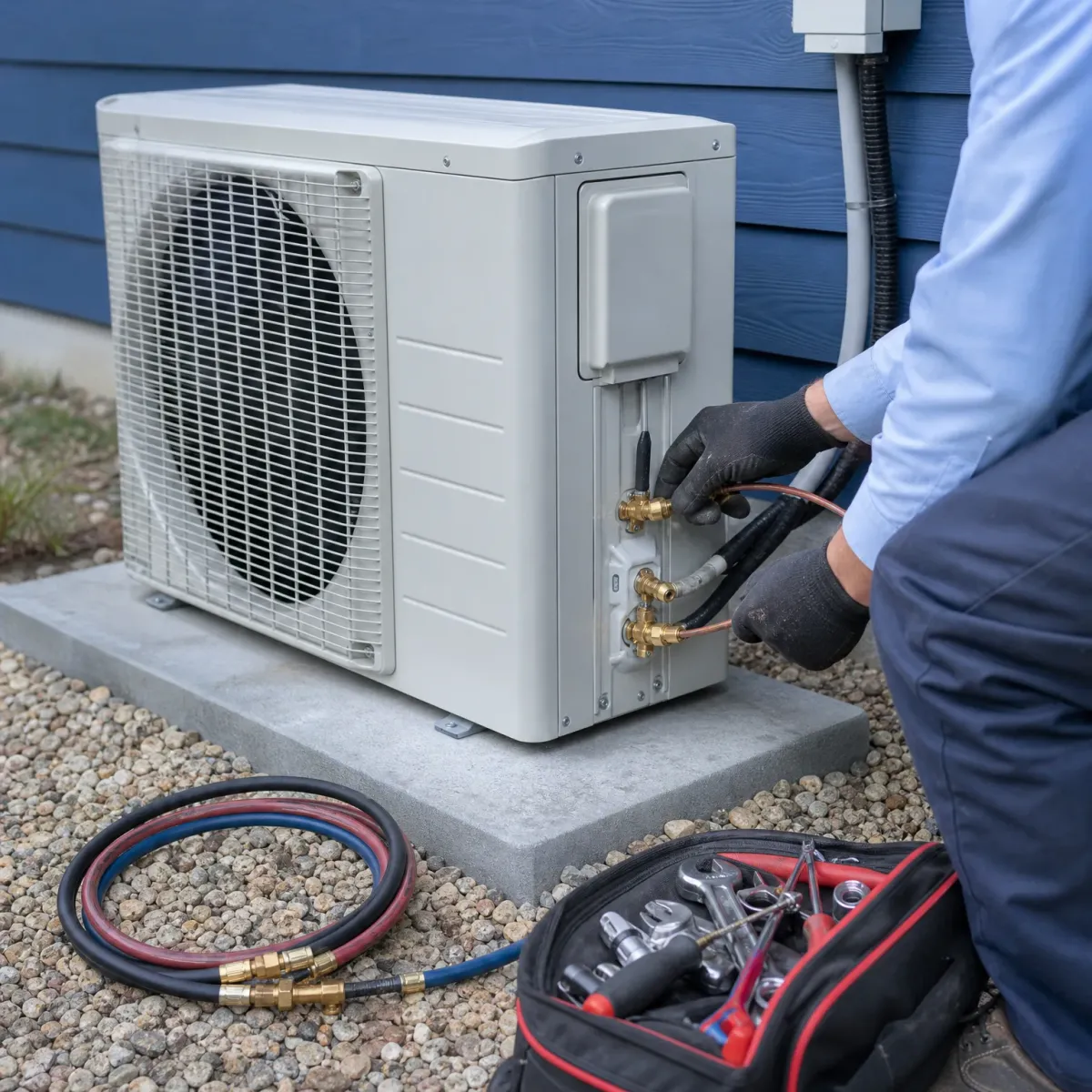
That does not mean a heat pump leaves you cold. A model built to the ENERGY STAR Cold Climate standard has to make real heat at 5°F, at least 1.75 units of heat for every unit of electricity, and hold on to most of its capacity at that temperature, checked by outside testing. In a two-winter field test of prototype cold-climate heat pumps in occupied homes, backup heat covered only a small share of the load between 0°F and 35°F, and the units rarely had to run on backup alone even above 0°F. A standard heat pump, not built for cold climates, is a different machine, and it will lean on backup heat more in a winter like this one.
Fewer than one night a year here drops to 0°F. You are buying for a long stretch of nights in the 20s and 30s, not for extreme cold, and a cold climate heat pump is built for exactly that stretch.