





White colonial houses with lit windows and dark shutters line a tree-lined street at dusk, bordered by dry-stacked stone walls.

Furnace Installation in Nantucket, MA

Tell us about the job

Takes about a minute. No obligation.

New system or replacementFurnace or heatingNantucket County, MA
Step 1 of 2

What ZIP code is the job in?

September is the month to get this done. Heat comes on in October here and runs through May, eight months of the year, so there isn't much room for a furnace to fail once the season starts. Replacing it before then means the contractor can take the time to size the install right, instead of rushing a job while you wait with no heat. Wait until the cold sets in and you're choosing from whoever still has an opening.

8 months
October through May, your furnace is on duty
28°F
the average winter night it heats against
80% AFUE
the federal minimum any new unit must meet
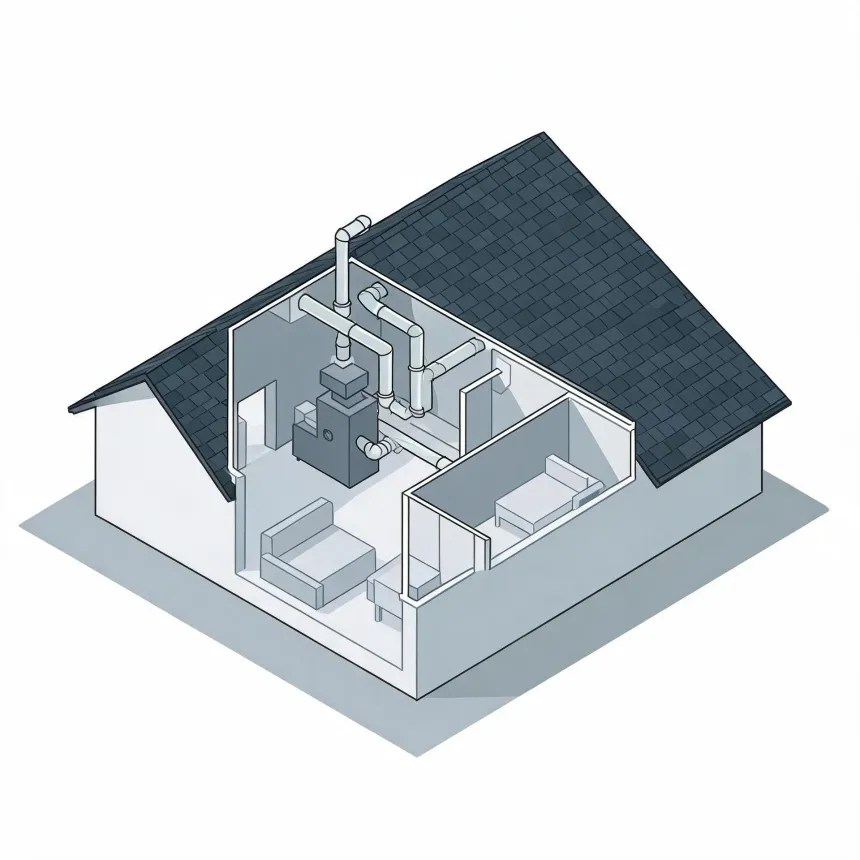
Isometric cutaway illustration of a single-story house with a dark shingled roof, showing interior rooms with furniture and a furnace connected to ductwork.
Your furnace works hardest from November through April.

NOAA nClimDiv, 1991–2020 normals

The size of the furnace matters more than the brand.

A unit too big or too small for the ductwork it's tied into will cost more to run every month it's in the house.

A furnace sized right handles this just fine

Heat runs October through May
Winter nights average 28°F
Climate zone 5A

The old furnace gets disconnected from the gas line and the ductwork, then hauled out, usually the same day the new one goes in. If it's a gas furnace, the vent connector and flue get checked too, since a new furnace often vents differently than the one it replaces. A furnace that size isn't something you put out with the trash. Most contractors include haul-away in the install, but it's worth asking rather than assuming. If the old unit still runs, some contractors will tell you straight whether it has scrap value or not, though most furnaces at replacement age don't. Either way, it shouldn't sit in the garage waiting on a decision. Once the new furnace is in, the old one has no role to play, not as a backup, not as a spare parts source.

Replace it before the season

Replace it before the season starts, so it happens on your schedule, not in a hurry.

Find a contractor
A man in a cap, navy T-shirt and brown work pants walks up concrete steps toward a blue front door, carrying a worn canvas tool bag with a hammer inside, beside a potted shrub in a blue planter.
A gray residential gas furnace installed in an unfinished basement, connected to sheet-metal ductwork and PVC pipes.

What to ask before you sign anything

Ask what the contractor used to size the furnace, not guessed. A proper load calculation looks at the house itself. How much space there is to heat, how much is lost through the walls and windows, how the ductwork is laid out. A contractor who sizes off the old furnace's rating alone is carrying forward whatever mistake was built into that first install. Ask about the ductwork too. A furnace can be sized right and still run poorly if the ducts feeding it are too small, too leaky, or laid out for a different unit. Ask what the warranty covers and who has to register it. Some manufacturers void coverage if registration is missed, and that falls on the homeowner to catch, not the contractor. Ask how the contractor handles a service call if something needs adjusting once the system has been running a while. A furnace rarely shows its true behavior in the first week.

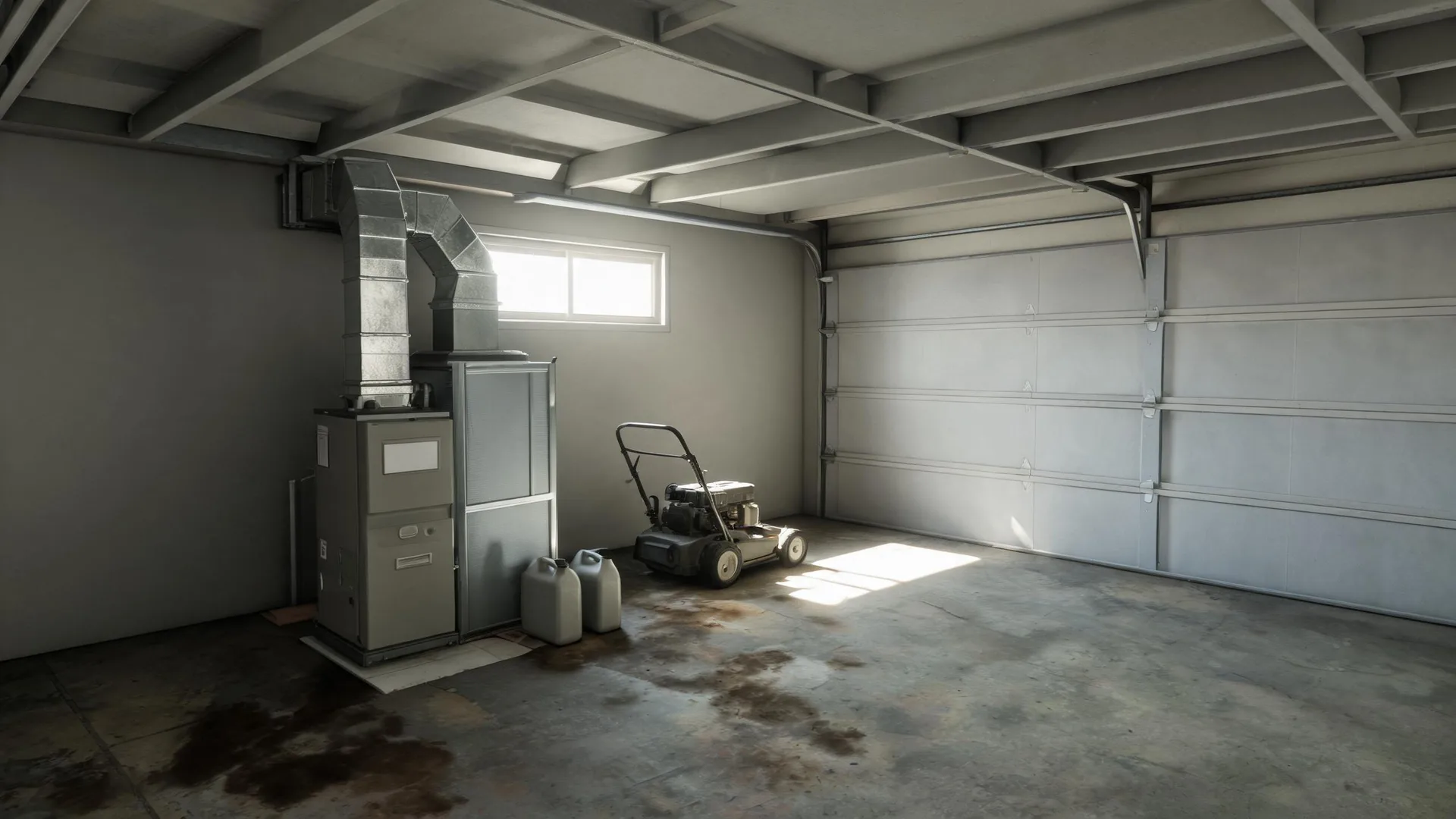
Too big burns more fuel than it should

An oversized furnace heats the house fast, shuts off, then starts again a few minutes later. That short cycling never lets the system settle into a steady run, and it's that steady run where a furnace is most efficient. The burners and the blower wear from the extra starts, not from the hours they actually spend running.
Too small never stops trying

An undersized furnace just keeps running, trying to close a gap it can't close on the coldest days. The blower and igniter rack up hours for a house that still feels cool near the windows and far from the vents. Sizing it right means matching the furnace's output to how much heat the house actually loses, not rounding up for safety.

On install day the new furnace usually goes where the old one sat, tied into the same gas line and the same duct trunk, so most of the work is in doing those connections right rather than moving things around. The gas line gets connected and checked for leaks before anything is fired up. The vent or flue gets fitted to match how this furnace vents, not the last one. Once it's wired in and the thermostat is hooked up, the contractor runs it through a full cycle, checking the flame, the temperature rise across the heat exchanger, and the airflow at the vents. That last check matters as much as the install itself. A furnace that fires up fine on day one can still be set wrong in ways that only show up as a bad temperature rise or weak airflow, and that's what the startup check is for.