





Profile view of a bearded man wearing a black baseball cap and a dark gray T-shirt against a plain light background.

Is radiant floor heat worth it in Massachusetts

New system or replacementBoilerMassachusetts
Step 1 of 2

What ZIP code is the job in?

For most Massachusetts homes, radiant floor heat is worth it if you're already redoing floors or finishing a basement, and less worth it as a stand-alone upgrade to a house that's fine with its boiler and radiators. Radiant floors warm a room evenly from the ground up instead of pushing heated air around, so rooms feel warm at lower temperatures and cold floors stop being the thing you notice walking in from a Massachusetts winter. Since most homes here already run on gas, radiant systems pair with your existing boiler rather than replacing it, heating water that runs through tubing instead of through radiators. The real cost is the labor of opening up floors to run that tubing, which is why it makes the most sense during a renovation and the least sense as the only reason to tear up a finished room. For comfort, it delivers. For a house that doesn't need the floors opened anyway, it's a harder case.

A woman in a knitted shawl sits in a living room with a fireplace, shelves, a sofa with cushions, and a lamp by a bright window, looking off to the side.
A woman with long brown wavy hair in a green shirt over a white top stands in a living room with built-in white shelves, a ceiling fan, a potted plant and a sliding glass door.
A woman with shoulder-length gray-streaked hair in a light gray knit sweater stands smiling and looking off to the side in a living room with a sofa, houseplant, framed picture, and sunlit sliding glass door.
A woman with shoulder-length curly gray hair wearing a gray knit sweater stands near a window with a sheer curtain, looking to the side, with a blurred interior room behind her.

Radiant Floors or Stick With Radiators

Radiant Floors

  • A boiler can run radiant zones and your existing radiators at the same time, so the change is additive, not a replacement.
  • Floors stay warm to the foot in rooms where people stand still, like a bathroom or a kitchen, without the room ever feeling overheated.
  • Radiant loops run at a lower water temperature than baseboard or cast iron radiators, which suits a boiler that's doing double duty.
  • Installing it under a new floor or a finished basement slab adds little extra disruption since the floor is already open.
  • Retrofitting radiant under an existing floor means raising the floor height or losing ceiling height below, which isn't always possible room to room.
  • It does nothing for summer. Massachusetts summers get sticky, and radiant floors have no part in cooling a room.

Keep the Boiler and Radiators

  • If the radiators heat the house evenly now, there's no comfort problem for radiant floors to solve.
  • Cast iron radiators hold heat and keep releasing it after the boiler cycles off, which radiant slabs also do but radiators already deliver that without new piping.
  • Nothing about the floors or walls needs to open up, so the house goes untouched.
  • A boiler with radiators has fewer feet of new tubing and fewer zone valves to maintain over the years.
  • Rooms you don't walk around barefoot in, like a garage or a mudroom, see little benefit from heated floors.
  • Staying with radiators costs you nothing now, but you also don't get the even floor warmth radiant delivers in the rooms where you'd notice it most.
  1. Your boiler heats water instead of burning gas for forced air.

  2. Hot water moves into tubing looped under the floor.

  3. The floor itself warms up and holds that heat.

  4. Heat rises off the floor into the room above it.

A woman and a sleeping child wrapped together in a cream knitted blanket on a couch, with a potted plant, framed photo and lit lamp in the background.
A gray-haired woman in a cream knit sweater stands in a dimly lit kitchen at night, looking to her right, with a round loaf of bread in the foreground and a dark window and potted plant behind her.
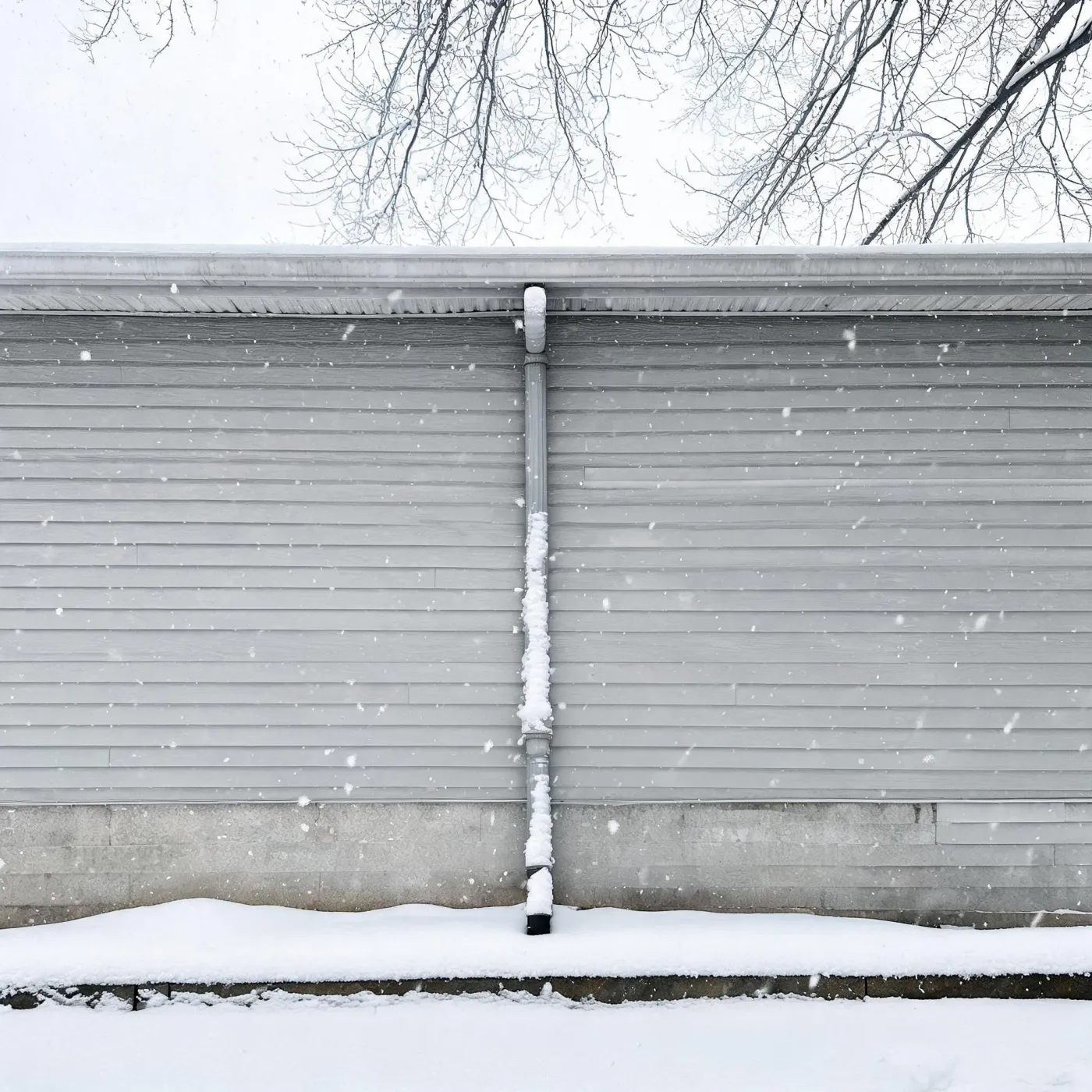
Gray horizontal lap siding on a building above a concrete block foundation, with a central downspout partly coated in snow, falling snowflakes, snow-covered ground, and bare tree branches against a white sky.

Winter nights average 21°F statewide, according to NOAA. That's the kind of cold that keeps a boiler cycling most of the night to hold a room steady. Radiant tubing under the floor changes what that cycling feels like at home. Instead of a radiator working hard to push heat into cold air, the floor itself stays warm, so a cold snap doesn't show up as a chilly floor underfoot in the bathroom or kitchen at 6 a.m. The boiler still runs the same nights it always did. What changes is whether anyone standing in the kitchen notices the cold outside at all.

NOAA nClimDiv 1991-2020 county normals weighted by homes

Why does the floor feel cold even with the heat on

You turn the thermostat up and the radiators get hot, but the tile in the bathroom and the kitchen floor still feel cold underfoot. That's normal for a radiator system. It heats the air in the room, not the floor you're standing on. If you've noticed you keep socks on all winter, or the baby's room feels fine at thermostat height but cold at crawling height, that's the gap radiant floors are built to close. It isn't a sign anything's wrong with your boiler. It's just what forced water through a radiator can and can't do. The risk isn't to the house, it's to comfort: someone in that room is cold while the thermostat says otherwise.

An older oil-fired boiler with a burner unit, flue pipe, expansion tank and copper piping stands in the corner of a concrete-floored basement with weathered plaster walls.
Before you get your boiler installation
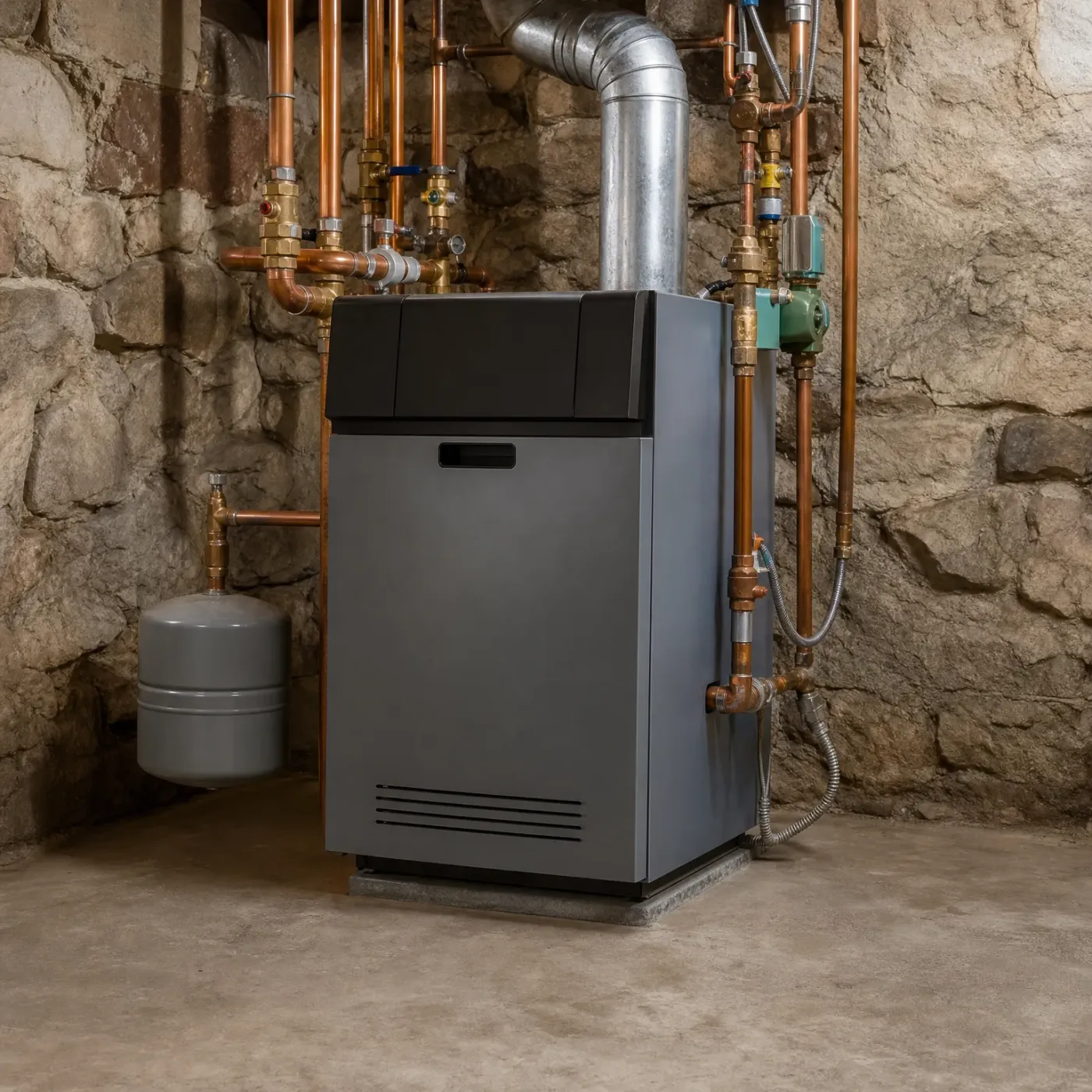
A gray boiler on a concrete pad in a basement corner, connected to copper and black pipes with a gauge, circulator pump, and gray expansion tank, beside a wood-framed wall.
After you get your boiler installation

Send one request and you're done looking

Your request goes to one pro, not a list of companies.

Sending the form costs nothing.

A gray floor-standing boiler with a metal flue stands against a concrete block wall, connected to copper pipes, brass valves and a gray expansion tank, on a bare concrete floor.

Boiler holding steady

This is a boiler keeping up with the loop as it's piped, copper lines and valves all doing their job, nothing straining. A boiler in this shape can usually take on a radiant zone without a fight, since it's already built to send hot water where it's told.

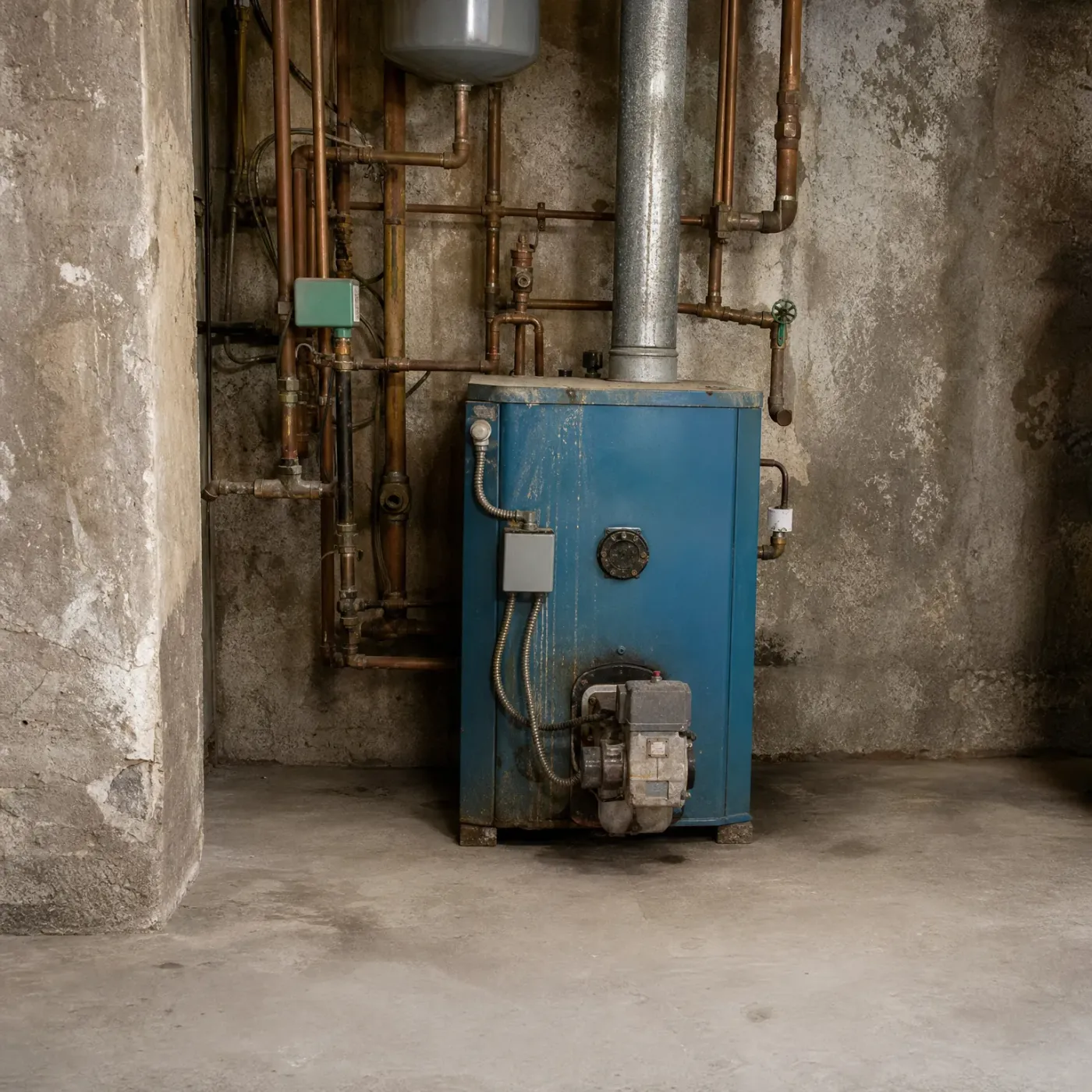
A blue oil-fired boiler with a burner unit and pressure gauge stands in a concrete basement corner, connected to copper pipes and a metal flue.

Boiler past its years

An old oil-fired boiler like this one is working harder than it should to keep a house warm. Adding a radiant loop to a unit already struggling with the radiators isn't the move. Get it looked at first, so you know what it can actually carry before building anything onto it.

Can you zone radiant heat separately from the rest of the house

You don't want the whole boiler working harder just to warm one bathroom floor, and you don't want the living room roasting because the kitchen tile needs heat. You're asking whether a radiant zone can run on its own schedule, separate from the radiators heating the rest of the house, since that's really what makes it useful rather than just warm.

Yes, radiant gets its own zone valve and thermostat

A radiant loop runs on its own zone valve, piped separately from the radiators. That valve opens and closes based on its own thermostat, usually one set in the room with the radiant floor, like the bathroom or the kitchen. The boiler fires when either the radiant zone or the radiator zones call for heat, but each zone decides for itself when that call happens. So the bathroom floor can run warm in the early morning on its own schedule while the rest of the house stays on whatever the radiators are set to. This is standard zoning, the same idea as having upstairs and downstairs on separate thermostats, just applied to one loop instead of a whole floor.

A gray residential boiler on a concrete pad in a basement with stone walls, connected to copper piping, brass valves, a circulator pump, an expansion tank, and a metal flue duct.

Boiler running the way it should

This is what a boiler looks like when it's keeping up, pipes and valves intact, pump turning, nothing leaking or straining. A unit in this shape can usually take on a radiant loop without needing anything more than the new tubing and a zone valve.

A blue cabinet boiler with a metal flue pipe and copper piping stands against a bare concrete wall in a basement with a concrete floor.

Boiler already struggling

An old unit like this, corroded flue pipe and all, is the one to have looked at before adding anything to its workload. Tying radiant tubing into a boiler that's already weak just gives it one more zone to fall behind on.

Winter nights average 21°F statewide

At 21°F, your boiler is already firing often to keep the radiators warm through the night. A radiant zone works with that same heat source, so the floor in a cold bathroom or kitchen doesn't have to wait on the air to catch up.

NOAA nClimDiv 1991-2020 county normals weighted by homes

Where this leaves you

  • Radiant heat pays off most when it rides along with floor or basement work you're already doing, not as its own project on a house that's fine as is.
  • Your boiler can run a radiant loop and the existing radiators at once, so nothing already working gets ripped out to make room for it.
  • A loop under a cold bathroom or kitchen floor changes how that room feels in a way a radiator by the wall never will.
  • A contractor who works on boilers all winter in Massachusetts knows which units take a new zone without strain and which ones need work first.
  • You'll hear from one licensed local contractor, not a handful of companies competing for the job.

Radiant floor heat earns its keep in a Massachusetts home when it's riding along with work you're already doing, a bathroom remodel, a finished basement, new tile going down anyway. On its own, as a project for a house where the boiler and radiators are doing fine, it's a harder case to make. What tips it either way is what's already true of your place: the floors coming up, the room that never feels warm no matter what the thermostat says, the boiler in the basement and whether it has room to take on a loop.

That last part is where a local contractor matters more than the equipment itself. Someone who's out working on boilers all winter in this state has seen which ones take a new zone without strain and which ones need a part replaced or a line reworked before they can. That's not a guess from a brochure, it's the kind of thing you only know from doing the work on the same systems, in the same cold, every year.

You'll hear from one contractor, licensed and local, not a round of calls from companies you don't know competing to get in your door first. One person looking at your boiler, your floors and your rooms, telling you straight what's worth doing and what isn't.

Elevated view over a dark standing-seam metal roof with a stone chimney and wood-sided gable, surrounded by conifers and autumn-colored trees with forested hills under an overcast sky.

Finding a pro stops being your job

Send my request

You're not committing to anything by asking.

A cold bathroom floor doesn't fix itself by turning up the thermostat. Sending the request gets a local contractor who works on boilers and radiant loops all winter looking at your layout, so you find out what a zone would actually take before you tear up any floor.