




An unfinished basement containing a gas furnace with ductwork in the foreground and miscellaneous stored items along the far concrete wall.

Furnace Repair in Amherst Town, MA

Tell us about the job

Takes about a minute. No obligation.

RepairFurnace or heatingHampshire County, MA
Step 1 of 2

What ZIP code is the job in?

Most furnace calls come down to a handful of parts. The igniter is the most common. It takes repeated cycles of heating up and cooling down, and after enough of them it gets a hairline crack and stops glowing hot enough to light the gas. The flame sensor fails a different way. It gets a film of residue over time and can't tell the controller a flame is lit, so the system shuts the gas valve off as a safety measure. A dirty filter causes its own chain of trouble. Airflow drops, the heat exchanger runs hotter than it should, and the limit switch trips to keep it from overheating. Blower motor bearings wear out from years of running, and you'll hear it before anything stops working, a grinding or squealing that gets worse. Any of these can look like the same thing from the thermostat, a furnace that won't start or won't stay running, but what's actually failing inside is different in each case.

8 months
October through May, your furnace is on duty
18°F
the average winter night it heats against
53 winter storms
in ten years, the nights a failure hurts most
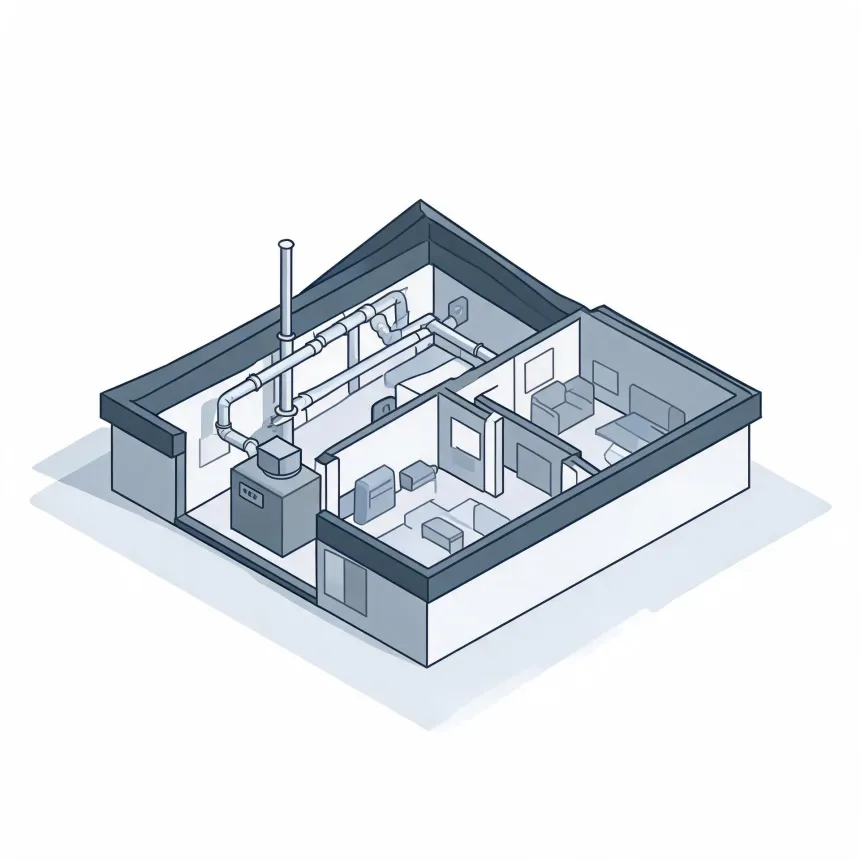
Isometric line illustration of a cutaway building interior showing a furnace unit with a flue pipe and ductwork running along the ceiling, plus adjacent rooms with simplified furniture.
Your furnace works hardest from November through March.

NOAA nClimDiv, 1991–2020 normals

Half the homes in Hampshire County were built in 1969 or earlier.

A furnace that came with a house that old has likely put in decades of work already.

Furnace trouble in Amherst shows up first in October, the month the heat goes back on.

Heat runs October through May
Winter nights average 18°F
53 winter storms from 2015 to 2024
Furnace repair in Amherst TownHampshire County saw 218 damaging wind events between 2015 and 2024, more than any other kind of severe weather.

If your furnace is original to the house, ask the contractor for its age and condition before agreeing to a repair. A cracked igniter or a failed flame sensor is a fix worth making on its own. But if the same visit turns up a cracked heat exchanger or a blower motor on its way out, that changes what you're deciding. A furnace running on borrowed time doesn't owe you a warning before the next part fails. Get the honest read on what's left in it before you commit to the repair.

Get it diagnosed properly

Your furnace works hard here, and that's usually what's behind the problem. Have it diagnosed properly so the fix lasts.

Find a contractor
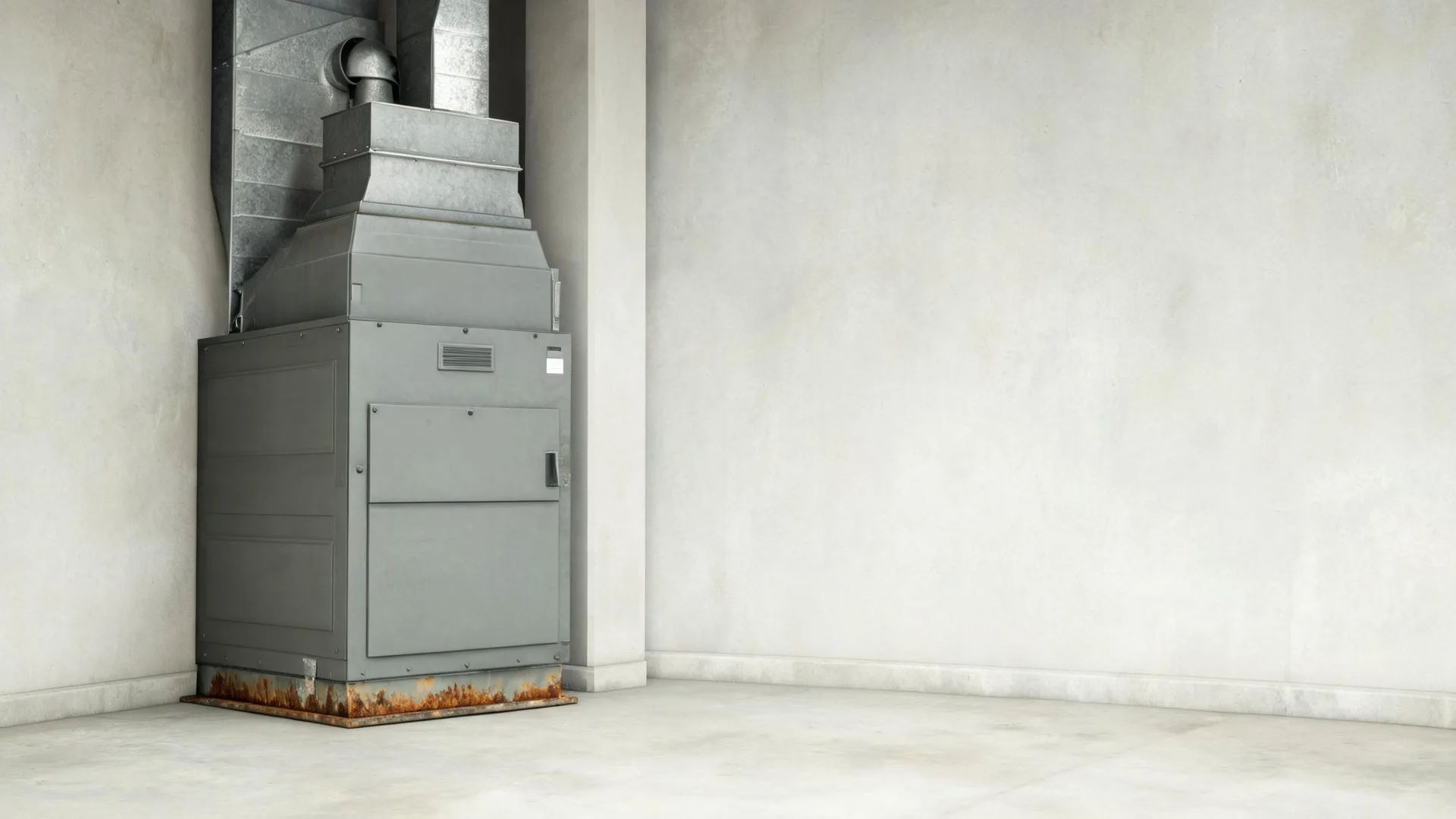
A gray residential gas furnace installed in an unfinished basement, surrounded by ductwork, a metal flue pipe, and a gas supply line.

Running it doesn't mean it's fine

A furnace with a cracked heat exchanger will keep running if you let it. It doesn't shut itself off to protect you. The crack lets combustion gas mix into the air your blower pushes through the house, and every cycle after that is pushing more of it. A limit switch that's starting to trip from heat stress behaves the same way. It might reset and let the furnace fire again instead of forcing the issue. Run it long enough on a bad flame sensor's sister problem, a cracked igniter, and nothing gets worse except that the furnace won't start, which is at least honest about the failure. The parts that fail quietly and let the furnace keep running are the ones worth catching early.

What you can check yourself

Look at the thermostat first. Make sure it's set to heat and the set temperature is actually above room temperature. Check the furnace switch, the one that looks like a light switch on or near the unit, and make sure it's on. Check the breaker. Pull the filter and hold it up to a light. If you can't see light through it, that's airflow the furnace isn't getting, and it's worth replacing before anything else. If the furnace has a standing pilot, see if the pilot light is actually lit.
What to leave alone

Don't take the burner compartment apart or reach for the flame sensor or igniter yourself. They're simple parts but they sit next to a gas valve and a running flame, and putting them back wrong is worse than leaving a working furnace alone. If you smell gas, don't flip any switches or look for the problem at all. Leave the house and call the gas company from outside.

Short cycling is worth paying attention to, a furnace that fires up, runs for a couple minutes, and shuts off before the house warms up. That's usually the limit switch reacting to heat buildup, often because airflow is restricted somewhere. A furnace that runs but never quite reaches the set temperature points more toward a different problem, like a blower that's lost speed or ductwork not moving enough air. Pay attention to the color of the flame too, if you can see it. It should be blue with maybe a small tip of yellow. A flame that's mostly yellow or flickering oddly means the gas isn't burning clean, and that's not something to wait out.

A diagnostic visit starts before any panel comes off. A tech will ask what the furnace is doing, when it started, and whether you noticed a smell, a sound, or a pattern, like it working fine during the day and failing once it gets cold at night. Then the tech runs it and watches the cycle, whether it ignites, whether the flame holds, whether it shuts off on its own or trips something. Opening the cabinet comes next. The flame sensor and igniter get checked for the wear you'd expect after years of cycling, the limit switch gets tested, the blower gets checked for how it sounds and how it draws air. Most of this is reading what the furnace is already telling you rather than guessing at it. A tech who has done this long enough can usually narrow it down before anything gets tested, then confirm it with a meter instead of swapping parts and hoping.