






A row of illuminated white colonial houses with black shutters and a stone wall along a road at dusk.

Furnace Installation in Lynn, MA

Tell us about the job

Takes about a minute. No obligation.

New system or replacementFurnace or heatingEssex County, MA
Step 1 of 2

What ZIP code is the job in?

A furnace in Lynn runs about eight months a year, October through May. Overnight lows average 21°F through December, January and February, and the furnace has to make up that difference every night it runs. Winter storms hit this area often enough that a furnace spends real hours just keeping a house warm through the worst of them. A furnace sized wrong for the house, even slightly, feels that workload more than one that fits. Worth asking any installer how they're sizing the unit for your house, not just which model they want to sell.

8 months
October through May, your furnace is on duty
21°F
the average winter night it heats against
56%
of homes here heat with gas, so most furnaces here burn gas
80% AFUE
the federal minimum any new unit must meet
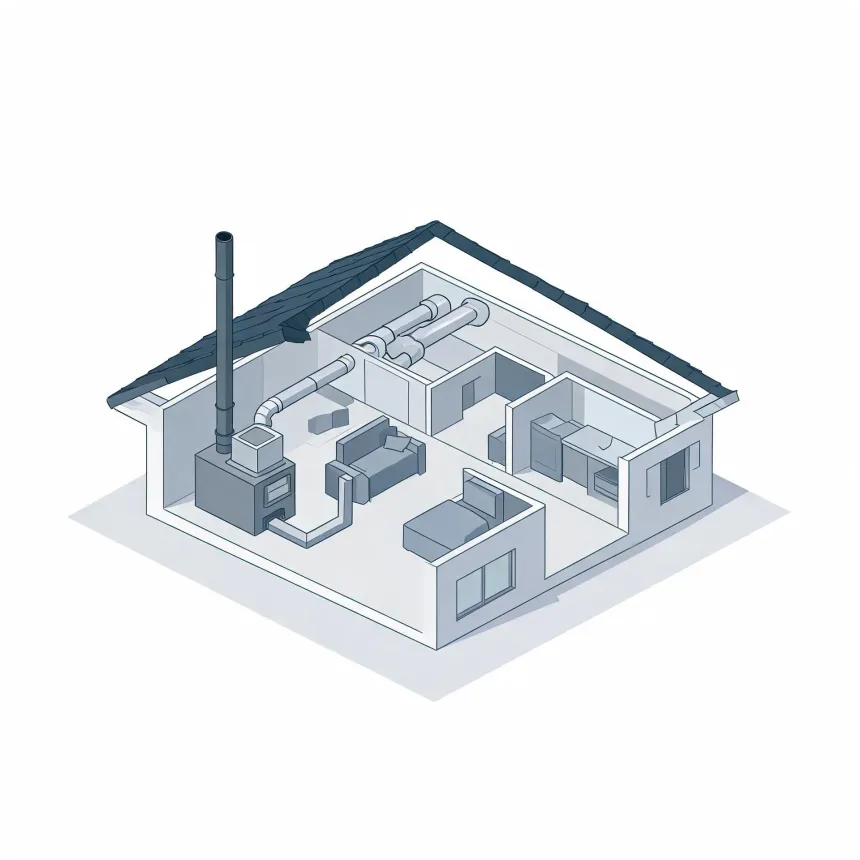
Isometric line illustration of a cutaway single-story house showing interior rooms with furniture, a furnace unit with a tall flue pipe, and connected ductwork running under the pitched roof.
Your furnace works hardest from November through March.

NOAA nClimDiv, 1991–2020 normals

Half the homes in Lynn were built in 1960 or earlier.

A furnace going into a house that old has to match the house, not just the model you liked.

Lynn's weather is hard on a furnace, not on the specs you buy

344 severe weather events from 2015 to 2024
10% of homes statewide lost power a day or more in 2024
256 damaging wind events from 2015 to 2024
Gas heats most of Lynn56.4% of homes in Essex County run on utility gas, more than any other fuel

Natural gas in Massachusetts ran $21.27 per million Btu in 2024, among the higher prices in the country. A furnace already runs most of the year here, so that price shows up on a lot of bills, not just the coldest ones. A furnace sized and installed right burns less gas to do the same job, and in a state where gas costs this much, that difference is worth real money over a winter. Worth asking any installer for the AFUE rating on the models they're quoting, not just the price.

Install before October, not after

Furnaces here start running in October and keep going through May. Put a new one in before September ends and it's broken in and ready for that first cold night, not working out kinks while you're already depending on it.

Find a contractor
A man seen from behind in a gray shirt and tan work pants climbs porch steps toward a blue front door, carrying a worn leather tool bag in his right hand, with a potted shrub in a blue planter beside the door.
A gray high-efficiency gas furnace installed in an unfinished basement, surrounded by gas lines, a condensate drain, and sheet-metal ductwork.

Sized for your house, not the one next door

A load calculation done on your actual house tells an installer what size furnace it needs, and that matters more in a house built in 1960 or earlier than in a newer one. Ask for that calculation, not a number based on square footage or a guess at what the last furnace was. If the ductwork is original to the house, ask about that too, since a furnace can only heat as well as the ducts carrying its air.

Too big is its own problem

A furnace that's too large heats the house fast, then shuts off before it's pulled moisture out of the air or warmed the place evenly. Rooms far from the furnace stay cold while the thermostat reads satisfied. That start-stop cycle also wears the ignition system and the blower harder than a steady run would.

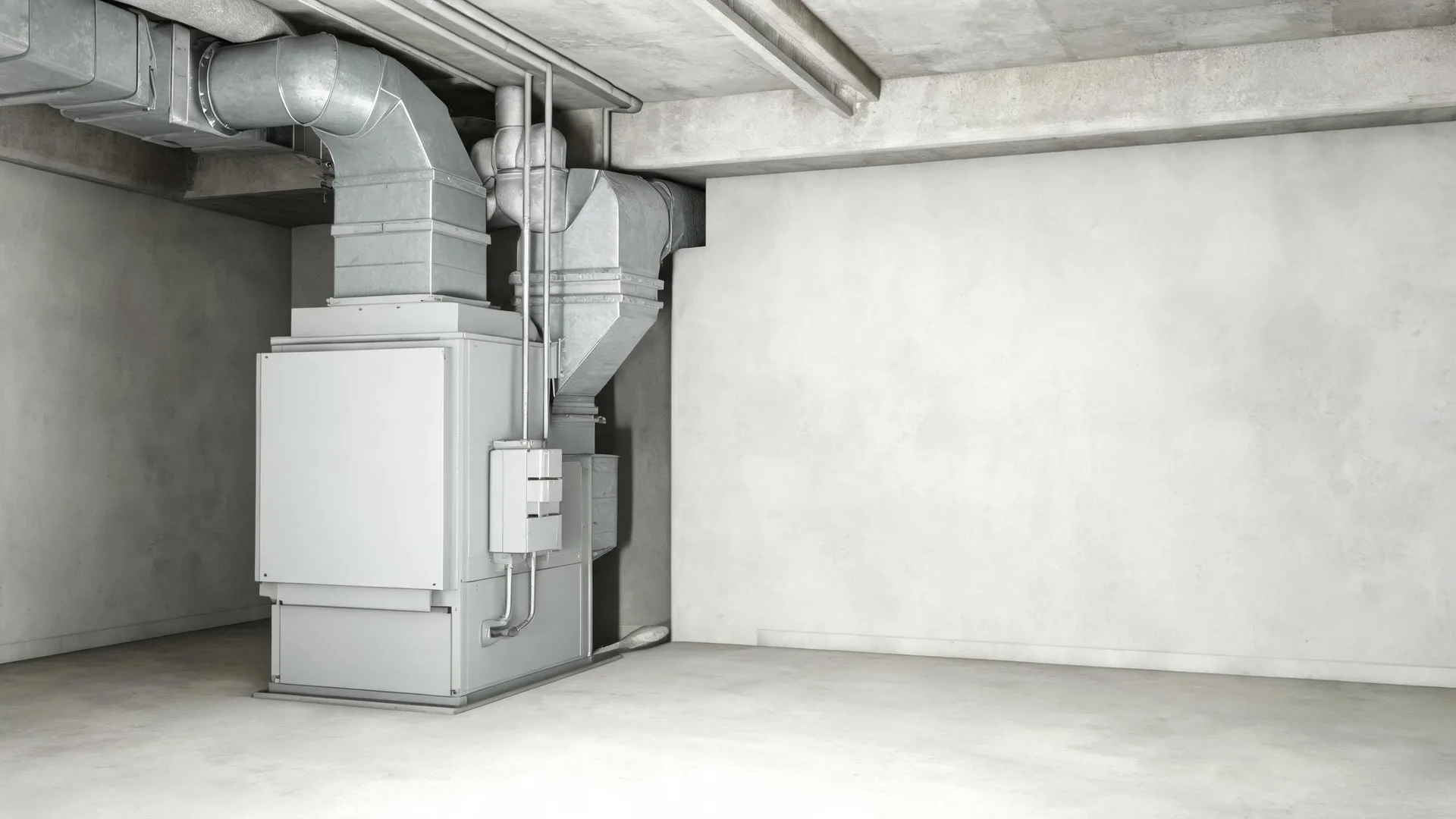
The math behind the number

A load calculation looks at the house itself. How much wall and window area it has. What's behind the walls. How the rooms are laid out and connected to ductwork. A house that holds heat well needs less furnace than one the same size that doesn't. That's the only way to land on the right size instead of guessing from square footage.

An unfinished concrete basement containing a metal HVAC air handler, exposed wooden ceiling joists with sheet-metal ducts, a hanging bare bulb, copper pipes, and stacked cardboard boxes.

A high-efficiency gas furnace would save about $180 a year to run in Essex County compared with a gas furnace.

  • A high-efficiency gas furnace$840 a year
  • A gas furnace$1,020 a year

Estimates for a typical Essex County home, from EIA household energy data, Massachusetts fuel prices and NOAA climate normals. Your home will differ.

The old furnace comes out first. Gas line, vent pipe and duct connections all get disconnected before it's hauled away. The new unit goes in that same spot, and then the real work starts. The gas line, the vent or flue, the supply and return plenums and the electrical all get connected and checked for leaks and secure fit. Once it's hooked up, the installer fires it up and tests it. That means checking the heat exchanger, the gas pressure, the temperature rise across the furnace and the airflow at the registers. A furnace that runs but hasn't been tested right can hide a problem for months. The last step is balancing the system so air reaches every room, not just the ones closest to the furnace.