






Two white colonial houses with lit windows and black shutters photographed at dusk along a tree-lined residential street.

Furnace Installation in Greenfield, MA

Tell us about the job

Takes about a minute. No obligation.

New system or replacementFurnace or heatingFranklin County, MA
Step 1 of 2

What ZIP code is the job in?

A furnace that burns fuel oil costs more to run here than one burning gas, simply because of what the fuel costs. Massachusetts homes paid $23.29 per million Btu for fuel oil in 2024. That number matters most in the years after installation, not on the day of it. A unit with a higher efficiency rating turns more of that oil into heat in your house instead of losing it, and over a Greenfield winter that difference adds up on every tank. If your home burns oil now, it's worth asking what efficiency rating a new furnace carries before deciding on one.

8 months
October through May, your furnace is on duty
17°F
the average winter night it heats against
80% AFUE
the federal minimum any new unit must meet
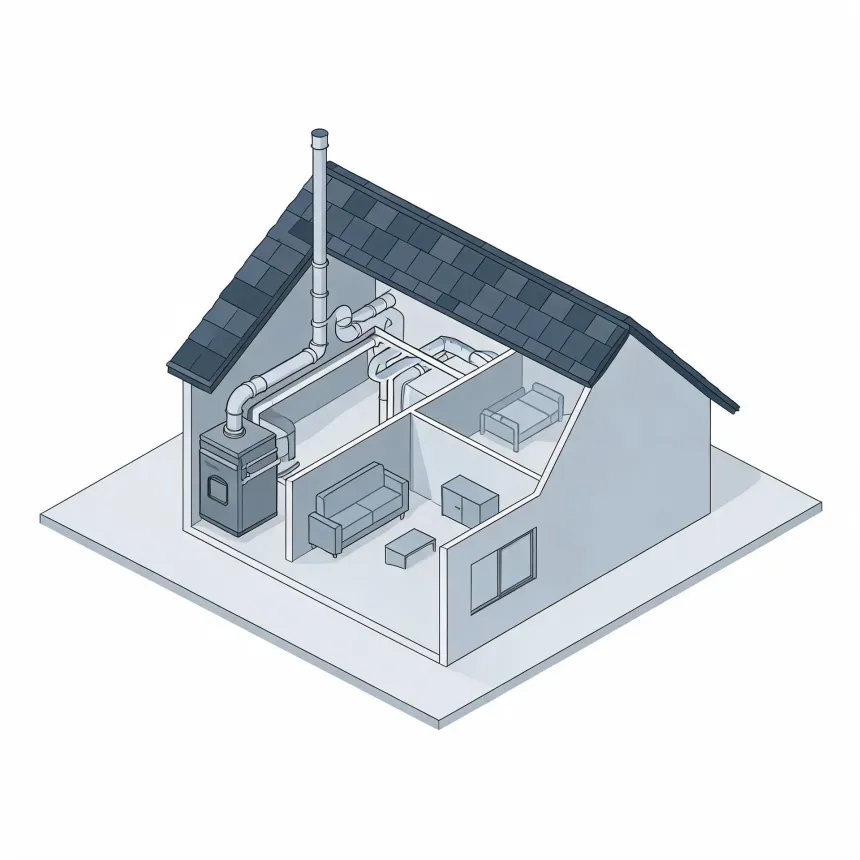
Isometric cutaway illustration of a small gabled house showing a furnace with flue pipe and ductwork connecting to interior rooms containing a sofa, bed, and cabinets.
Your furnace works hardest from November through March.

NOAA nClimDiv, 1991–2020 normals

Your furnace in Greenfield runs eight months of the year, and winter nights average 17°F.

A furnace sized wrong for this house works harder on top of that, so get the sizing right before anything else.

Most homes near Greenfield heat with oil, and that's the furnace worth installing again

42.2% of homes heat with fuel oil
Heat runs October through May
Winter nights average 17°F
Get it installed before September is overHeat starts in October here and runs through May.

Nothing about Franklin County calls for an oversized furnace or a premium efficiency tier beyond what the fuel math above already supports. Winter storms and damaging wind both hit this county often, and a correctly sized furnace handles a bad night the same way it handles any other. Power is the bigger question. A good share of Massachusetts households lost power for a full day at some point in 2024, and a furnace with an electronic ignition won't run without it, no matter its size or rating. That's a reason to ask about a battery backup or a generator hookup, not a reason to size up. Get the load calculation right for this house and let the oil efficiency decision carry the weight, as the section above already laid out.

Size it for the house you have

Half the homes in Franklin County went up in 1962 or earlier. An older home like that wasn't built around the furnace you're putting in now, so the new one needs a load calculation for this house, not a swap for whatever size sat there before.

Find a contractor
A man in a cap, dark shirt and cargo pants, seen from behind, carries a canvas tool bag up wooden porch steps toward a blue front door.
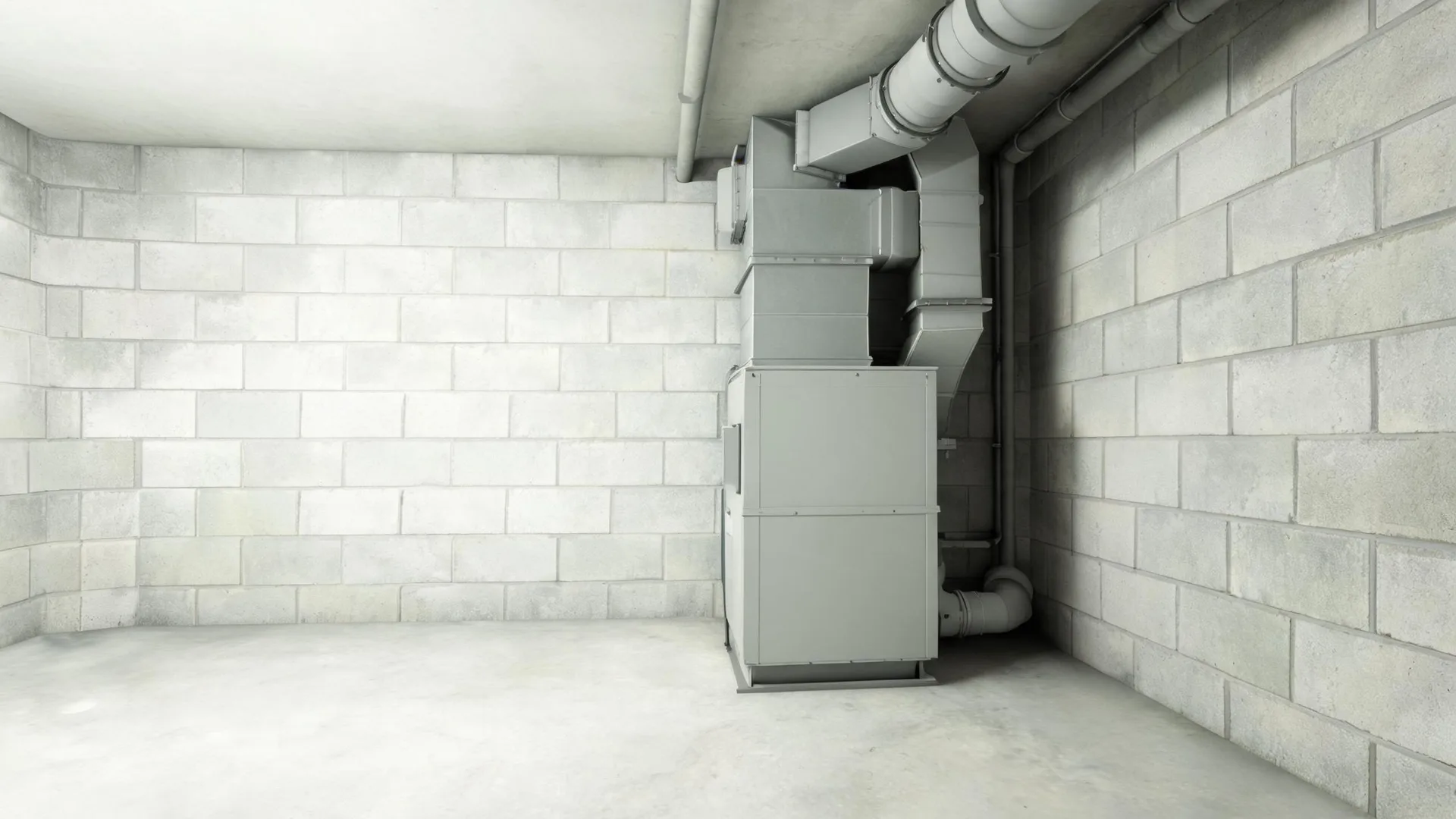
A gray residential gas furnace installed in an unfinished basement, connected to sheet-metal ductwork and PVC pipes.

Eight months a year, for as long as this furnace lasts

A correctly sized furnace still runs eight months a year in this county, with nights averaging 17°F through the worst of winter. That load doesn't change because a contractor skips the math. Ask what manual J calculation they ran before they quote a size, and ask to see the number.

Ask what AFUE rating each quote assumes

Every furnace quote should name an AFUE rating, not just a price. That rating tells you how much of each gallon or therm turns into heat in the house versus going out the flue. Contractors quoting the same size box should land on the same rating, and if one quote runs higher with no efficiency gain to show for it, ask what the extra cost is buying.
Ask what happens to the old venting

A higher efficiency furnace often vents differently than the one coming out, sometimes through a sidewall instead of up the old chimney. That changes the installation job itself, not just the equipment sitting in the basement. Ask whether the existing venting gets reused or replaced, because a quote that skips this question can turn into a surprise once the crew pulls the old furnace out.

Sizing a furnace comes down to how fast the house loses heat on the coldest night, nothing more. A contractor works that out room by room, adding up the windows, the walls, the ceiling below the attic, where the house faces, and comes out with a number the furnace has to match. Guessing by square footage alone skips most of that and usually lands too big. An oversized furnace heats the house fast, then shuts off, then fires again a few minutes later, all night long. Those short cycles wear the ignition system and the blower harder than long steady runs do, and the house ends up with warm and cold swings between cycles instead of even heat. Too small, and the furnace runs constantly and still can't catch up on the coldest nights. The right size runs long and steady and wears the way it's supposed to.

Installation day starts with the old furnace coming out, and that's usually slower than putting the new one in. The crew disconnects the gas or oil line, the venting, the ductwork, and the electrical, then carries the old unit out in pieces if it won't fit through the basement door whole. The new furnace goes in, gets leveled, and gets tied back into the same connections, but not always the same way. If the venting changes, that's new pipe run to a sidewall or up through the roof, not just a reconnect. The ductwork gets checked at the plenum, where it meets the furnace, since a mismatch there is where air leaks start. Once everything's connected, the furnace runs through a startup cycle while the gas pressure, the flame, and the temperature rise across the heat exchanger all get checked against what the manufacturer specs for that model. A furnace that passes all of that is ready to run, but a bad startup check is also how a crew catches a problem before the house is cold and the furnace is the only thing standing between the family and winter.