




Two white multi-story colonial houses with lit windows and black shutters photographed at night, fronted by a stone wall.

Boiler Repair in Springfield, MA

Tell us about the job

Takes about a minute. No obligation.

RepairBoilerHampden County, MA
Step 1 of 2

What ZIP code is the job in?

Half the homes in Hampden County were built in 1959 or earlier. A boiler that came with a house that age has likely been repaired more than once already. Old age by itself doesn't mean the boiler is at the end of the line, but it changes the math on a repair. Replacing a part on a boiler that old keeps it running for now, without telling you how much running is left in it. Before paying for the repair, it's worth asking what else on the unit is close to going.

Most boiler failures trace back to water. Low pressure, a clogged line, sludge sitting in the heat exchanger.

Clear that out and the boiler can run fine again for years.

Hampden County sees its share of storms, but that's not why boilers here fail

335 severe weather events from 2015 to 2024
10% of homes statewide lost power a day or more in 2024
227 damaging wind events from 2015 to 2024
Gas here isn't cheapMassachusetts gas ran $21.27 per million Btu in 2024. A boiler working harder than it should burns more of it.

Boilers here start the season in October, with September the last quiet month before that. Most problems don't show up on day one. They show up once the boiler is running long cycles instead of short ones, which is what the first real cold asks of it. A weak circulator or a failing igniter can sit fine all summer and then quit the first week it has to work for real. If yours struggled last winter, the same weak spot is still there. Getting it looked at before October asks less of it than waiting for it to fail on the coldest night so far.

Get the repair, but ask what else is close to going

When the contractor comes out, ask two things. What's wrong with it now, and what shape the rest of the boiler is in. If it came with a house built in 1959 or earlier, that second answer matters as much as the first.

Find a contractor

A small leak gets worse under pressure

A boiler loses a little water, the pressure drops, and it keeps firing anyway. Low water means the heat exchanger has less to carry the heat away, so that metal runs hotter than it was built for. Keep running it that way and a hairline leak turns into a crack.
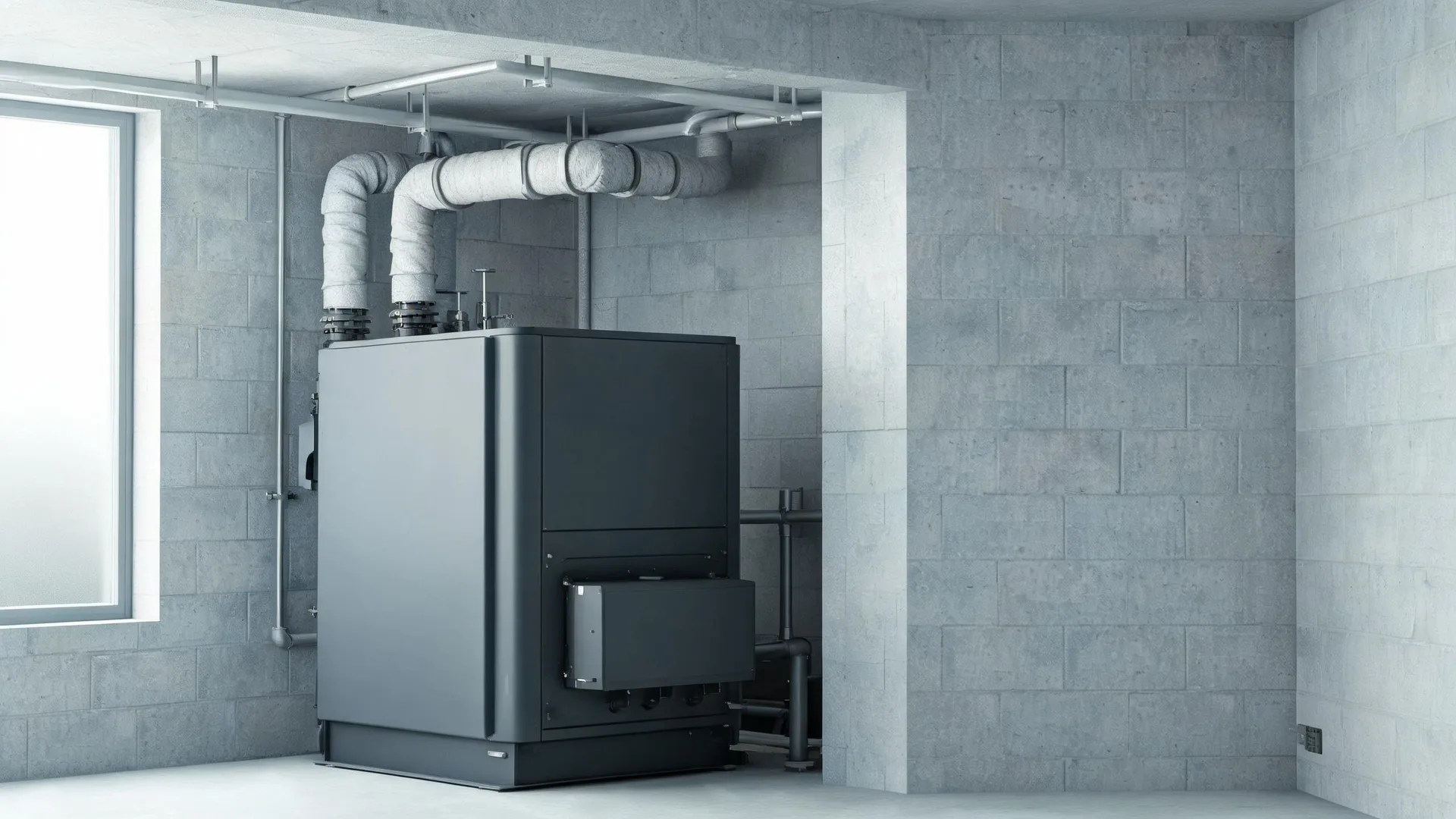
Soot and scale build with every cycle

A sooty burner or a scaled heat exchanger blocks heat from passing into the water the way it should, so the boiler burns more gas to warm the house. Each cycle it runs dirty leaves another layer behind. The longer that sits, the more work it takes to clean out, and the boiler spends that whole stretch running harder than it needs to.

No heat in some rooms while others stay warm points to trapped air or a circulator that's lost its grip. Banging or knocking from the pipes is usually water hammer or a kettle of built-up sediment hitting a hot surface. A boiler that short cycles, firing up and shutting off again before the house warms, is often struggling with pressure or a bad thermostat signal. Water pooling at the base is never nothing, even if it's just a few drops. A pilot or ignition system that won't stay lit points to a flame sensor losing its read on the flame. None of these get better by waiting, since a boiler that's struggling finds a way to keep running right up until it doesn't.

A repair makes sense when the rest of the boiler is sound and the failure is one part doing its job badly. A circulator, a valve, an ignition control. Swap the part and the boiler goes back to running the way it was built to. Replacement starts to make more sense when the failures stop being one thing. A heat exchanger that's cracked or badly scaled is a different question than a bad igniter, because the exchanger is the boiler. Pay to fix that and you've paid to keep the rest of an old unit running too. The pattern matters as much as any single failure. One repair in a few years is a boiler getting old normally. A repair every winter, each one a different part, is a boiler telling you it's running out of parts left to fail.