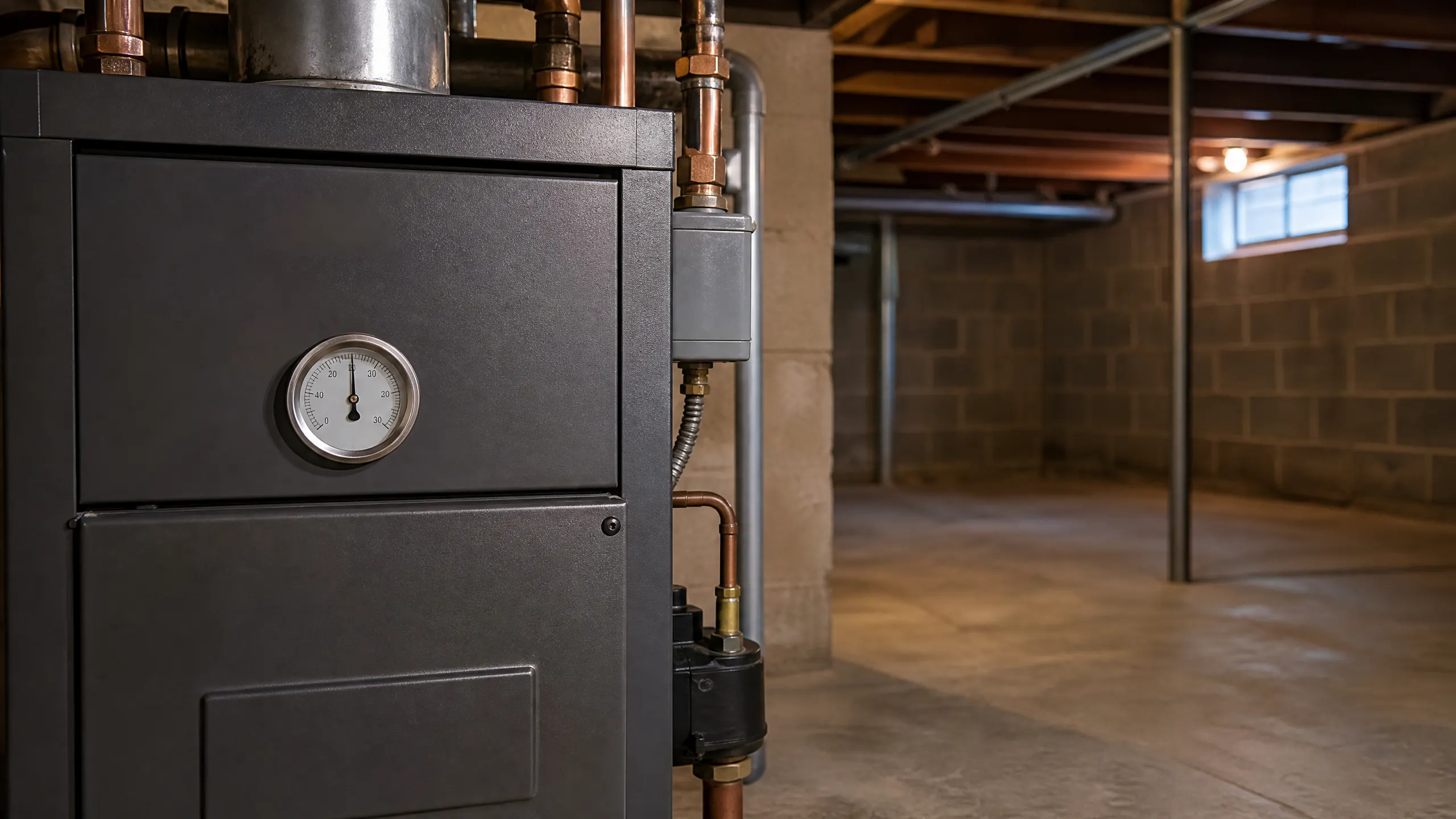





A dark metal boiler with a pressure gauge and copper pipe connections installed in an unfinished concrete basement.

Boiler Repair in Cambridge, MA

Tell us about the job

Takes about a minute. No obligation.

RepairBoilerMiddlesex County, MA
Step 1 of 2

What ZIP code is the job in?

Your boiler runs about eight months out of the year here, October through May. That overnight low near 19 in December and January means it's firing often, for long stretches, just to keep up. A boiler working that hard wears its parts sooner than one that gets a few months off. If something's making noise, short cycling, or not heating evenly, that's usually wear catching up with it rather than a one-off glitch. A proper diagnosis tells you whether it's a part worth replacing or a sign the boiler itself is on its way out.

Half the homes in Cambridge were built in 1962 or earlier.

A boiler that old is worth asking about before you pay to fix it again.

Middlesex County sees its share of storms, but none of that is what's wearing out your boiler

622 severe weather events from 2015 to 2024
10% of homes statewide lost power a day or more in 2024
467 damaging wind events from 2015 to 2024
Gas prices here make a struggling boiler expensive to ignoreNatural gas ran $21.27 per million Btu in Massachusetts in 2024.

September is worth paying attention to. Heat comes on in October here, and whatever was marginal over the summer gets found out fast once the boiler starts running every day. A pilot light that's been lazy, a pressure reading that's crept down, a valve that sticks, these tend to surface in the first cold snap rather than give warning ahead of time. Getting a boiler looked at before October, not after it's already working through an eight-month stretch, means catching the weak part on your schedule instead of theirs.

Find out if it's worth repairing before you pay for it

Before you pay for another repair, get a straight answer on how much life is left in the boiler. If it came with the house, it may be older than the fix is worth.

Find a contractor
A man in a dark cap, dark shirt and tan pants, seen from behind, carries a canvas tool bag up concrete steps toward a blue front door, with a potted green plant in a blue planter beside the entry.

Check the pressure gauge and the pilot

A cold boiler should read on the low end of the normal range marked on the gauge. If the needle has dropped below that, the system is losing water somewhere, or it needs a refill at the feed valve. If you have a standing pilot, look to see if it's still lit. A pilot that's out, or burning a weak, flickering flame instead of a steady blue one, points to a draft problem or a dirty thermocouple.
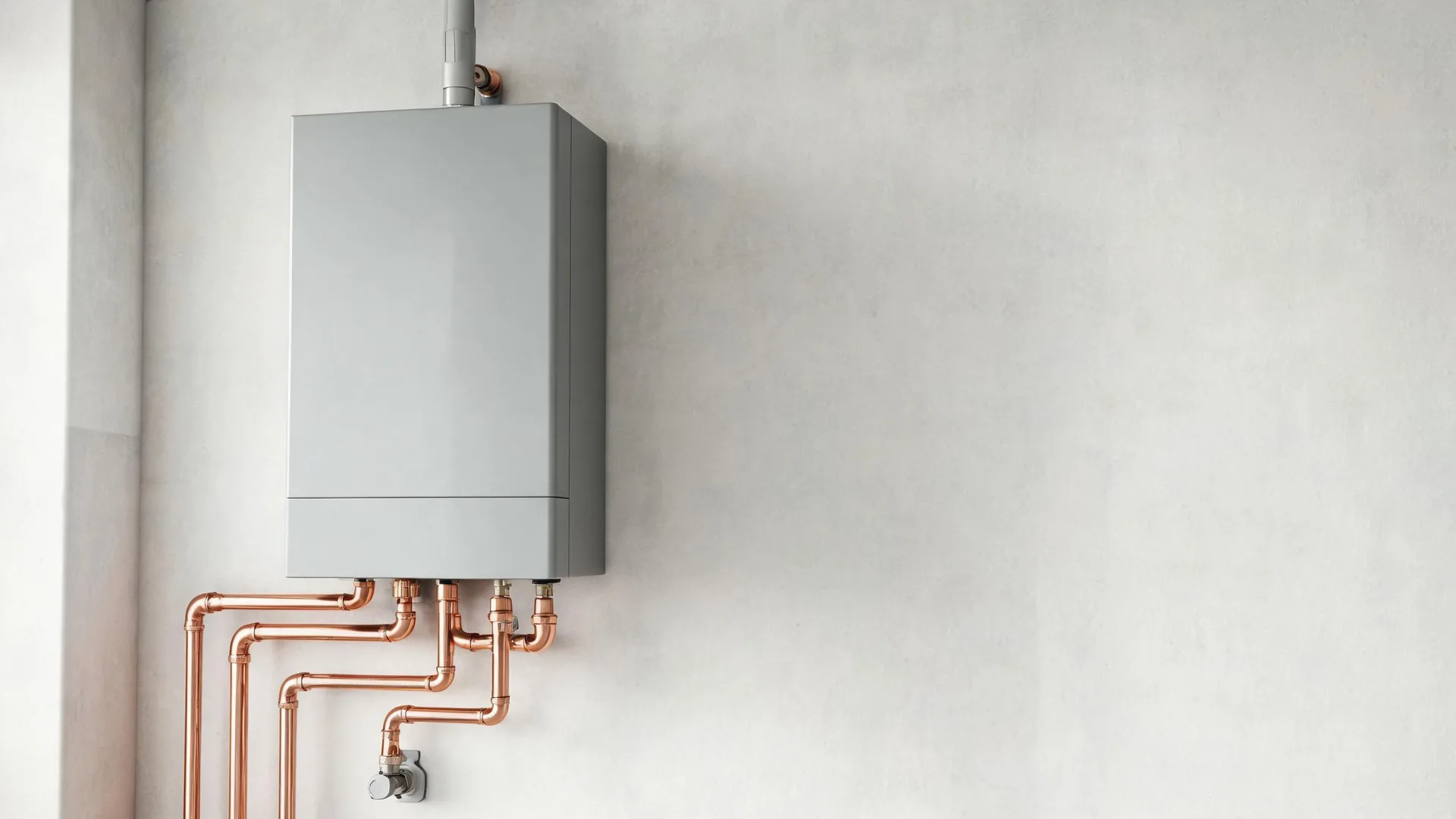
Know what to leave alone

Bleeding a radiator that's cold at the top but hot at the bottom is safe to try yourself, and it clears trapped air that causes uneven heat. Past that, don't open the boiler's cabinet or touch the gas valve. If you smell gas, hear banging or kettling from the heat exchanger, or see water pooling at the base, that's a sign to shut it down and get a tech out rather than something to keep running while you watch it.

Most boiler failures start small and get ignored until the heat's needed every day. A thermocouple or flame sensor wears out and stops signaling the gas valve to open, so the pilot won't hold or the burner won't fire. Mineral buildup and sludge collect in the heat exchanger over years, and that's what causes the banging or kettling sound as water flashes to steam against the scale. Circulator pumps wear out too, usually the bearings or the seal, and a failing one means the boiler fires but heat doesn't move through the radiators or the floors. Low water pressure is often a slow leak at a valve or a fitting rather than one big failure, and it's worth finding before the boiler shuts itself down on safety. None of these show up clearly until the system is under real load, which is why a boiler can seem fine one week and start acting up the next.

A boiler is worth repairing when the problem is one part, not the whole system. A thermocouple, a circulator pump, a valve, these are normal wear items, and swapping one out on an otherwise sound boiler is money well spent. What changes the math is the heat exchanger. Once that's cracked or scaled through with kettling, you're not fixing a part anymore, you're looking at the core of the machine, and that's usually not worth doing on an old unit. Age matters less than how many separate things are going wrong at once. One failure is a repair. A boiler that needs a new circulator this year and had a valve replaced last year is telling you it's done being reliable, and that pattern is worth more than any single symptom.