





White colonial houses with lit windows photographed at dusk along a tree-lined residential street.

Furnace Repair in Springfield, MA

Tell us about the job

Takes about a minute. No obligation.

RepairFurnace or heatingHampden County, MA
Step 1 of 2

What ZIP code is the job in?

Half the homes in Hampden County were built in 1959 or earlier. If yours is one of them, the furnace inside it may not be original, but it also isn't likely to be new. An older furnace has a lot of hours on its heat exchanger and blower motor already. When a repair comes up on a furnace that's been running that long, it's worth asking how much life is left in it before you put money into fixing it again.

8 months
October through May, your furnace is on duty
19°F
the average winter night it heats against
47 winter storms
in ten years, the nights a failure hurts most
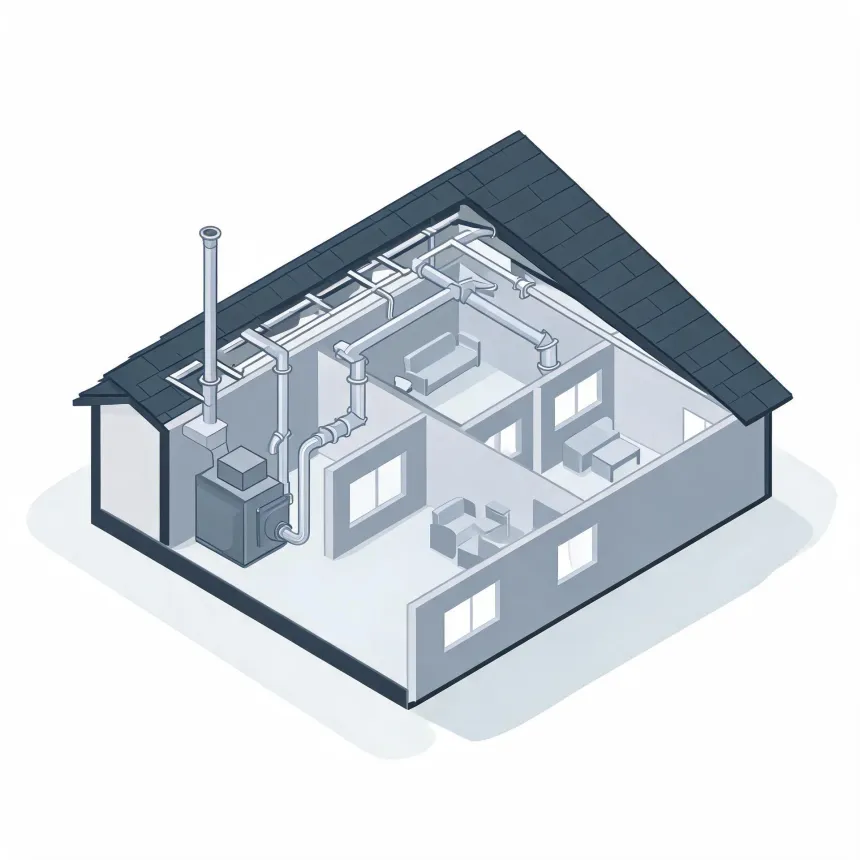
Isometric cutaway illustration of a single-story house showing interior rooms, a furnace unit with flue pipe, and branching ductwork running through the ceiling space under a dark shingled roof.
Your furnace works hardest from November through March.

NOAA nClimDiv, 1991–2020 normals

Furnaces in Hampden County run from October through May.

Eight months of work a year is what's driving the breakdown you're dealing with now.

October is when the weak ones fail

Heat runs October through May
Winter nights average 19°F
47 winter storms from 2015 to 2024
Nothing unusual here, just an old furnaceHampden County sees the same wind, snow and outages as the rest of the state

Natural gas in Massachusetts ran $21.27 per million Btu in 2024, among the highest in the country. A furnace that's short-cycling, running long to reach temperature, or firing more than it should is burning through that gas every time it runs. That cost doesn't show up all at once. It shows up a little worse on every bill until the problem gets fixed. A repair now stops it. Waiting just means paying more for the same broken furnace until you deal with it anyway.

Before you repair it, find out what else is left in it

Get a technician to look at the furnace, not just the repair. Ask what shape the heat exchanger and blower motor are in before you pay to fix what's broken now.

Find a contractor
A man in a navy long-sleeve shirt and tan work pants, seen from behind, carries a canvas tool bag up light-colored porch steps toward a blue front door.
A gas furnace with attached ductwork, gas piping, and condensate lines installed in a concrete-block basement.

One visit, the whole furnace gets looked at

A technician starts by watching it run. That means a full cycle, not just a glance inside the cabinet. They'll check how it ignites, how long it takes to reach temperature, and whether it shuts off clean or lingers. Then comes the heat exchanger, checked for cracks or hot spots, since that's the part that decides whether the furnace is safe to keep running at all. The blower motor gets checked too, for noise, for how hard it's working to push air through. Flame sensor, igniter, pressure switch, gas valve, each gets tested on its own, because a furnace can fail from any one of them while the rest stay fine. What they're really doing is figuring out if this call is a part swap or the start of a bigger conversation about the whole unit.

A small problem leans on the parts around it

A furnace that's struggling to ignite will try again and again, and every failed attempt puts a new load on the igniter and the gas valve. A blower pulling dirty air works harder to move the same amount of heat, and that extra strain lands on the motor bearings. The part that first showed trouble usually isn't the only one still fine.

A cracked heat exchanger doesn't stay the same size

A hot metal part that flexes every cycle will keep flexing along the same line, and a crack grows a little more with each run. Left alone, it stops being a repair and starts being a reason to shut the furnace off until it's replaced.

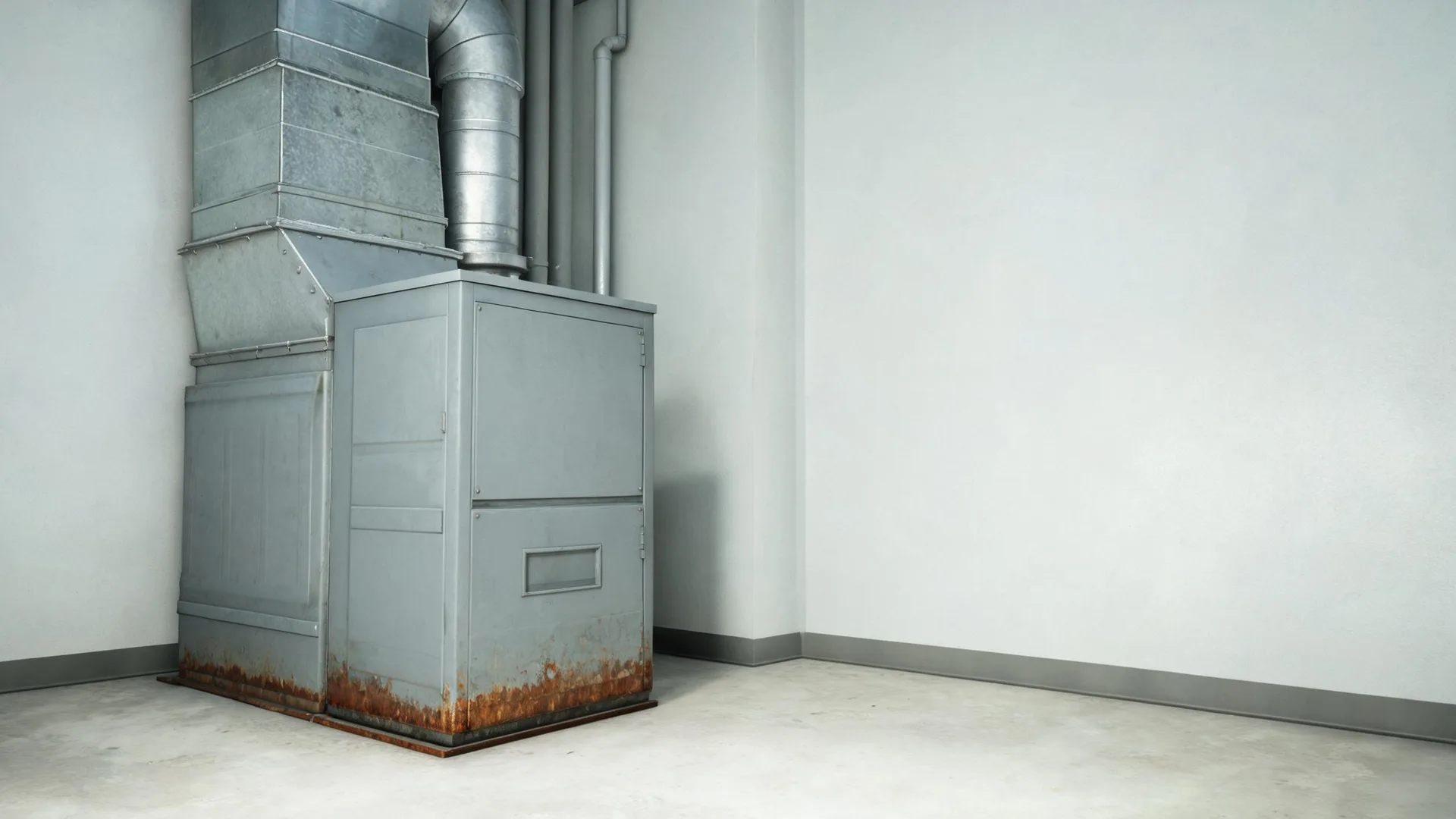
An empty unfinished basement containing a forced-air furnace with overhead ductwork, exposed ceiling joists, and a single hanging light bulb.

A new furnace would cut about $210 a year off heating for a typical Hampden County home.

  • A new high-efficiency furnace$880 a year
  • An older furnace$1,090 a year

Estimates for a typical Hampden County home, compared with an older unit built to the previous federal minimum, from EIA household energy data, Massachusetts fuel prices and NOAA climate normals. Your home will differ.

Repair makes sense when one part has failed and the heat exchanger is sound.

Replacement makes sense when the heat exchanger is cracked or the furnace keeps needing parts.

A repair decision really comes down to what else is riding on that same part. A furnace is a set of parts that each depend on the next one working right, so the question is never just what broke, it's what broke it. An igniter that failed once is a part replacement. An igniter that keeps failing is a sign the gas valve or flame sensor is making it work harder than it should. The same goes for a blower motor that's loud or slow to start. On its own that's a straightforward fix. If it's been drawing dirty air or straining against a clogged filter for a long stretch, the motor bearings have already taken that wear, and replacing one part without checking the rest just sets up the next call. A cracked heat exchanger changes the conversation entirely, because that's not a part you patch and move on from. How many winters it's already run matters more than how old the house is, since a furnace someone installed partway through a home's life can still be worn hard if it's been working every one of those winters. The honest question to ask is whether this repair fixes the problem or just buys time until the next part on the same chain gives out.