





An unfinished concrete basement containing a gas furnace with sheet-metal ductwork, utility shelving, and exposed overhead joists.

Furnace Repair in Quincy, MA

Tell us about the job

Takes about a minute. No obligation.

RepairFurnace or heatingNorfolk County, MA
Step 1 of 2

What ZIP code is the job in?

A furnace that's starting to fail usually tells you before it quits outright. Short cycling is the common one. It fires up, runs a few minutes, shuts off, then starts again before the house gets warm. That's often a flame sensor that can't hold a signal or a clogged filter choking airflow. A burner that clicks and clicks without catching, or lights with a bang instead of a steady whoosh, points to a dirty or failing igniter. Cold air blowing from the vents while the system runs means the heat exchanger or gas valve isn't doing its job, not the blower. A burning dust smell on the first runs of the season is normal and fades fast. If it lingers, or turns sharp and metallic, shut the system off and have it looked at. Any yellow or flickering flame where it should be steady blue means stop using it until someone checks the combustion.

8 months
October through May, your furnace is on duty
21°F
the average winter night it heats against
54%
of homes here heat with gas, so most furnaces here burn gas
87 winter storms
in ten years, the nights a failure hurts most
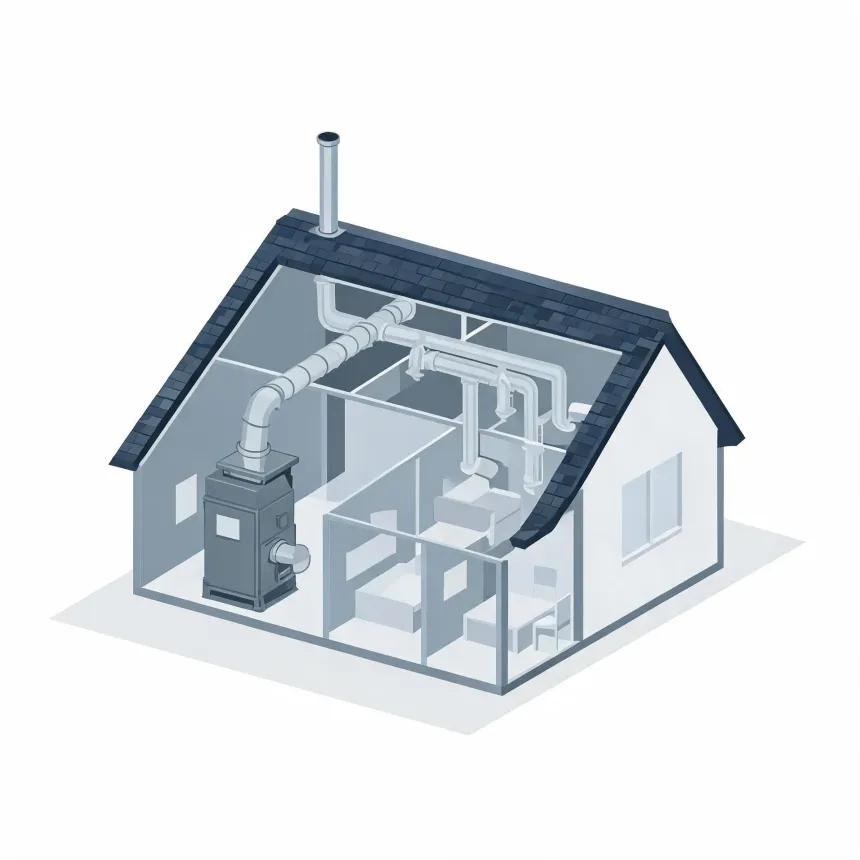
Isometric cutaway illustration of a small house showing a gray furnace unit with a flue pipe through the roof and branching ductwork running to rooms with simple furniture.
Your furnace works hardest from November through March.

NOAA nClimDiv, 1991–2020 normals

Half the homes in Norfolk County were built in 1964 or earlier.

A furnace that came with a house that old is a furnace worth asking hard questions about before you pay to fix it again.

Natural gas runs $21.27 per million Btu in Massachusetts, and this furnace runs October through May

Heat runs October through May
Winter nights average 21°F
87 winter storms from 2015 to 2024

Eight months of heat a year is a long season for a furnace to run clean. Norfolk County overnights average 21°F through December, January and February, and that's the stretch where a weak igniter or a tired flame sensor tends to show itself, because the furnace is cycling on longer to hold the house at temperature. Winter storms are common here, and a furnace that's already struggling has the least room to fail during one of those. The hard running is usually the reason behind whatever's going wrong, not bad luck. Getting it diagnosed properly tells you whether the fix holds or whether you're paying for the same visit again next month.

Heat starts up in October. September is when a weak part gets found before it fails.

Furnaces get checked at the end of a long idle, not the start of a hard one. Have it looked at in September, before the season's first cold night asks more of it than it can give.

Find a contractor
A man in a gray T-shirt and tan work pants, seen from behind, carries a worn canvas tool bag up concrete steps toward a blue front door of a house with gray siding and a potted shrub.
A gray residential gas furnace installed in an unfinished basement, surrounded by ductwork, a metal flue pipe, and a gas supply line.

How old is the furnace you're fixing

A furnace installed when the house was built could be older than the house itself by now if it's been replaced once already, or it could still be the original unit from 1964 or earlier. Ask whoever comes out which one you've got and how much life is left in it. A cracked heat exchanger or a failing gas valve on a furnace that old usually means the unit is done, not that it needs a part. Worth asking before the next repair, not after.

Most failures start with dirt or dust, not age

A furnace draws return air across a filter, and whatever gets past that filter settles on the blower wheel, the burners, or the flame sensor. A flame sensor coated with a thin film stops reading the flame and shuts the burner down, even though the furnace is otherwise fine. Burners clogged with dust burn uneven and can trip the limit switch. None of this means the furnace is failing. It means something that was never cleaned is finally getting in the way.

The parts that fail from age are different from the parts that fail from neglect

A heat exchanger cracks from years of heating and cooling, not from dust. Once that happens, the fix is a new furnace, not a new part. A gas valve or draft inducer motor wears out the same way, from age and run time, and replacing one of those on an old furnace is a real question worth asking rather than an automatic yes. Knowing which kind of failure you've got, a dirty part or a worn one, is most of what the repair call is for.

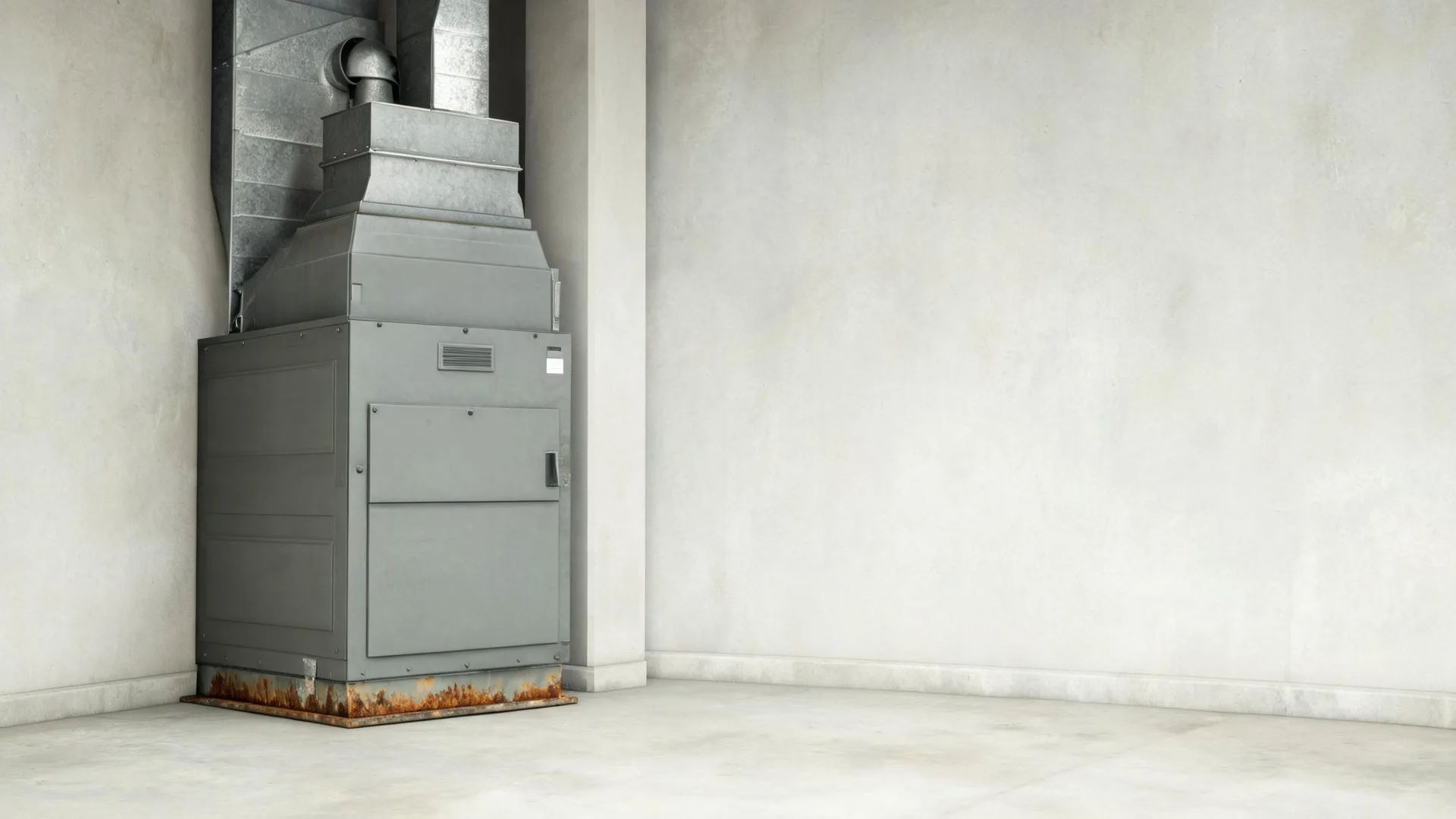
An unfinished basement containing a gas furnace with ductwork in the foreground and miscellaneous stored items along the far concrete wall.

A new furnace would cut about $200 a year off heating for a typical Norfolk County home.

  • A new high-efficiency furnace$810 a year
  • An older furnace$1,010 a year

Estimates for a typical Norfolk County home, compared with an older unit built to the previous federal minimum, from EIA household energy data, Massachusetts fuel prices and NOAA climate normals. Your home will differ.

Repair makes sense when one part has failed and the heat exchanger is sound.

Replacement makes sense when the heat exchanger is cracked or the furnace keeps needing parts.

A diagnostic starts before any panel comes off, just listening to the thing run and asking what it's doing that it shouldn't. Then the cover comes off and the tech checks for a flame, watches its color, and looks at how it responds across a full cycle, not just the first few seconds. Pulling the flame sensor to look for buildup takes a minute. Reading the igniter's resistance takes about the same. A pressure switch gets tested under draw, not just at rest, because some only fail once the inducer's been running a while. Static pressure across the filter tells you if the system is breathing right or working against itself. None of this is guesswork. Each test rules something out or points at exactly what's failing, so the part that gets replaced is the part that's actually bad.