




An unfinished basement featuring concrete block walls, exposed floor joists, and a metal forced-air furnace with ductwork near a central pillar.

Furnace Repair in Cambridge, MA

Tell us about the job

Takes about a minute. No obligation.

RepairFurnace or heatingMiddlesex County, MA
Step 1 of 2

What ZIP code is the job in?

Your furnace in Cambridge runs about eight months a year, October through May. Overnight lows across the county average 19°F in January, so it's rarely coasting. It's pushing hard most of the day and night for a big stretch of the year, and that kind of run time wears down an igniter or a blower motor sooner than you'd expect. Winter storms here add to the load, asking a furnace that already runs long hours to work even harder when the temperature drops fast. If yours is acting up, there's usually a real reason tied to how much work it's been doing. Worth having someone look at what's actually failing before you decide what to do about it.

8 months
October through May, your furnace is on duty
19°F
the average winter night it heats against
59%
of homes here heat with gas, so most furnaces here burn gas
89 winter storms
in ten years, the nights a failure hurts most
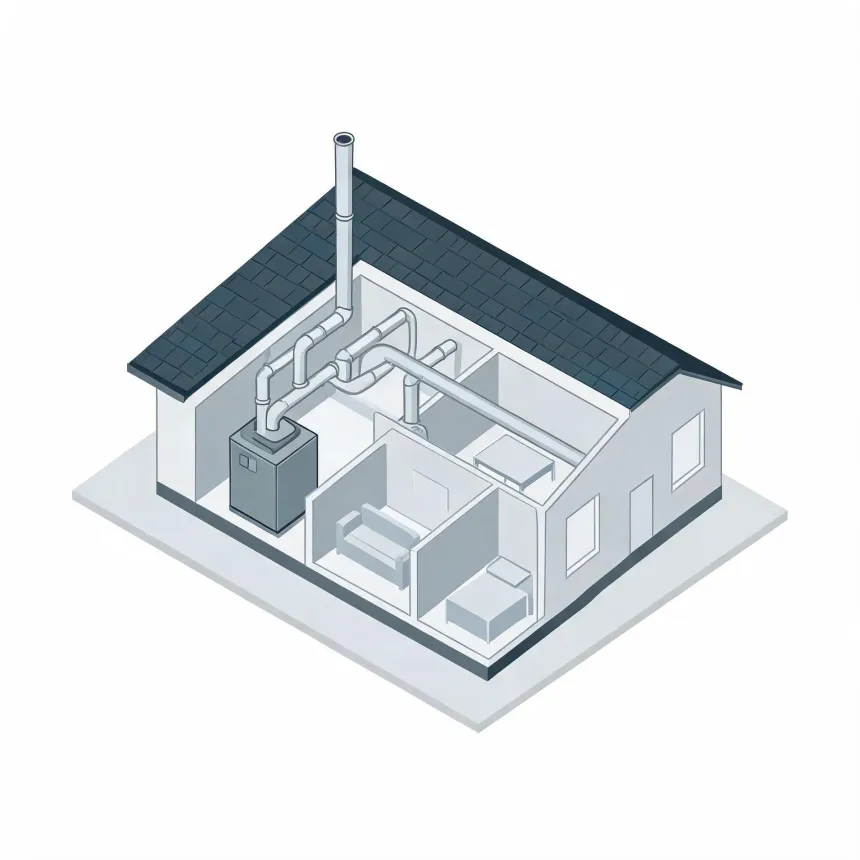
Isometric cutaway illustration of a single-story house showing a gray furnace connected to white ductwork and a flue pipe extending through the shingled roof, with simplified furniture in the interior rooms.
Your furnace works hardest from November through March.

NOAA nClimDiv, 1991–2020 normals

Half the homes in Middlesex County were built in 1962 or earlier.

A furnace that came with a house that old has likely already had one replacement, maybe two.

A furnace that runs this much, on gas this expensive, is costly to ignore

Heat runs October through May
Winter nights average 19°F
89 winter storms from 2015 to 2024

September is worth a call before the weather turns. Furnaces here start up for the season in October, and the first cold snap is when a weak igniter or a cracked heat exchanger usually shows itself. It sat unused since spring, and the parts that were already marginal don't always come back cleanly after months off. Getting it looked at in September means a problem gets caught on a mild day instead of the first freezing night. Once October hits, homes across the county are running heat for the next eight months straight, so whatever is wrong only gets more work to do.

Get it diagnosed properly

Your furnace works hard here, and that's usually what's behind the problem. Have it diagnosed properly so the fix lasts.

Find a contractor
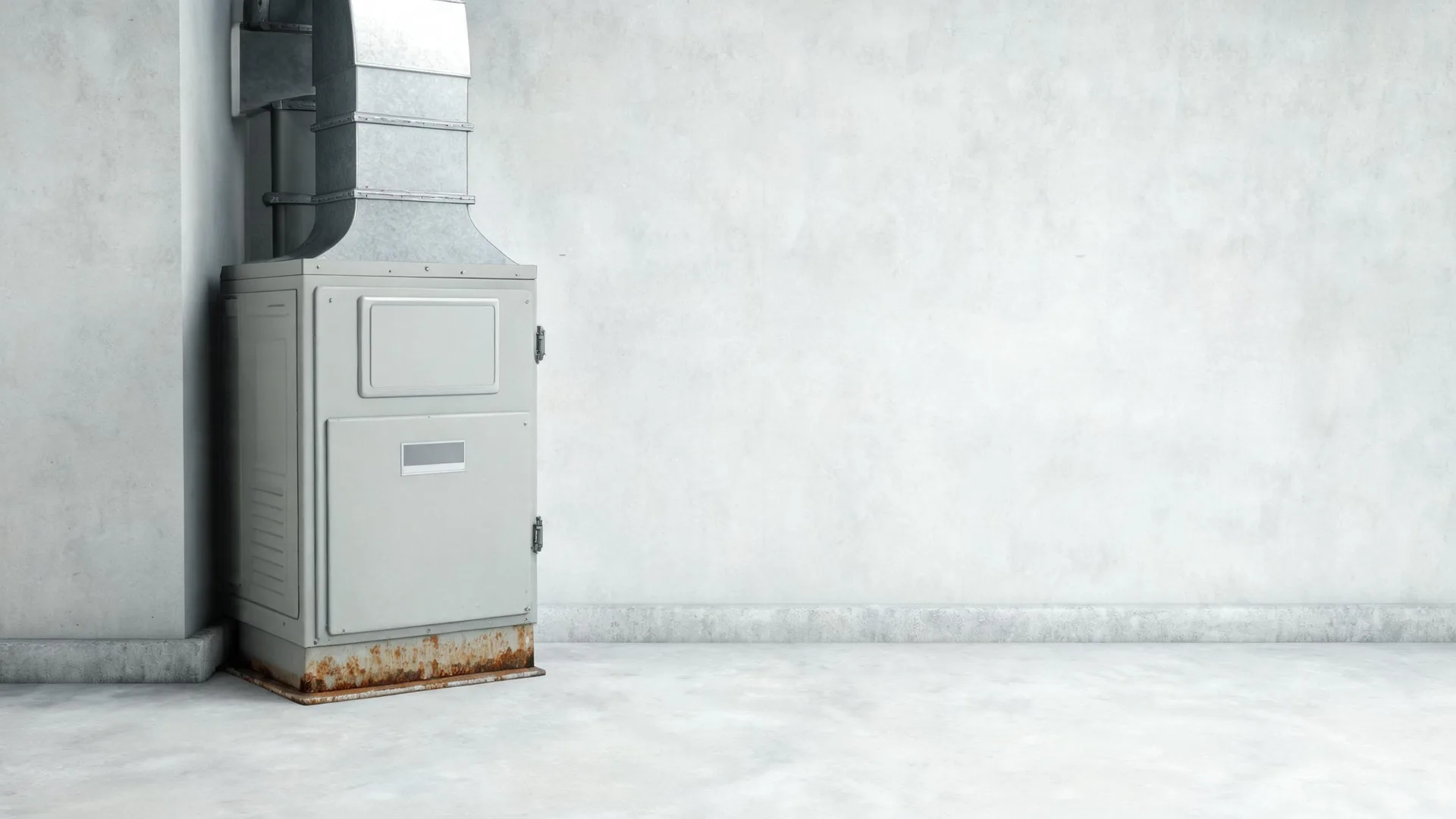
A gray gas furnace with attached ductwork and piping installed in an unfinished concrete basement.

Know what you're repairing before you pay for it

If yours is original to the house, ask the contractor straight out how much life is left in it before you pay for the repair. A furnace on its second life doesn't owe anyone a third. Sometimes the honest answer is to fix what's broken now. Sometimes it's to put that money toward a new one instead.

What you can check first

Make sure the thermostat is set to heat and the setting is above room temperature. Check the furnace switch, it looks like a light switch near the unit, and make sure nothing turned it off. Look at the filter and swap it if it's gray or clogged, a blocked filter can starve the system of air and shut it down on its own. If you have a standing pilot, check whether the pilot light is lit.

Where to stop

If the filter and thermostat check out and it still won't run, or it runs and shuts off again, that's a job for a contractor. Don't pull the burner compartment open or go near the gas line or flue connection. A furnace that smells like gas means leaving the house and calling the gas company first, not troubleshooting it yourself.

An unfinished basement interior showing a gray furnace unit beneath a bare incandescent bulb, surrounded by exposed joists, concrete walls, cardboard boxes, and utility pipes.

A new furnace would cut about $200 a year off heating for a typical Middlesex County home.

  • A new high-efficiency furnace$850 a year
  • An older furnace$1,050 a year

Estimates for a typical Middlesex County home, compared with an older unit built to the previous federal minimum, from EIA household energy data, Massachusetts fuel prices and NOAA climate normals. Your home will differ.

Repair makes sense when one part has failed and the heat exchanger is sound.

Replacement makes sense when the heat exchanger is cracked or the furnace keeps needing parts.

A diagnostic visit starts with the contractor asking what the furnace is doing, or not doing, before anyone opens a panel. Short cycling, no heat at all, a burner that won't light, each one points down a different path. From there it's a sequence. Check for power at the board. Check the thermostat signal. Watch the ignition sequence happen, or watch it fail. A gas furnace has to follow a set order to run safely. The igniter glows, the gas valve opens, the flame sensor confirms the flame is actually there, and the inducer motor has to clear the flue before any of that starts. A meter on the igniter or the flame sensor tells the contractor whether that part is still working within range or has drifted off and is the reason the sequence stalls. Pulling the blower and looking at the heat exchanger is part of a full visit too, since that's not something anyone can judge from how the furnace sounds running. By the end you should know which part failed and why, not just that something did.