







Two white multi-story colonial houses with lit windows and black shutters photographed at night, fronted by a stone wall.

Furnace Repair in Boston, MA

Tell us about the job

Takes about a minute. No obligation.

RepairFurnace or heatingSuffolk County, MA
Step 1 of 2

What ZIP code is the job in?

Furnaces in Boston run from October through May, about eight months of work a year. That's a long season, but nothing about the cold here is unusual. Overnight lows average 23°F through December, January and February, which is normal range for a furnace built for this region. Snow and ice hit the area often enough, but that affects roads and power lines, not what's going on inside the furnace. When one stops heating or starts short cycling, the cause is usually something ordinary. A failed igniter. A dirty flame sensor. A clogged filter choking off airflow. A contractor who knows the machine can run through these fast and find the real one.

8 months
October through May, your furnace is on duty
23°F
the average winter night it heats against
57%
of homes here heat with gas, so most furnaces here burn gas
22 winter storms
in ten years, the nights a failure hurts most
Isometric cutaway illustration of a single-story house with a dark shingled roof, showing interior rooms with beds and furniture, overhead ductwork, and a gray furnace with a tall flue pipe at the exterior wall.
Your furnace works hardest from November through March.

NOAA nClimDiv, 1991–2020 normals

Furnaces in Boston start their season in October.

September is the month to get a furnace checked, before the first cold night finds the weak part.

Gas runs $21.27 per million Btu here, and a furnace running wrong burns that every month it's broken

Heat runs October through May
Winter nights average 23°F
22 winter storms from 2015 to 2024
Boston's furnaces are old enough to voteHalf the homes in Suffolk County were built in 1949 or earlier

A furnace that's short cycling or struggling to hold a temperature isn't using less gas because it's not working right. It's using more. The burner fires again and again trying to reach the thermostat setting, and every one of those cycles burns gas at $21.27 per million Btu. A clogged filter or a bad igniter doesn't fix itself with time. It just keeps costing you every week it runs. Getting the actual cause found now is worth more than waiting to see if it settles down on its own.

Find out what's left in it before you pay to fix it

If your furnace came with a house built in 1949 or earlier, repair is only half the question. A contractor can tell you how many years it has left in it, and whether this repair is worth making. That's worth knowing before the money's spent, not after.

Find a contractor
A man in a dark T-shirt and tan work pants, seen from behind, climbs porch steps toward a blue front door while carrying a canvas tool bag filled with hand tools.
A gas furnace with attached ductwork, gas piping, and condensate lines installed in a concrete-block basement.

The parts that wear are the parts that switch

The igniter is usually the first thing to go. It glows hot enough to catch the gas, and every cycle asks it to heat up and cool down again. Enough cycles and it cracks or weakens until it won't catch anymore. The flame sensor fails a different way. It coats over with a thin film from normal combustion, and once that coating builds up, it can't tell the burner is lit. The system reads that as no flame and shuts itself down, which is the furnace doing what it's supposed to do, not malfunctioning. Pressure switches stick. Inducer motors wear on their bearings over years of running. None of this means a furnace is being pushed too hard. It's just what happens to small parts that switch on and off that many times over a season. A furnace built for cold winters is built to handle the load. It's the switching, not the cold, that wears a part down.

Listen before you look

A furnace usually tells you something is wrong before it quits outright. A boom at startup means gas is building up before it catches, instead of lighting right away. A rattle from the cabinet often means a loose panel or a part working its way free. Grinding or squealing points to a motor bearing giving out. None of these fix themselves, and all of them are easier to run down while the furnace is still running than after it stops.

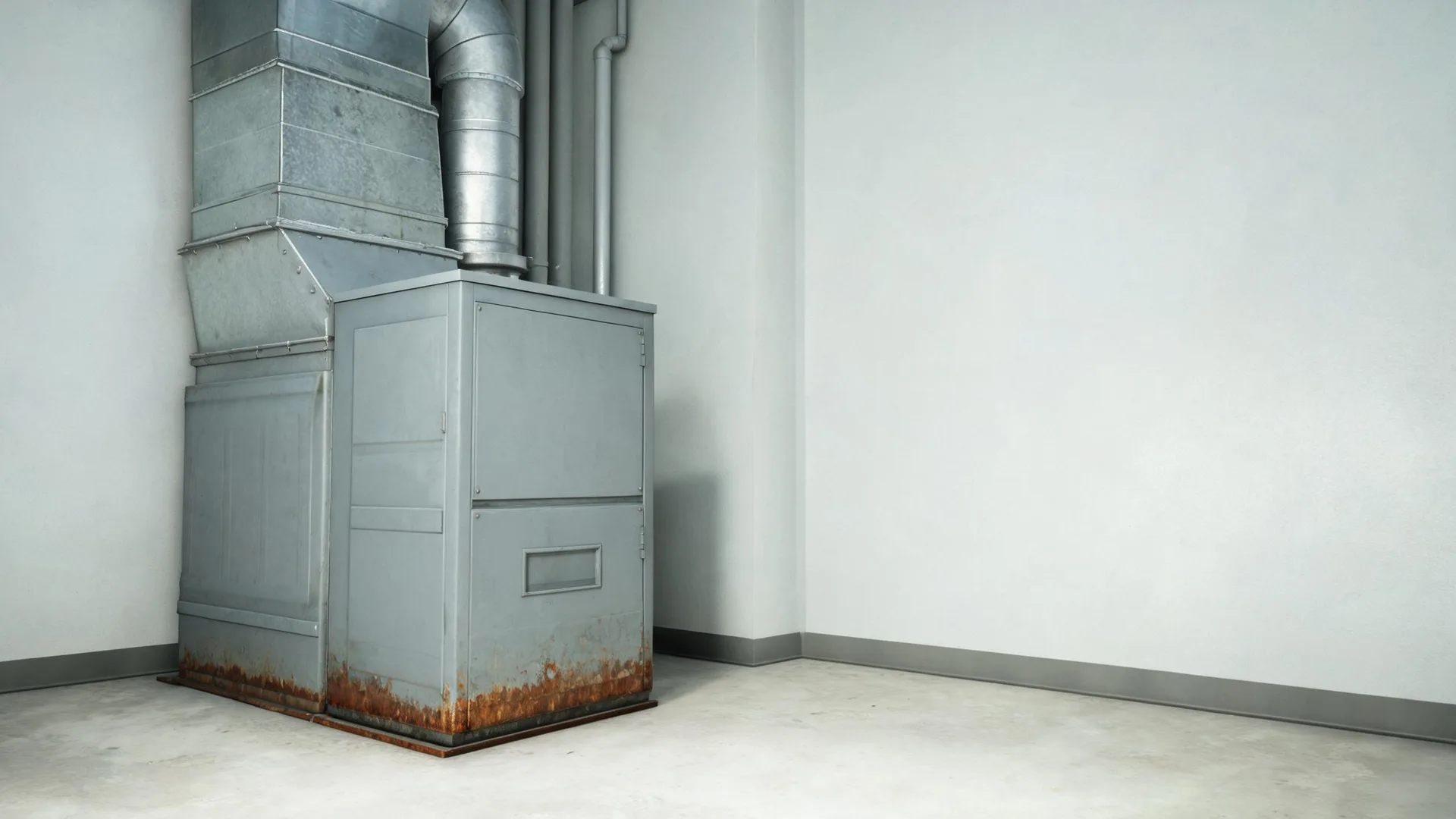
Short cycling wastes a call, not just gas

If the furnace shuts off before the room reaches temperature, then fires again a few minutes later, something is cutting the cycle short. It could be a flame sensor losing its signal, a filter choking airflow until a safety switch trips, or a cracked heat exchanger shutting things down for safety. Telling a contractor it's short cycling, and how often, gets you a faster diagnosis than waiting to describe it after the fact.

An empty unfinished basement containing a forced-air furnace with overhead ductwork, exposed ceiling joists, and a single hanging light bulb.

A new furnace would cut about $200 a year off heating for a typical Suffolk County home.

  • A new high-efficiency furnace$790 a year
  • An older furnace$990 a year

Estimates for a typical Suffolk County home, compared with an older unit built to the previous federal minimum, from EIA household energy data, Massachusetts fuel prices and NOAA climate normals. Your home will differ.

Repair makes sense when one part has failed and the heat exchanger is sound.

Replacement makes sense when the heat exchanger is cracked or the furnace keeps needing parts.

A furnace is worth fixing when the failure is one part doing one job. An igniter, a flame sensor, a pressure switch. Swap the part and the furnace is back to new, because everything else in it only ages when it runs, and replacing one part doesn't add wear to the rest. The heat exchanger is the one part that changes the math. It's not something a contractor replaces on its own, since the cost of swapping it starts to compete with a new furnace, and cracks in it aren't always safe to run a repair around. So the real question isn't just what broke. It's whether what broke is a part, or the exchanger itself.