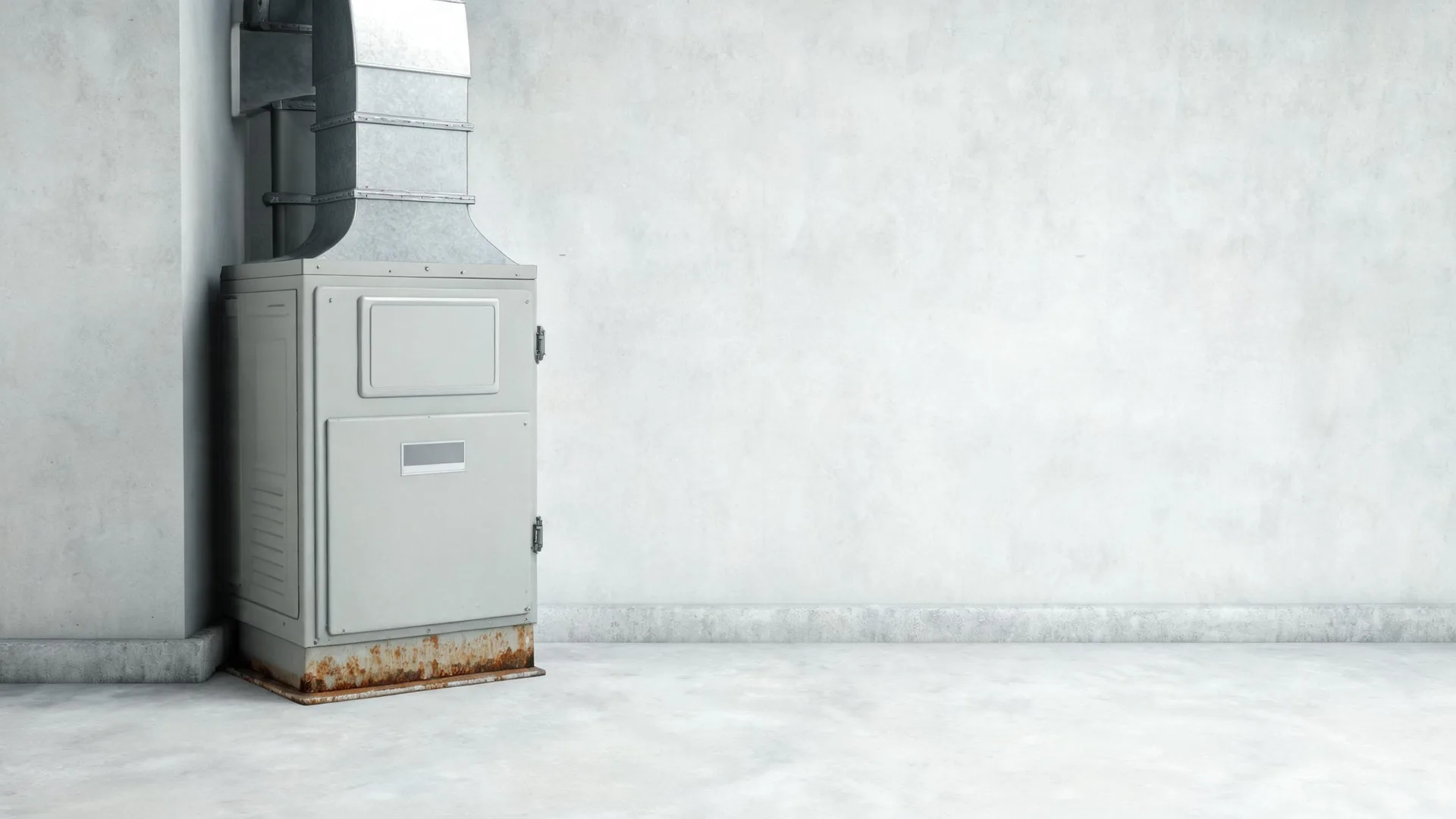
September is the month to get it looked at
Furnaces here sit idle from spring until October. A weak igniter or a cracked heat exchanger can sit quiet all summer and only show itself once the burners start cycling for real.

Takes about a minute. No obligation.
Furnaces here sit idle from spring until October. A weak igniter or a cracked heat exchanger can sit quiet all summer and only show itself once the burners start cycling for real.
A furnace that's been losing ground all summer usually makes it through a light start but not eight months of regular runtime. If yours is acting up as October sets in, that's the weak part finally meeting a real load.
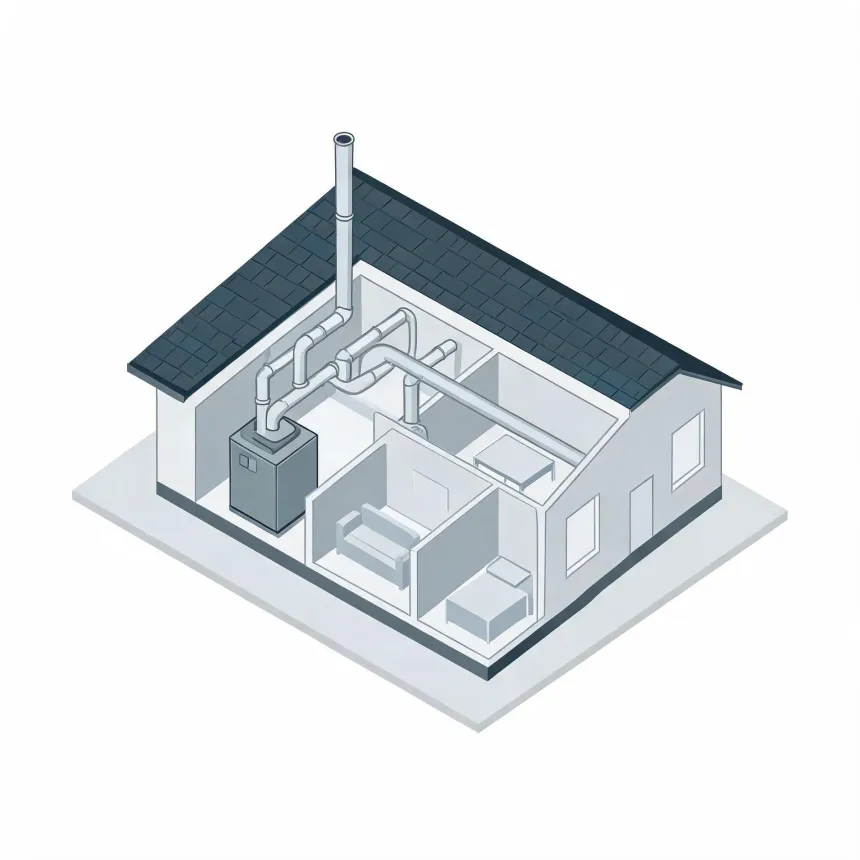
NOAA nClimDiv, 1991–2020 normals
Furnaces in Barnstable Town run eight months straight, October through May.
A furnace that age isn't usually the fix. It's one worn part finally giving out under a long season.




Before anyone comes out, there are a few things worth checking. Look at the thermostat first. Make sure it's set to heat and the set temperature is actually above room temperature, since a bumped setting or a dead thermostat battery can look exactly like a dead furnace. Check the filter. A filter packed with dust chokes off airflow and can trip a limit switch that shuts the burners down as a safety measure. Go to the breaker panel and look for a tripped breaker, and if the furnace has a power switch nearby, usually mounted on or near the unit itself, make sure it hasn't been bumped off. If the furnace uses a standing pilot, check whether the pilot light is actually lit. None of this fixes a cracked heat exchanger or a worn igniter, but it rules out the simple stuff before anyone opens the cabinet.
Problems tend to show up in the first weeks of the season, when the load hits a part that was already weak.
Find a contractorMost furnace failures come down to one part that finally wore past its limit. The igniter takes a hit every cycle. It heats up, cools down, heats up again, and after enough cycles it gets brittle and cracks. A flame sensor coated in residue stops reading the flame properly. The burners shut down as a safety measure even though the flame was fine. Blower motor bearings wear from steady use and start pulling more current until the motor trips its overload. The heat exchanger matters most of all. It expands and contracts with every heat cycle, and metal fatigue eventually opens a crack. None of these parts announce themselves ahead of time. A part can run fine on light, occasional use and then fail once it has to carry real demand.
A furnace that fires up, runs briefly, then shuts off and starts again isn't getting through a normal cycle. A dirty flame sensor, a clogged filter restricting airflow, or a cracked heat exchanger tripping a safety switch can all cause this. It's worth having someone look at before the burners stop lighting at all.
Sometimes the blower is running but the burners never lit, and that's an igniter or gas valve problem. Sometimes the burners are fine but the air coming out feels lukewarm, which points more toward airflow or a limit switch cutting the burners short. Either way it's the kind of thing to get checked before the only setting left is off.
Estimates for a typical Barnstable County home, compared with an older unit built to the previous federal minimum, from EIA household energy data, Massachusetts fuel prices and NOAA climate normals. Your home will differ.
Repair makes sense when one part has failed and the heat exchanger is sound.
Replacement makes sense when the heat exchanger is cracked or the furnace keeps needing parts.
Most of the time the question isn't the furnace, it's the part. A cracked heat exchanger means replacing the furnace, because that part isn't sold on its own and isn't meant to be. An igniter, a flame sensor, a blower motor, a control board, those get swapped out and the furnace runs like normal again. The decision usually comes down to how many of those parts have already been replaced and how old the rest of them are. One worn part on an otherwise sound furnace is a repair. A furnace that's already had the blower motor and the control board go is telling you where the rest of it stands.