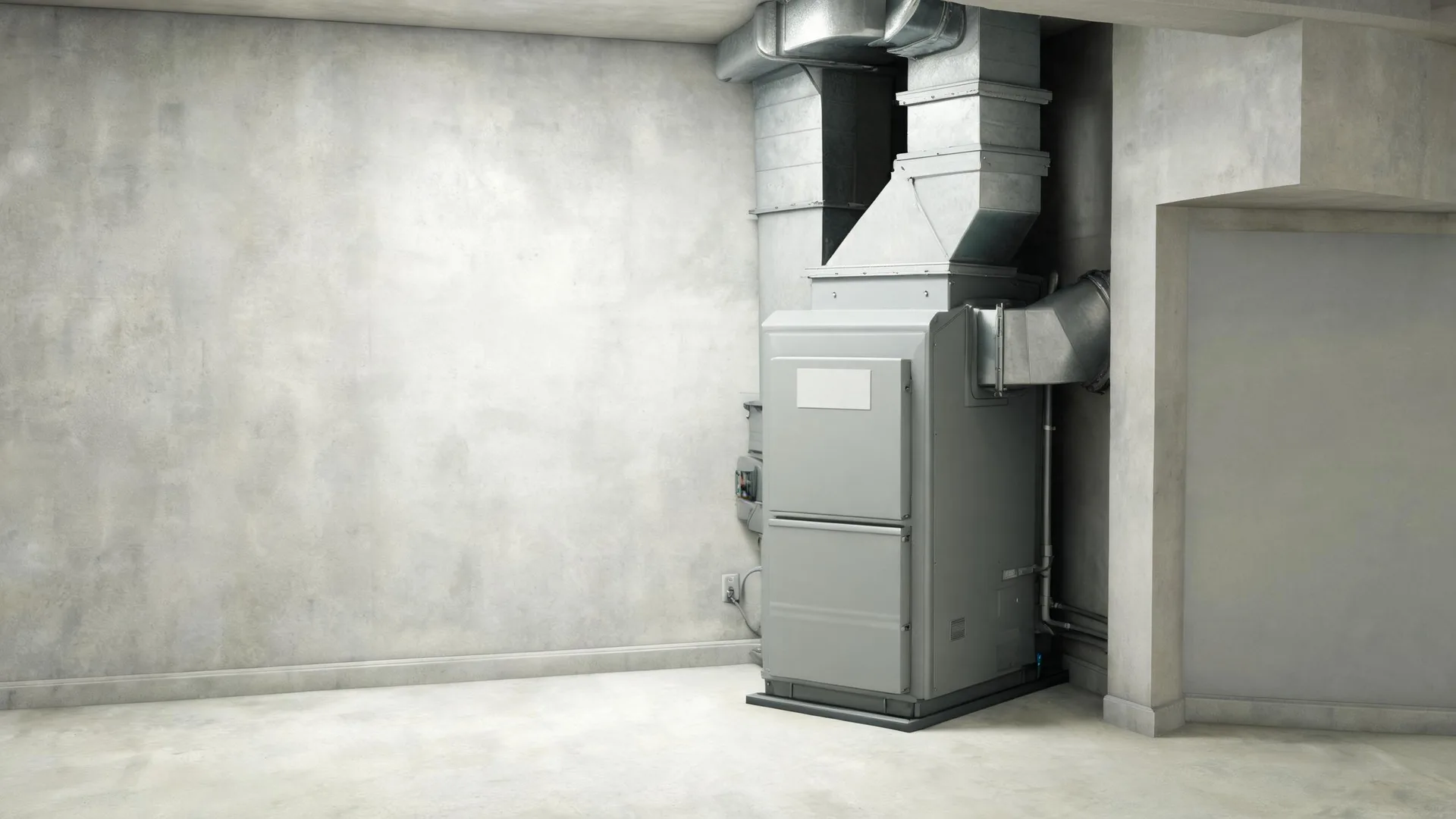
Half the homes here were built in 1959 or earlier
A furnace going into a house that age is going into ductwork and a gas line sized for whatever ran before it. The new unit should get sized to the house, not matched to the old equipment.
Takes about a minute. No obligation.
A furnace going into a house that age is going into ductwork and a gas line sized for whatever ran before it. The new unit should get sized to the house, not matched to the old equipment.
A contractor may need to adjust ductwork or venting to get the new furnace running the way it's rated to. Worth asking about before the work starts, not after.
NOAA nClimDiv, 1991–2020 normals
Furnaces in Hampden County run from October through May, eight months of the year.
Eight months of winter work will expose a furnace that was sized wrong from the start.



Hampden County sits in climate zone 5A, a cool zone where the furnace carries more of the year's work than the air conditioner. Any gas furnace installed here now has to hit at least 80 percent AFUE, the current federal minimum for non-weatherized units. That floor is set to rise to 95 percent AFUE for furnaces built from December 2028 on. A furnace installed today under today's minimum will still be running long after that higher standard takes hold.
Gas heats close to half the homes in Hampden County, more than any other fuel. If gas already runs to your house, a new furnace uses what's already there, the same line, the same venting path. That keeps the job simpler than switching to a different fuel, which is why most furnace replacements here stay gas.
Find a contractor
October through May, eight months of the year. That's the stretch your furnace needs to be ready for, not the week it turns cold. Replacing it in September means it's broken in and running right before it has to carry the house through winter. Wait until the first cold snap and you're making the decision under pressure, with whatever unit can be installed fastest.
A contractor should measure the house room by room to size the furnace, not just quote something close to what's already there. Too big and the furnace short cycles, heating the house in bursts and wearing out its parts faster. Too small and it runs constantly without catching up on the coldest days. The only way to know the right size is the calculation, not the square footage alone.
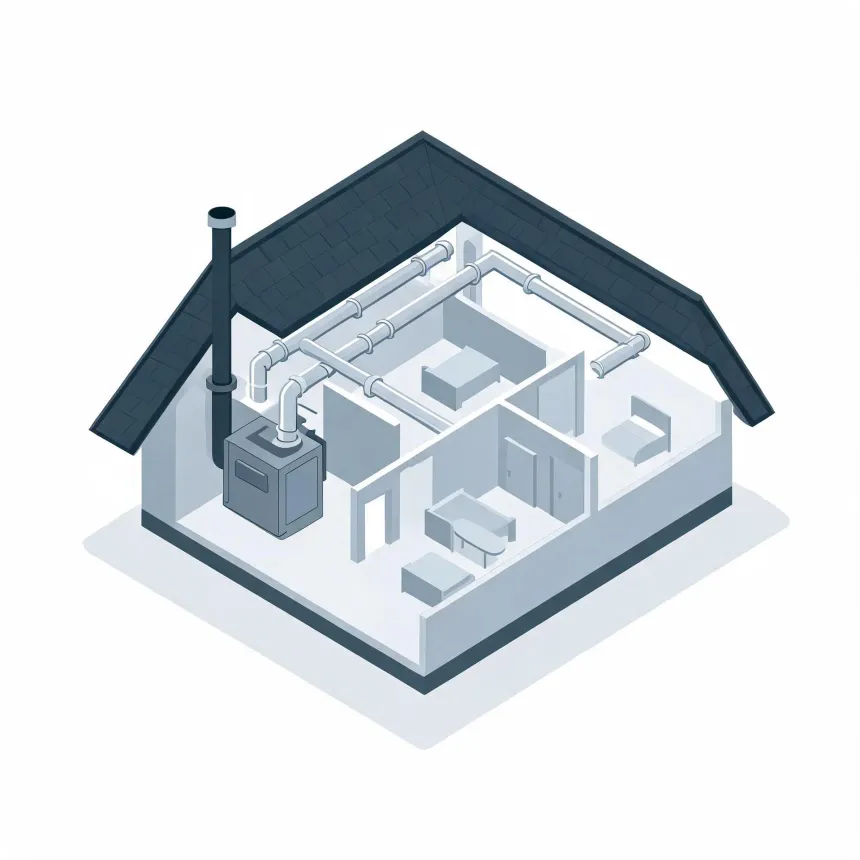
A higher efficiency furnace vents differently than an older one. Some vent through a wall with plastic pipe instead of up through a chimney, and if the furnace shares a chimney with a water heater, pulling it out can leave that chimney too large to vent the water heater safely on its own. Worth asking how the new furnace vents and what else uses that same chimney now.
Estimates for a typical Hampden County home, from EIA household energy data, Massachusetts fuel prices and NOAA climate normals. Your home will differ.
Install day starts with the old furnace coming out, and that alone takes a few hours once the gas line, vent and ductwork connections are disconnected. The new unit gets set in place, leveled, and connected to the gas line, the vent and the supply and return ducts, then the electrical and thermostat wiring gets run to it. A contractor pressure tests the gas connection before anything gets fired up, because a leak found after startup is a much bigger problem than one caught before. Once it's hooked up, the furnace runs through a full cycle while the technician checks the flame, the temperature rise across the heat exchanger, and the airflow at the registers. Settling the gas pressure and blower speed to match the ductwork is what separates a furnace that just turns on from one that's actually tuned to the house it's heating.