





A row of illuminated white colonial houses photographed at twilight along a tree-lined road with a stone wall in the foreground.

Boiler Installation in Vineyard Haven, MA

Tell us about the job

Takes about a minute. No obligation.

New system or replacementBoilerDukes County, MA
Step 1 of 2

What ZIP code is the job in?

Propane ran $41.72 per million Btu in Massachusetts last year. If your boiler runs on propane, that price sets your fuel bill before anything else about the house matters. A boiler running on the low end of its efficiency range burns more propane to put out the same heat, and at that price the difference shows up fast. The rating on the new boiler is worth checking closely for this reason, not as a formality.

Boilers here start running in October.

Installed in September, this boiler is tested and ready before the first cold night, not during it.

Most homes in Vineyard Haven heat with propane, so a propane boiler is the easier system to install and service

40% of homes heat with propane
Heat runs October through May
Winter nights average 27°F
A normal boiler will do hereHeat runs October through May, with winter nights averaging 27°F. Nothing about that calls for sizing up.

Vineyard Haven falls under zone 5A, and gas-fired hot water boilers built on or after January 15, 2021 have to reach 84 percent AFUE. That's the floor, not a target to aim for. A boiler sold today has to clear that bar before it ever gets installed, so the question worth asking is how far above it the model you're considering sits. Given what propane costs here, the gap between a boiler at the minimum and one built to run higher is the gap you'll see on the fuel bill every winter after.

Ask for the AFUE number before you decide

At $41.72 per million Btu, the gap between a boiler built to the minimum and one built higher shows up on the propane bill. Get that number for the model you're considering before you sign off on it.

Find a contractor
A man in a gray t-shirt and brown work pants carries a canvas tool bag up porch steps toward a blue front door of a house with gray siding.

AFUE measures what the burner wastes

The rating tells you how much of the fuel burned turns into heat in your home and how much goes out the flue. A boiler with a higher AFUE loses less heat up the vent for every cycle it runs. That's the whole measurement. It says nothing about how big a boiler you need or how fast it heats the house.
The rating assumes correct install and upkeep

A boiler only hits its stamped AFUE when it's sized right for the heat load, piped correctly, and the heat exchanger stays clean. Scale buildup, a fouled burner, or short-cycling from an oversized unit will pull real-world performance below the number on the label. The rating is what the boiler can do, not a guarantee of what it will do.

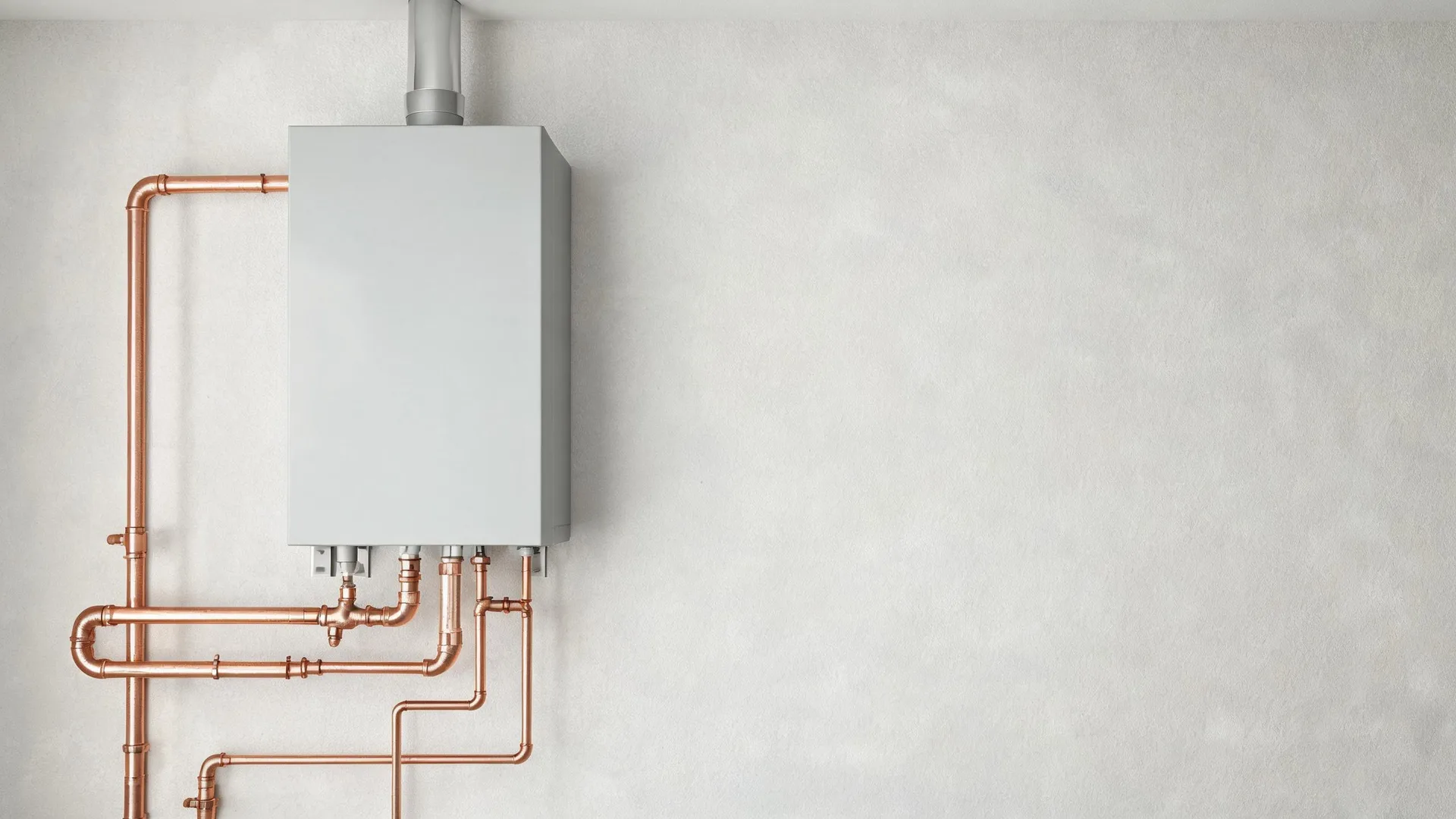
The boiler itself is one line item. Venting is another, and it often moves the price most, because a change in how the unit vents means new pipe, new routing, sometimes a new termination point through the wall or roof. Piping configuration matters too. A straightforward swap where the new boiler's connections line up with the existing gas and water lines takes less work than one where the near-boiler piping has to be rebuilt to fit. Zoning adds cost if the house is split into multiple heating areas, since each zone needs its own valve or circulator wired in and controlled. The heat loss calculation itself doesn't cost much, but what it finds does. A boiler sized correctly for the house sometimes carries a different output than the one coming out, and that changes what fits the existing pipe sizes. None of this is optional work tacked onto a bid. It's what separates a boiler that's connected from one that's actually installed right.

Install day starts with the old boiler coming out, along with the venting that served it. If the new boiler pulls combustion air differently or vents at a different rate, that pipe run gets redone, not reused. Gas and water lines get fitted to the new unit's connections, which rarely match the old one exactly. Once it's piped in, the system gets filled and purged of air, because trapped air in the lines causes noise and uneven heat at the radiators or baseboards later. The last part is combustion testing, where the technician checks the flue gas to confirm the boiler is burning correctly and actually hitting the efficiency it's rated for. A boiler that fires but never gets tested is a boiler nobody has confirmed is running right.