White colonial-style houses with lit windows photographed at dusk along a tree-lined street.

Boiler Installation in Quincy, MA

Tell us about the job

Takes about a minute. No obligation.

New system or replacementBoilerNorfolk County, MA
Step 1 of 2

What ZIP code is the job in?

The rating is about fuel use, not comfort

An efficiency rating tells you how much of the fuel a boiler burns actually turns into heat for the house instead of going out the flue. A higher-rated boiler wastes less fuel doing the same job. It says nothing about how fast the house warms up or how even the heat feels, so it shouldn't be the only thing you weigh against price.


The install affects whether you get that rating

A boiler only hits its rated efficiency when it's sized and piped correctly for the home it's heating. Too large a boiler cycles on and off more than it should and never settles in to run efficiently. The rating on the label is what the unit can do under the right conditions, not a guarantee of what it will do.

Taking out the old boiler is part of the job, not an extra step.

Whoever installs the new one should plan for hauling off the old, plus whatever venting or piping only made sense for that unit.

Heat runs eight months here, October through May. Put the new boiler in before October, on your schedule.

Heat runs October through May
Winter nights average 21°F
87 winter storms from 2015 to 2024
Most of Quincy heats with gasGas heats 54.3% of homes in Norfolk County, more than electric, oil and propane combined.

Norfolk County sees its share of rough weather, 87 winter storms between 2015 and 2024, plus wind, hail, even the occasional tornado. None of that changes what boiler you need. A standard size and a standard efficiency rating heat a home here the same way they would anywhere else in the region. What severe weather does affect is the power to run it. Most boilers need electricity for the igniter and the circulator pump even if the fuel itself is gas or oil, so a storm that knocks out power stops the heat regardless of how new or efficient the unit is. That's a reason to ask about backup power, not a reason to size up the boiler itself.

Gas costs real money here. Install a boiler that doesn't waste it.

Gas in Massachusetts cost $21.27 per million Btu in 2024. Heat runs here most of the year. A boiler that wastes less of that fuel out the flue costs less to run for as long as you own it, and sized and piped right, the new one can actually hit the rating on its label.

Find a contractor
A man in a dark jacket, tan work pants and a cap, seen from behind, climbs stone steps toward a blue front door while carrying a canvas tool bag, with a blue planter of greenery at left.

Ask what size they're proposing, and why

A contractor should size a boiler by doing a heat loss calculation on the house, not by matching the old unit or rounding up for safety. Bigger isn't a cushion. An oversized boiler short cycles, turning on and off before it settles into a steady burn, and that wears parts faster and burns more fuel than the label promises. Ask what numbers they used to land on this size.

Ask what happens to the near boiler piping

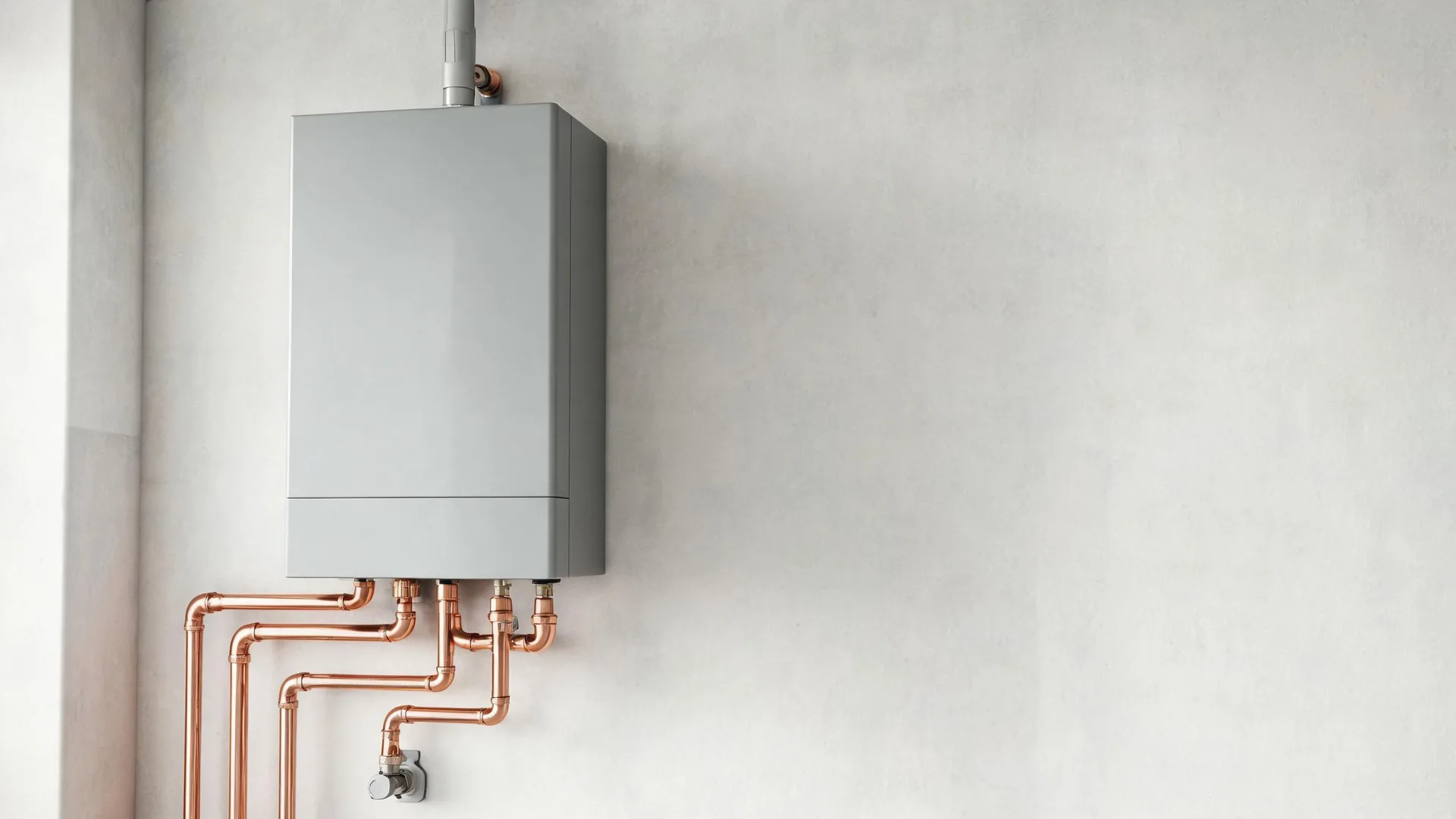
The pipes and venting run right next to the boiler were sized for the old unit's output, not necessarily the new one's. If they're reused as is, the new boiler can end up fighting its own piping, pushing harder than it should or not circulating water the way it's designed to. Ask whether the near boiler piping gets redone to match the new unit or just reconnected as is.

Sizing a boiler comes down to how much heat the house actually loses on the coldest day, not square footage and not what the old unit happened to be. A contractor works that out room by room, adding up the walls, windows and ceilings and what each one lets escape, then picks a boiler that can match that loss without much to spare. Go too small and the house never quite gets there on the coldest days. Go too big and the boiler short cycles, firing up, satisfying the thermostat fast, then shutting off again before it ever settles into a steady burn. That start stop pattern wears the igniter and the circulator pump harder than a long steady run would, and it burns more fuel doing less work. The right size isn't a guess rounded up for safety. It's a calculation, and it's worth asking to see it.

Installation day starts with the old boiler coming out, drained and disconnected, then hauled away. From there it's pipe work more than anything else. Supply and return lines get cut back and refitted to match the new unit, the flue gets connected or replaced if the new boiler vents differently, and the gas or oil line gets tied in and checked for leaks before anything fires. The circulator pump gets mounted and wired in. Once it's all connected, the system gets filled with water and purged of air, because trapped air in the lines causes noise and uneven heat later. Only then does the contractor fire it up, checking the burn, checking pressures, and bleeding any radiators or zones that need it. A boiler isn't something you plug in and walk away from. It has to be commissioned, which means watching it run through a full cycle and adjusting it before calling the job done.