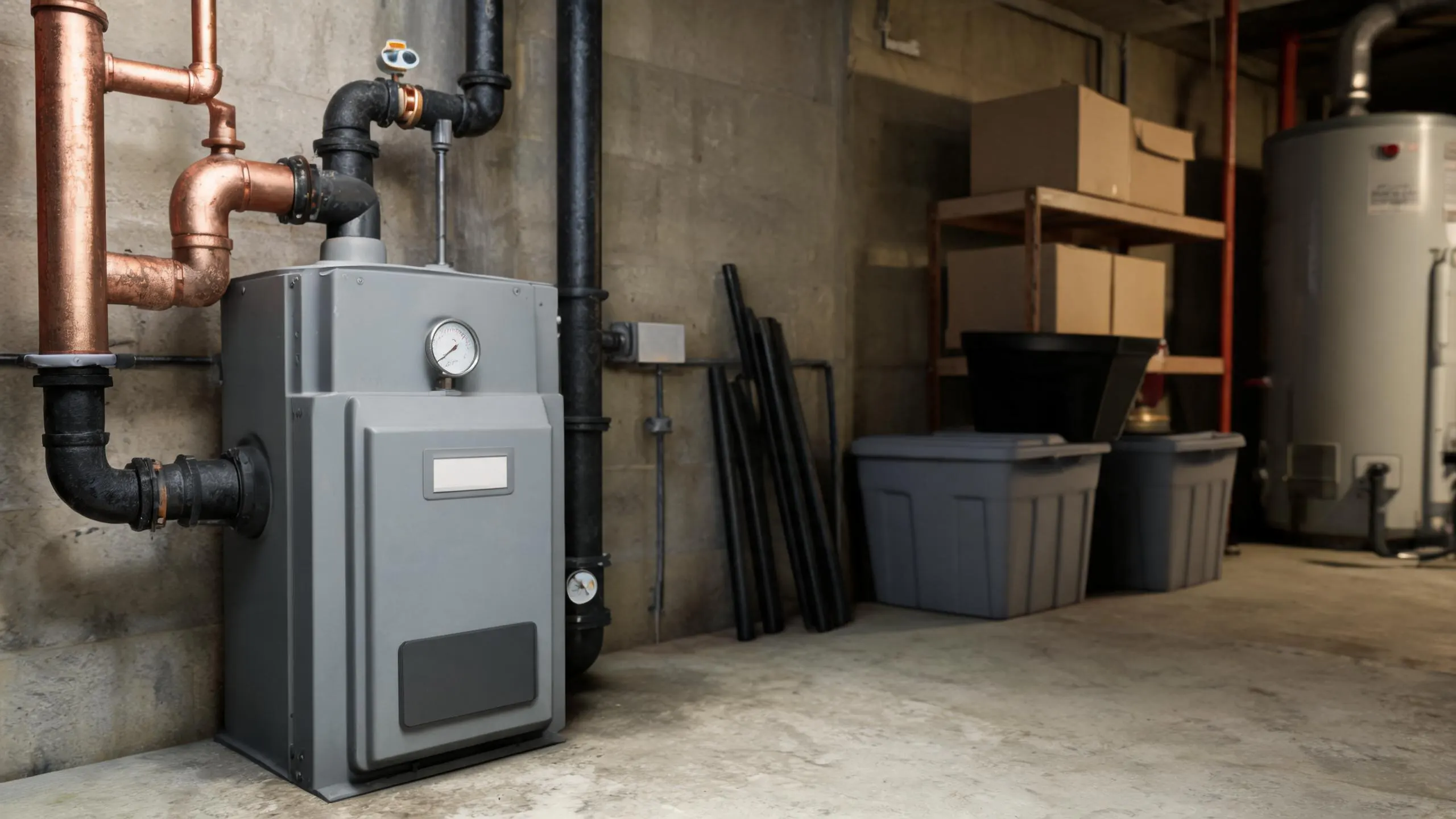




A gray boiler with copper and black iron pipe connections stands against a concrete basement wall, with a water heater and storage shelving visible in the background.

Boiler Installation in Greenfield, MA

Tell us about the job

Takes about a minute. No obligation.

New system or replacementBoilerFranklin County, MA
Step 1 of 2

What ZIP code is the job in?

Fuel oil ran $23.29 per million Btu in Massachusetts last year. If your boiler runs on oil, that price is why the efficiency rating on the new unit matters more than the sticker price. A boiler that wastes less heat per gallon burns fewer gallons all winter, and at that price per Btu, the gap between an old boiler and a new one shows up fast on the delivery bill. Ask what AFUE rating the contractor is quoting and get it in writing.

Fuel oil or kerosene heats 42.2% of occupied homes in Franklin County, more than any other fuel.

Most boilers going into this county are replacing an oil boiler with another one.

Eight months of heat a year, nights near 17 degrees. This boiler has work to do

Heat runs October through May
Winter nights average 17°F
59 winter storms from 2015 to 2024

Franklin County sees its share of rough weather, 275 damaging wind events and 59 winter storms over the past ten years. None of that changes what boiler you need. A standard boiler, sized right for the house and rated for the fuel it burns, holds up fine through an ice storm or a windy night the same as it would anywhere else. What matters more is what happens when the power goes out, since most boilers need electricity to run the igniter and circulate water even if the fuel itself doesn't. Ask the contractor whether the model they're quoting needs power to fire, and if a backup matters to you, say so before the install, not after.

Size the new boiler to the house you have

Half the homes in Franklin County were built in 1962 or earlier. A boiler going into a house that age has to be sized for that house, not for a generic one. The old boiler was sized for the system it was installed in, and that's the number a contractor needs to check, not just match.

Find a contractor
A man in a dark jacket, tan work pants and a cap, seen from behind, climbs stone steps toward a blue front door while carrying a canvas tool bag, with a blue planter of greenery at left.

The old boiler gets disconnected and hauled out

The contractor shuts off the fuel line and water lines, drains what's left in the boiler and the near piping, and disconnects the vent or flue. Once it's free, it gets carried out and scrapped. Cast iron boilers are heavy enough that moving one out the door takes real effort, and the old unit does not get reused anywhere.
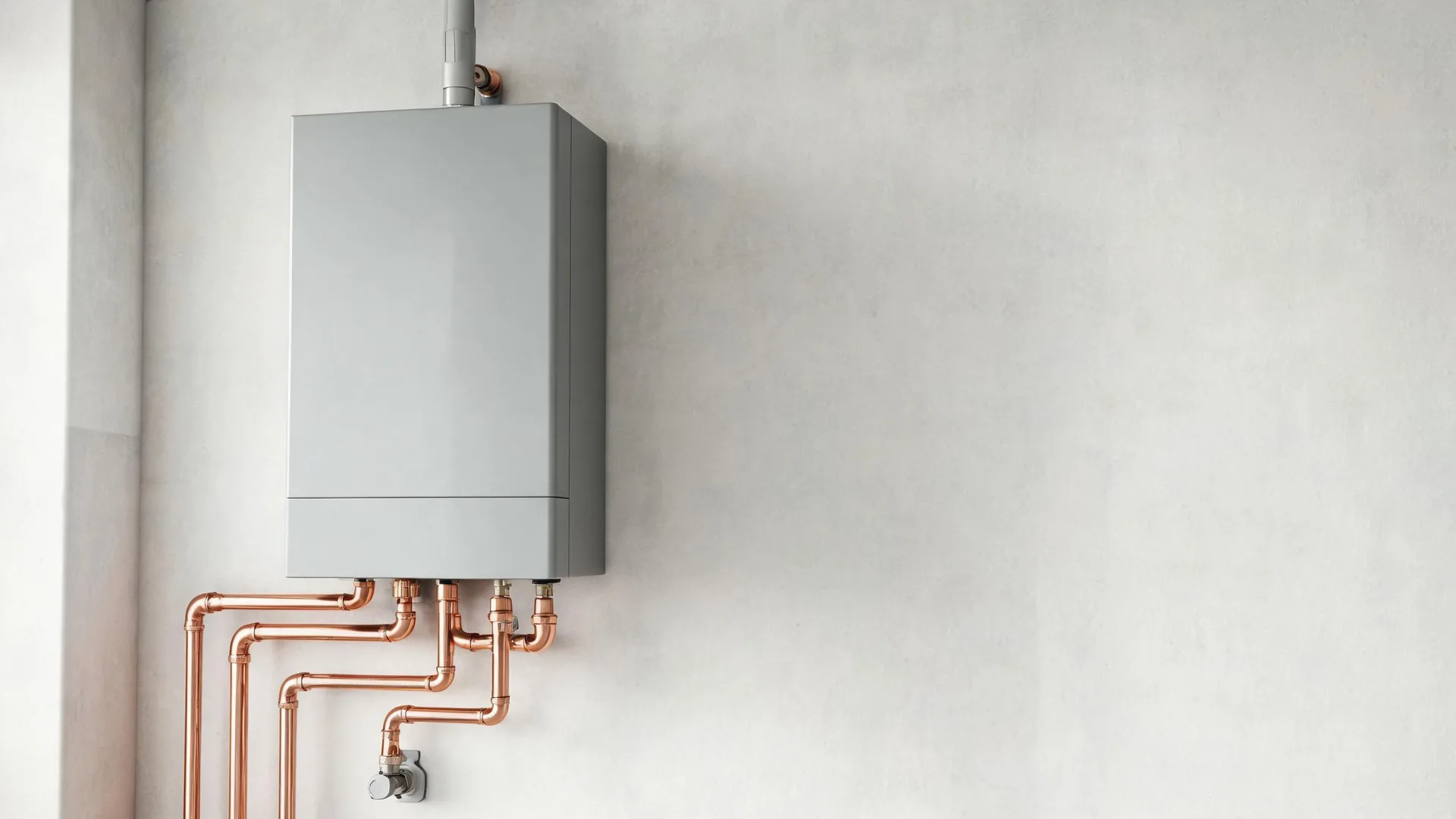
Old piping and venting rarely survive untouched

A new boiler often has a different output and a different vent type than the one it replaces, so the near-boiler piping and the flue connection usually need some rework even when the new unit goes in the same spot. If the old boiler vented into a chimney, the contractor has to check whether that chimney still works for the new unit or needs a liner.

The AFUE number on the label is the share of fuel that turns into heat in the house. What's left goes out the flue. That number gets measured new, in a lab, not after years of scale building up inside the heat exchanger, so an older boiler often runs worse than its rating once claimed. A higher AFUE boiler still needs to be sized and piped correctly to deliver on that number, so the rating tells you what the unit is capable of, not what you'll actually see on the fuel bill. Ask the contractor what AFUE they're quoting and whether that figure assumes anything about how the system gets installed.

Install day starts with the old boiler already cold, since the contractor shuts off fuel and power before touching anything. The new boiler gets set in place and leveled first, because a boiler that sits even slightly off can trap air in the piping later. Then it's piping, venting, and the controls, roughly in that order, since the controls are the last thing wired in and the first thing tested. Once the system is filled and purged of air, the contractor fires it and watches the burn, checking that it ignites cleanly and runs steady rather than cycling on and off. The last step is setting the aquastat and any zone controls to match the house, not just the factory default, since a boiler left on factory settings rarely matches what the piping and radiation actually need.