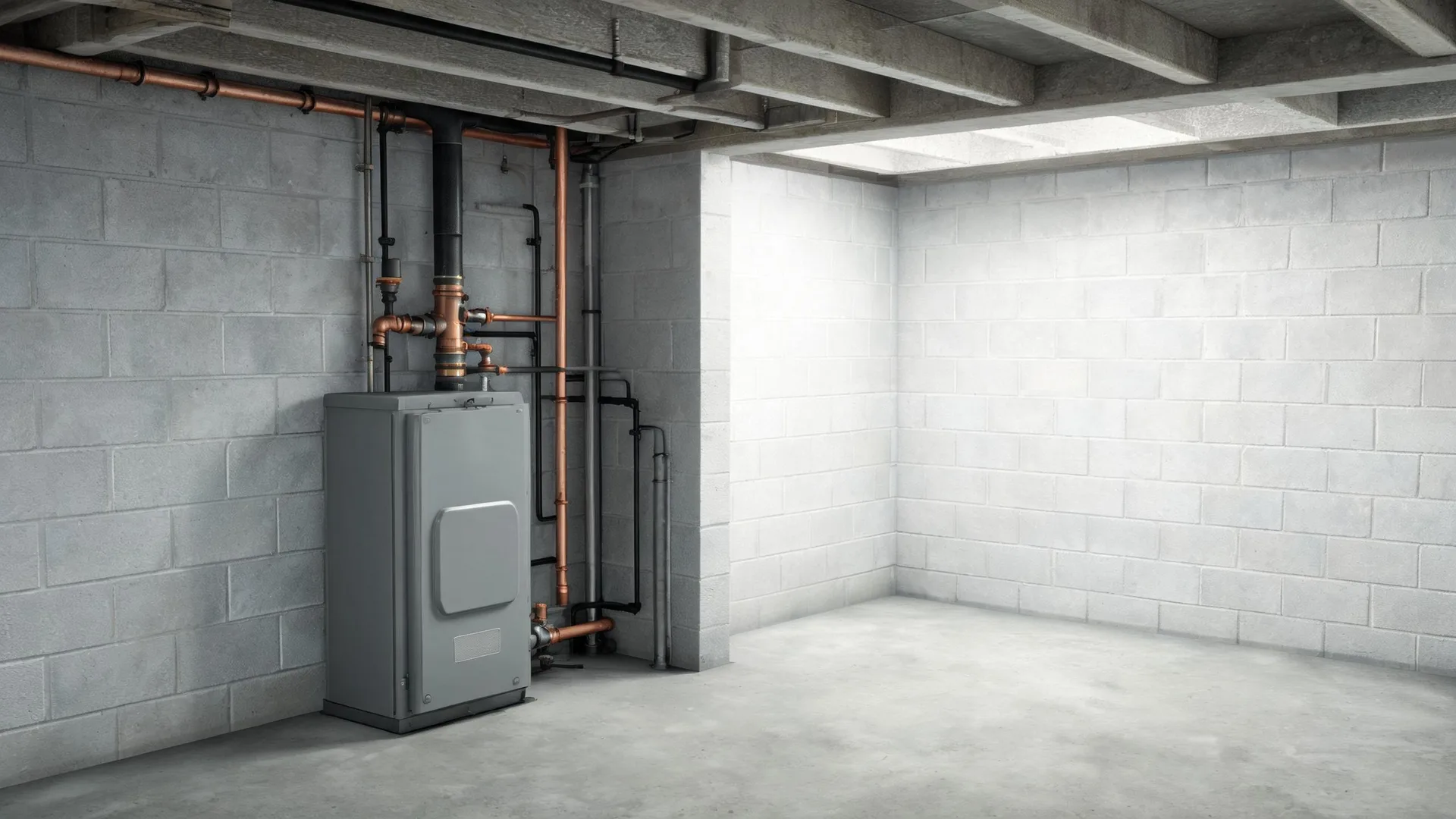
Low-angle view across a grassy lawn toward a light-gray house with a dark shingled roof, dormer windows and dark shutters, framed by large leafy trees under an overcast sky.

Boiler Installation in Cambridge, MA

Tell us about the job

Takes about a minute. No obligation.

New system or replacementBoilerMiddlesex County, MA
Step 1 of 2

What ZIP code is the job in?

Half these homes were built in 1962 or earlier

Cambridge is in Middlesex County, where half the homes go back to 1962 or before. A boiler going into a house that old has to work with whatever piping and radiators are already in place, not a layout picked to suit the new unit.


The old boiler was sized for the old setup

Whoever installed the last boiler matched it to the radiators and piping that existed then. A straight swap only makes sense if none of that has changed since. Worth checking before you settle on a replacement.

The AFUE number on the label says how much of the fuel turns into heat for the house.

A higher rating costs more up front and less every month it runs after that.

59.3% of homes here heat with gas, and boilers are built for it

59.3% of homes heat with gas
Heat runs October through May
Winter nights average 19°F
September is the month to do thisHeat runs October through May here. Replace it in September, before the season starts.

Gas here runs $21.27 per million Btu, among the higher rates in the country. A boiler that turns more of that gas into heat instead of sending it up the flue keeps more of every bill in your pocket. That's what the AFUE number on the label is telling you. A few points of efficiency add up over a heating bill this size. An oversized or mismatched unit burns gas it doesn't need to, so the gain isn't just the rating on the label. It's whether the new system actually fits the house it's going into.

A standard boiler, sized right, is the call here

Winter storms hit Middlesex County 89 times in the last ten years, and the power can go out with them. That's a reason to ask about a standing pilot or a battery backup for the controls, not a reason to size up the boiler itself. Nothing here calls for bigger or fancier than the house actually needs. A unit matched to this house, installed before the heat has to run, is the job.

Find a contractor
A man in a gray T-shirt and tan work pants, seen from behind, carries a worn canvas tool bag up concrete steps toward a blue front door of a house with gray siding and a potted shrub.

The old boiler gets drained and cut out

A boiler holds water in its jacket and in the near piping, so that has to be drained before anything moves. The gas line gets capped, the flue connection comes apart, and the electrical gets disconnected. Then the unit is cut free from the pipes and carried out. None of this touches the radiators or the pipes running through the house.

What's left behind usually isn't reused

Old cast iron boilers are heavy, and most get scrapped for the metal rather than hauled off whole. If the old unit ran on a standing pilot or older venting, the new boiler likely won't connect the same way, so that venting gets replaced rather than matched. Ask what happens to the old unit before the work starts, since not every installer handles disposal the same way.

Sizing a boiler comes down to how much heat the house loses on the coldest day, not how big the old unit was or how big the house looks from outside. A contractor works this out room by room, adding up the radiators or baseboard and the walls and windows around them, then matches that number to a boiler's output. Too big and the boiler short cycles, firing up, satisfying the thermostat fast, and shutting down again before it ever runs long enough to heat evenly. Too small and it runs flat out on the coldest nights and still can't keep the far rooms warm. Neither mistake shows up on the showroom floor. It shows up later, in the room farthest from the boiler, or in a unit that never quite does what the label promised.

Installation day starts with the house cold, since the old boiler has to come out before the new one goes in. That means no heat for a stretch while the work happens, which is part of why this gets scheduled before the weather turns rather than during a cold snap. The new boiler gets set, leveled, and connected to the existing pipes, then the gas line, the flue, and the electrical all get hooked up fresh rather than reused. Once it's connected, the system gets filled with water and purged of air, because trapped air in the lines causes knocking pipes and rooms that won't heat evenly. Then it's fired up and run through its paces, checking that every radiator or baseboard loop actually gets hot, not just the ones nearest the boiler. The controls get set last, since a boiler that's wired right but never programmed for how the house actually runs isn't finished yet.