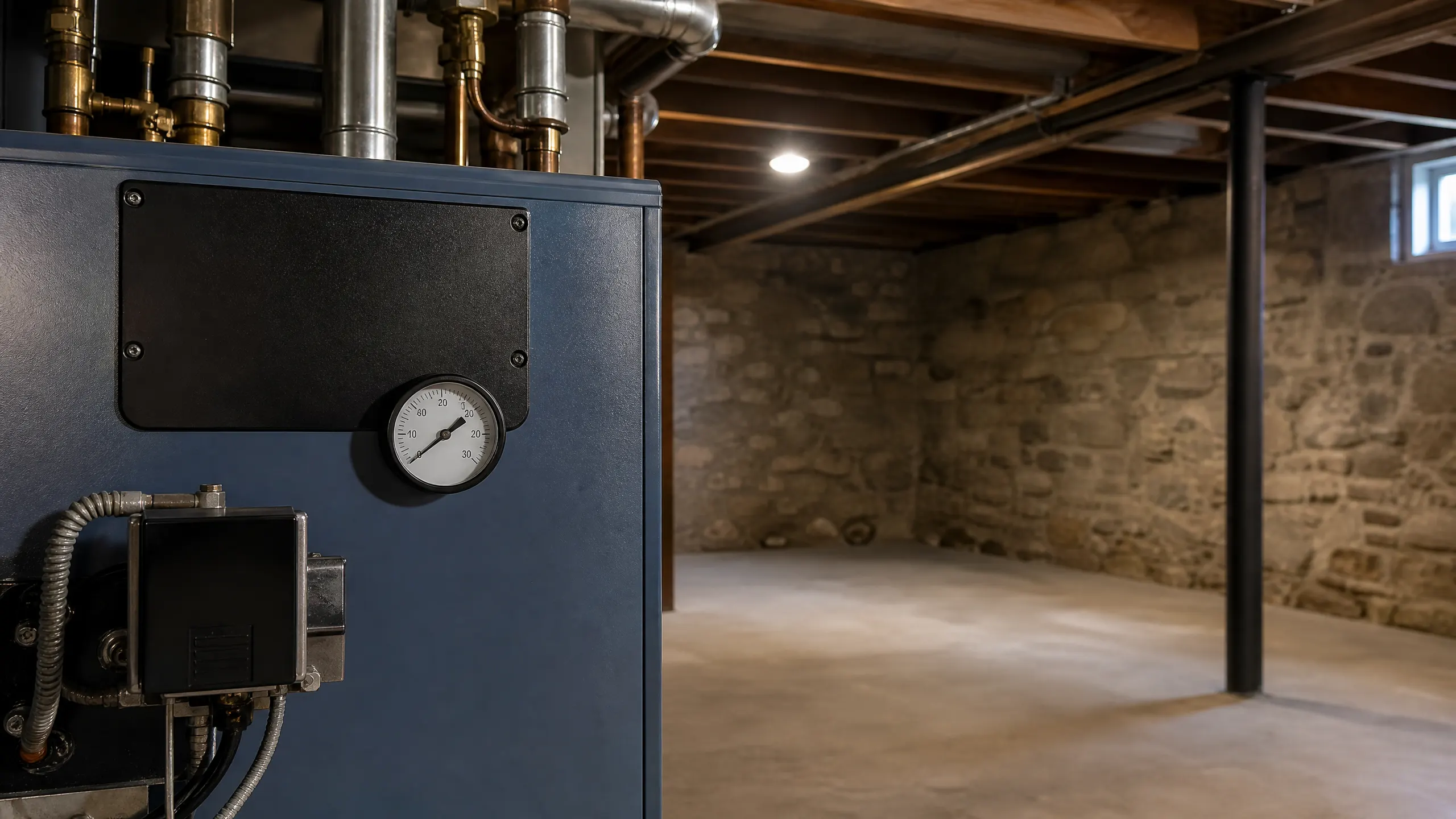




A blue boiler with copper pipework and a pressure gauge mounted in an unfinished basement with stone foundation walls.

Boiler Installation in Boston, MA

Tell us about the job

Takes about a minute. No obligation.

New system or replacementBoilerSuffolk County, MA
Step 1 of 2

What ZIP code is the job in?

Gas in Massachusetts runs $21.27 per million Btu, among the highest rates in the country. A boiler running on gas at that price turns every inefficiency into a line item you can see on the bill. The difference between a mid-efficiency boiler and a high-efficiency one isn't academic here, it's the gas meter turning. An old boiler that's lost a few points of efficiency over the years costs real money every month it keeps running. When gas costs this much, how well the new boiler converts fuel to heat matters more than it would somewhere gas is cheap.

Boston boilers start running in October and keep going through May.

A September install means it's broken in and adjusted before that first cold night, not during it.

Eight months of heat, cold nights, a storm most winters. Nothing here calls for more boiler than you need.

Heat runs October through May
Winter nights average 23°F
22 winter storms from 2015 to 2024

Suffolk County falls under zone 5A, a cool, humid climate where heating carries most of the load. Any gas-fired hot water boiler installed here now has to hit at least 84 percent AFUE, the federal minimum for units built since January 2021. That floor rules out the older, less efficient boilers some homeowners remember from years back. It also means the comparison shopping happens above that line, not around it. A federal tax credit is available on qualifying high-efficiency equipment, worth checking against whatever model you're considering before you decide.

Most homes here run on gas. A new gas boiler fits what's already there.

Gas heats 56.9% of occupied homes in Suffolk County. A gas boiler replacing a gas boiler is the straightforward path. The gas line and the venting are already built for it.

Find a contractor
A man in a cap, navy T-shirt and brown work pants walks up concrete steps toward a blue front door, carrying a worn canvas tool bag with a hammer inside, beside a potted shrub in a blue planter.

A boiler sized on square footage alone is a guess

The right size for a boiler comes from a heat loss calculation, room by room, that accounts for window area, wall insulation, ceiling height and how much of the place is exposed to outside air. Houses the same size can need different boilers because one holds heat and the other leaks it. A contractor who sizes off square footage alone is sizing off the wrong number.
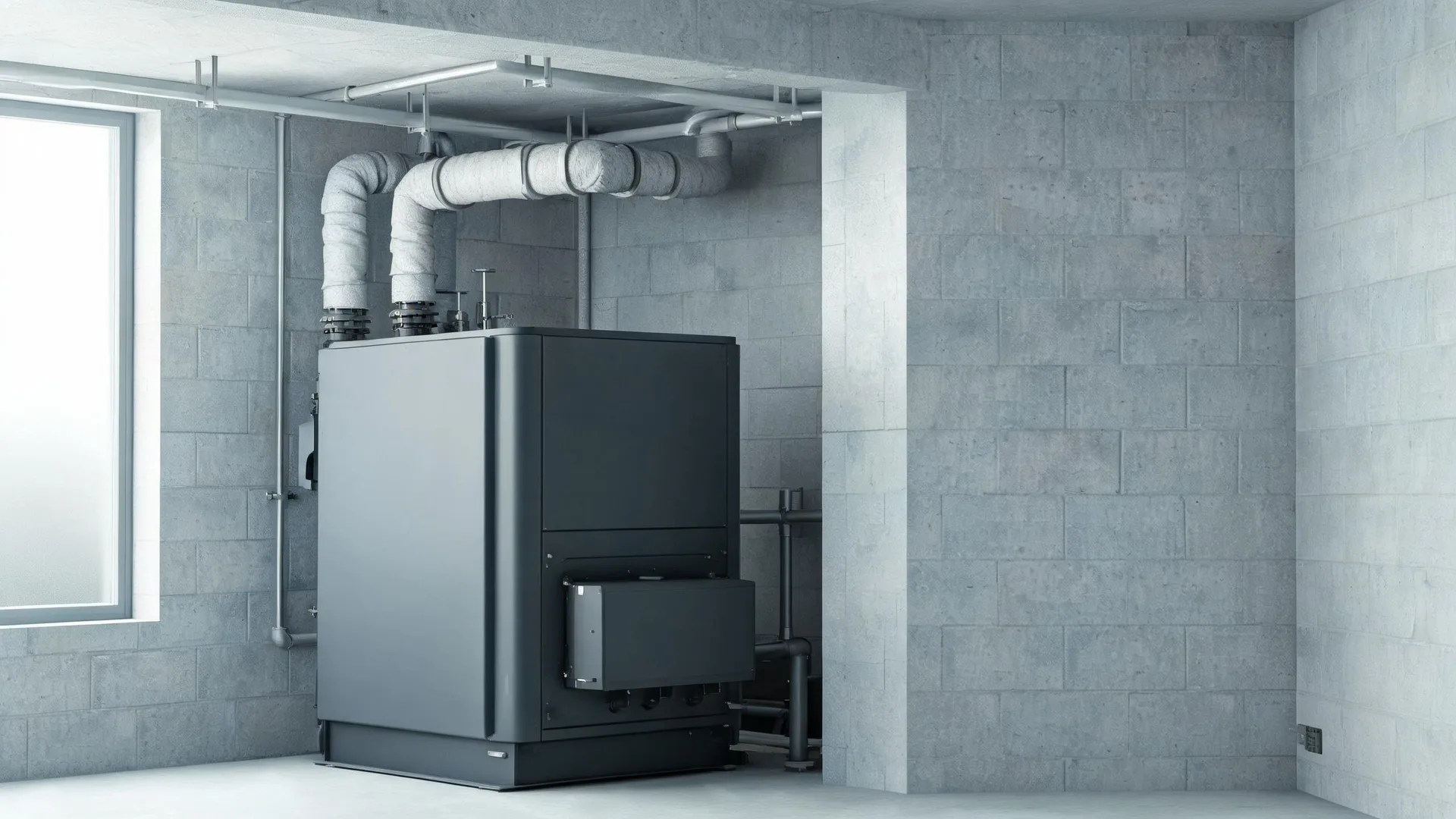
Bigger isn't a safety margin, it's a problem

An oversized boiler short cycles, firing up, satisfying the thermostat fast, then shutting off again before the house actually warms through. That start stop pattern wears on the ignition system and the circulator pump harder than steady running does, and the burn never settles into an efficient rhythm. A boiler sized right runs longer, steadier cycles and wears the way it's supposed to.

The boiler itself is one piece of what you're paying for. Venting is another. A high-efficiency condensing boiler vents through PVC pipe out a side wall. An older style needs a metal flue running up through the roof. If the venting path has to change, that's real labor. Piping matters too. A straight swap where the new boiler sits where the old one sat costs less than an install that relocates it or reworks the near-boiler piping to meet code. Zone valves, the circulator pump, the expansion tank and the controls all get replaced or reused depending on their own condition, not just the boiler's. A place with baseboard or radiators original to the house takes more thought to match than a system built recently. None of this shows up until someone's actually looked at what's there.

The old boiler comes out first, drained down and disconnected from the piping and the flue. If radiators or baseboard stay, those supply and return lines get inspected before the new unit ever comes through the door. Setting the boiler is the fast part. What takes the time is the near-boiler piping, getting the zone valves, the circulator and the expansion tank tied in so the system purges air and holds pressure the way it should. Venting gets run next, and that step depends entirely on what kind of boiler went in. Once it's piped, wired and vented, it gets fired and run through its paces, checking each zone calls for heat properly and the water temperature climbs the way it's supposed to. A boiler that's installed right gets left running, not just switched on and signed off.