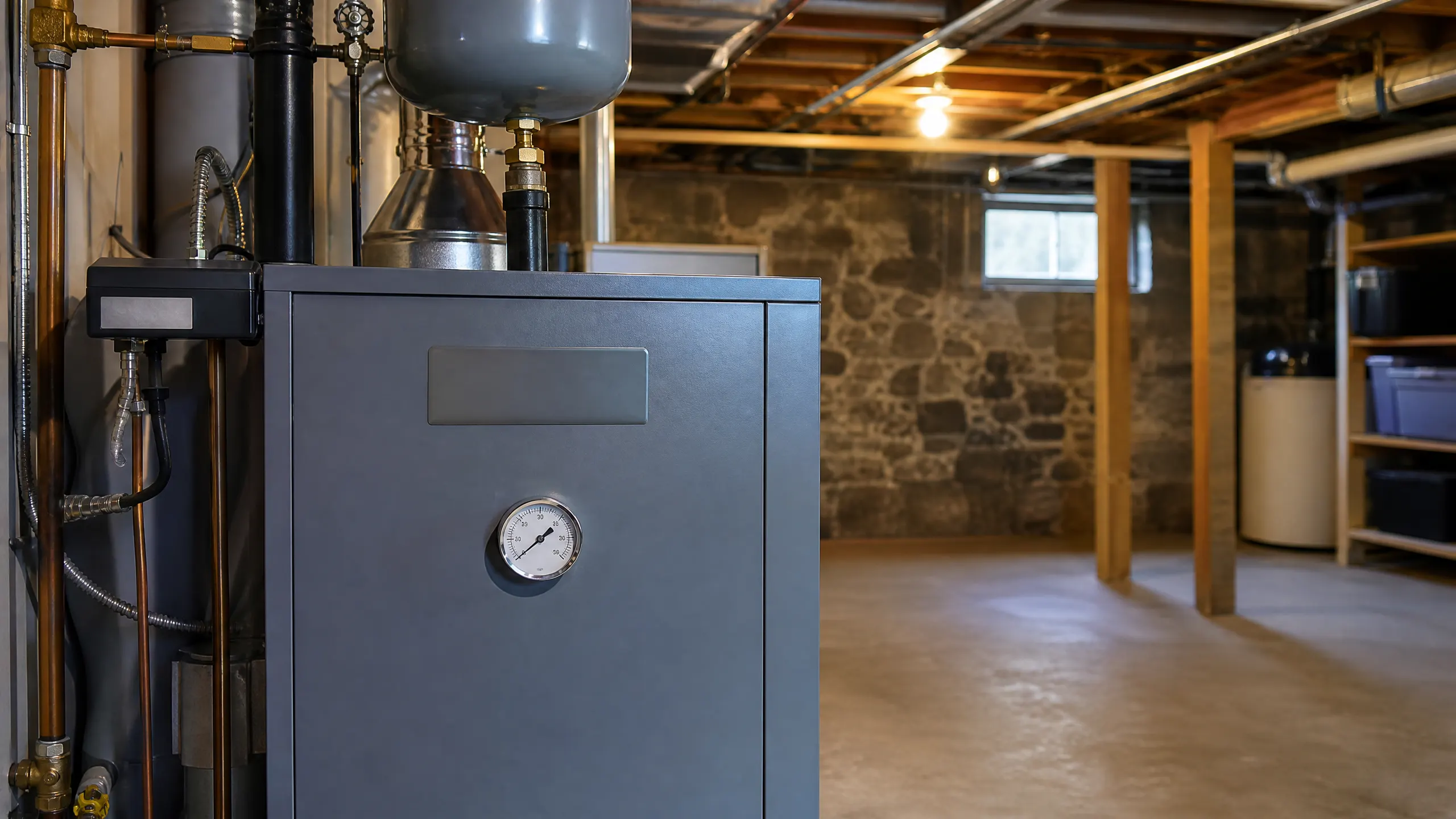




A gray boiler with a pressure gauge and copper pipes stands in an unfinished basement with stone walls and exposed ceiling joists.

Boiler Installation in Barnstable Town, MA

Tell us about the job

Takes about a minute. No obligation.

New system or replacementBoilerBarnstable County, MA
Step 1 of 2

What ZIP code is the job in?

Gas heats 61.3% of homes in Barnstable County, more than any other fuel. Oil or kerosene comes in second at 18.9%, with electricity and propane behind that. If your boiler runs on gas, replacing it with another gas boiler is usually the straightforward path, since the gas line and venting are already sized for that fuel. A switch to a different fuel means new venting, a new supply line, or both, which adds work beyond swapping the unit itself. Worth checking which fuel your current boiler uses before you start comparing models.

Boilers here start running in October and go through May.

Replace it in September and the install happens on your schedule, not during the first cold week.

Wind and outages matter more here than the boiler size

304 severe weather events from 2015 to 2024
10% of homes statewide lost power a day or more in 2024
249 damaging wind events from 2015 to 2024
A standard boiler fits this countyGas ran $21.27 per million Btu in Massachusetts in 2024, no reason to size up.

Barnstable County falls under zone 5A in the 2021 energy code, a cool, humid zone where heating carries the bigger load over the year. Any new gas-fired boiler installed has to hit at least 84 percent AFUE if it was built on or after January 15, 2021, which most new units on the market today are. That rules out the lowest-efficiency models some older homes still run. A federal tax credit is available for qualifying high-efficiency equipment, worth asking about when you're comparing models and prices.

A correctly sized boiler is all this county asks for

Eight months of heat a year, down to 26°F on a winter night, is a normal load for a standard boiler to carry. Nothing here calls for oversizing or a specialty unit. Get the size and efficiency right and it'll handle this county the way it's built to.

Find a contractor

The boiler itself is the smaller line

The unit is one piece of the job. Venting, gas or oil line work, the near-boiler piping, and the electrical hookup all add labor on top of the equipment cost. A straight swap in the same spot with the same fuel keeps that work minimal. Anything that moves the boiler, changes the venting path, or changes fuel type adds hours before the new unit even gets set.
Old piping decides more than the new boiler does

If the system is steam or uses old cast iron radiators, the boiler has to match what's already running through the house, and that can narrow the field of units that will actually work. Zone valves, circulator pumps, and an aging expansion tank sometimes need replacing alongside the boiler rather than after, since a new boiler run through worn-out parts won't perform the way it's rated to.

The old boiler has to come out before the new one goes in, and that's its own piece of work. A gas or oil unit gets disconnected from the supply line, the venting, and the near-boiler piping, then it gets drained if any water or fluid is still in the system. Cast iron boilers are heavy, heavy enough that moving one out of a basement or utility room takes real effort and sometimes a cut into sections to get it through the doorway. Whoever handles the install should also handle hauling the old unit away, so that's not something to arrange separately. If the boiler runs on oil, the old tank is a separate question from the boiler itself, and it only gets removed if you're asking for that as part of the job.

Install day starts with the old boiler coming out, so the system is empty before anything new goes in. The tech sets the new unit in place, then works through venting, gas or oil line, and the near-boiler piping in that order, since each one has to tie into the next correctly. Electrical hookup and the controls come after the piping is sound, not before. Once everything's connected, the system gets filled with water, and the tech checks for air in the lines and leaks at every joint before firing it up. The first firing is where settings get dialed in, combustion checked, and the boiler run through its paces so it's actually heating the way it's supposed to before anyone leaves. A straight swap in the same spot usually wraps in a day. Anything that involves moving the unit, rerouting venting, or replacing old piping and valves alongside it takes longer, since each of those is its own piece of work on top of the boiler itself.