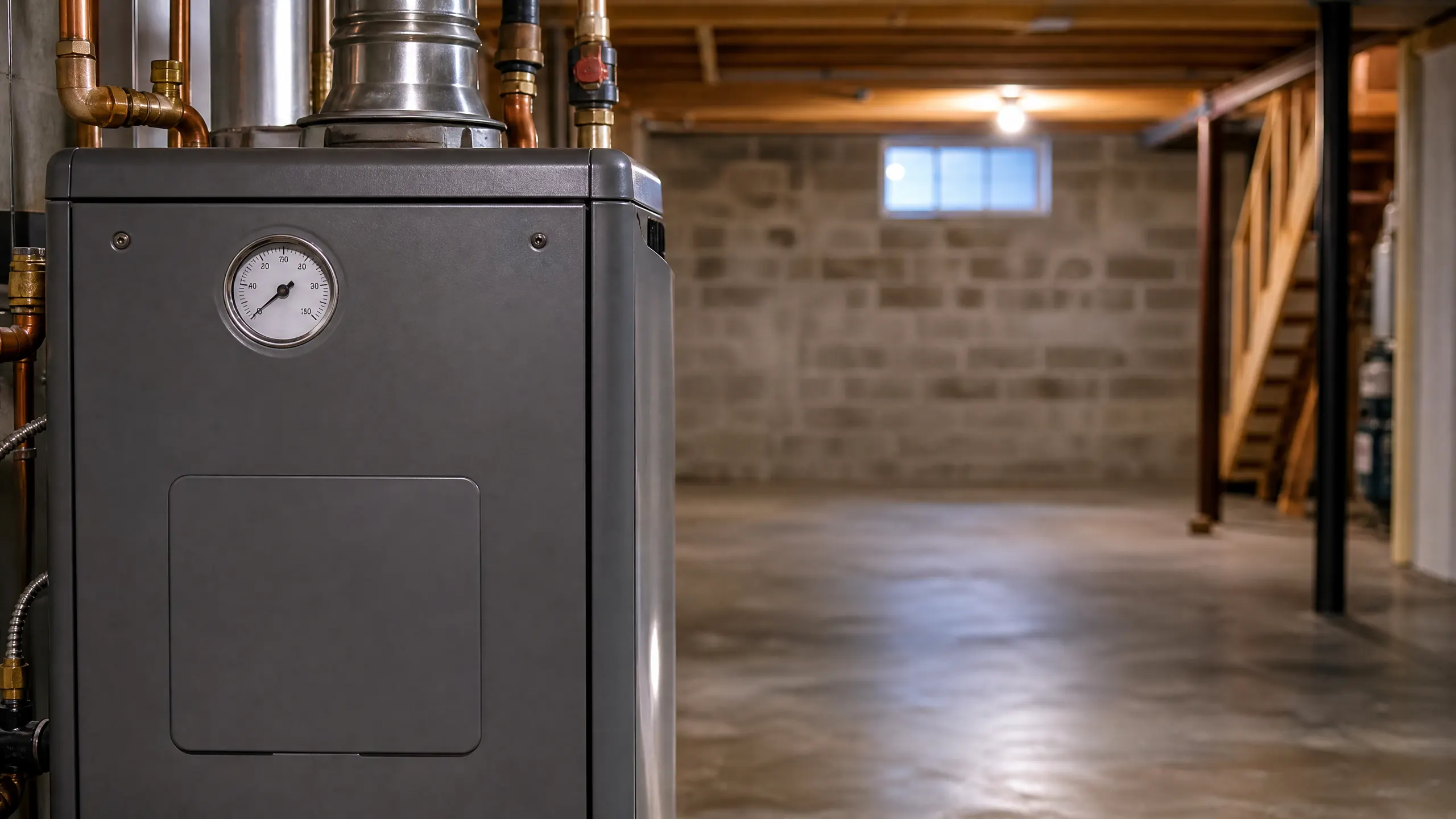




A gray residential boiler with copper pipes and a pressure gauge installed in an unfinished concrete-block basement.

Boiler Installation in Amherst Town, MA

Tell us about the job

Takes about a minute. No obligation.

New system or replacementBoilerHampshire County, MA
Step 1 of 2

What ZIP code is the job in?

Half the homes in Hampshire County were built in 1969 or earlier. A boiler going into a house that age is usually replacing one that was sized for radiators, pipe runs, and a layout nobody designed from scratch on paper. Whatever goes in now should be sized to that actual house, not to a generic square footage number. If your home still has its original piping or radiators, that's worth telling the installer before they quote anything. The right size boiler for an old house is often not the size of the one coming out.

The efficiency rating on a boiler tells you how much of the fuel it burns turns into heat for your home instead of going out the flue.

A higher rating costs more up front but a boiler sized wrong for the house will never hit its rated efficiency no matter what the label says.

Storms here are common, but that calls for backup power, not a bigger boiler

321 severe weather events from 2015 to 2024
10% of homes statewide lost power a day or more in 2024
218 damaging wind events from 2015 to 2024

Amherst Town sits in climate zone 5A, a cool zone where heating carries most of the load. Any gas-fired boiler installed here now has to hit at least 84 percent AFUE if it was manufactured on or after January 15, 2021, which by now covers what's on the market. That floor exists because heating runs so much of the year in this zone, so a less efficient boiler burns noticeably more fuel over a winter than one that clears the mark. A federal tax credit is available for qualifying high-efficiency equipment, worth asking the installer about when comparing models. The 84 percent number is a minimum, not a ceiling, and some boilers clear it by a wide margin.

Get a new boiler in before October, not after

Heat starts in October here and runs into May, eight months straight. A boiler put in during September goes in on your schedule, tested and adjusted before it has to carry a cold night. One put in after the first cold snap goes in under pressure, with whatever the old one leaves behind.

Find a contractor
A man in a dark cap, dark shirt and tan pants, seen from behind, carries a canvas tool bag up concrete steps toward a blue front door, with a potted green plant in a blue planter beside the entry.

Sizing is a heat loss calculation, not a guess

A contractor works out the right boiler size by going room to room, checking windows, walls, and the radiators or baseboard already in place, then adding up how much heat the house actually loses on a cold day. That number, not the square footage and not the old boiler's rating, is what the new one gets sized to.
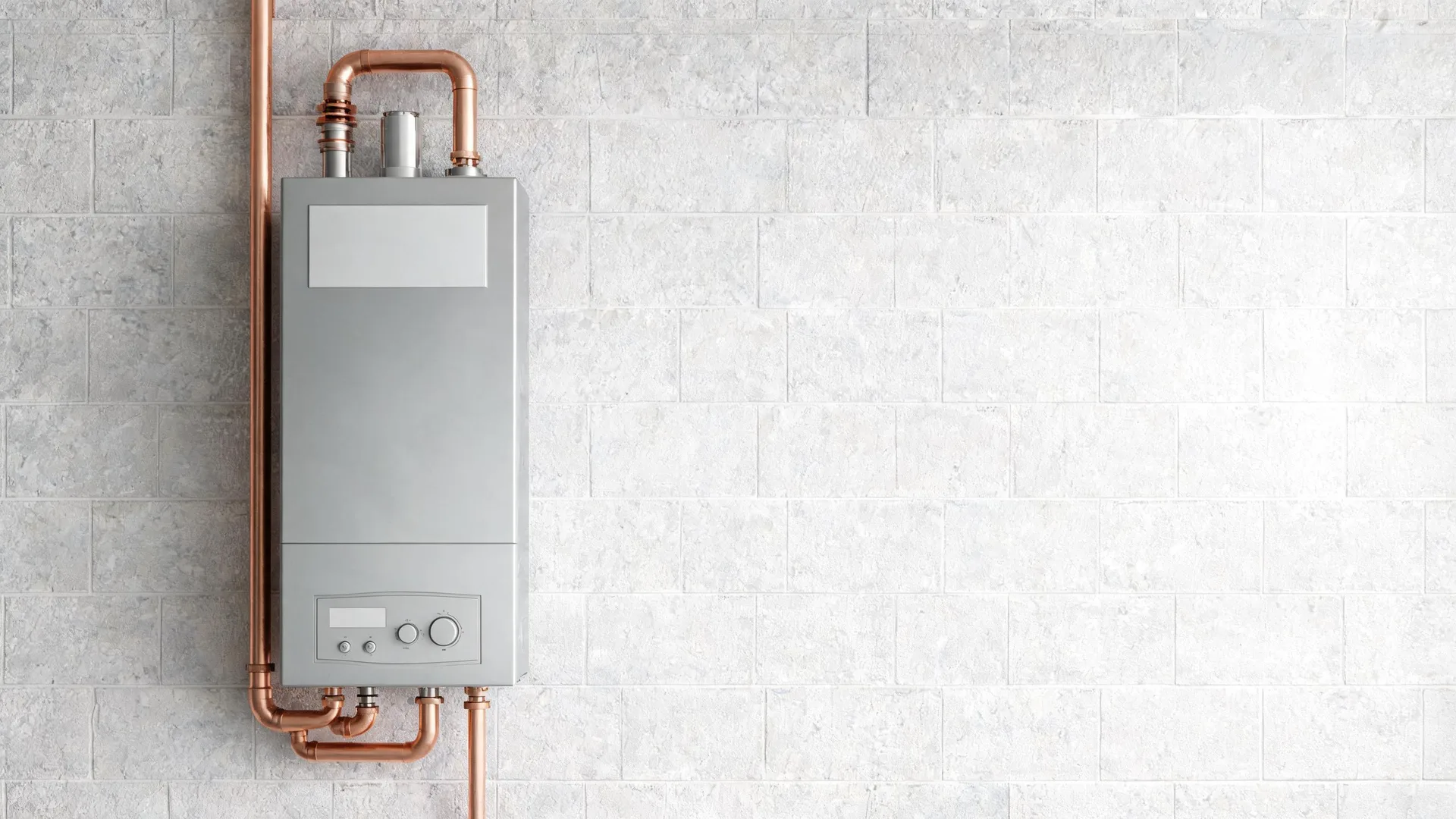
Oversized runs worse than undersized

A boiler too big for the house heats the space fast, shuts off, and starts again a few minutes later instead of running a long, steady cycle. That short-cycling wears on the ignition system and the pump, and it leaves rooms further from the boiler colder than the ones close to it.

Once the new boiler is in and running, the old one gets drained, disconnected from the supply and return lines, and taken out. If it ran on oil, the line gets capped and the tank, if it's not staying, gets pulled separately. A gas boiler means the gas line gets capped off at the valve before anything is disconnected. The flue connection gets sealed up or removed depending on what the new boiler vents through, since a lot of high-efficiency units vent through a wall instead of a chimney. Old cast iron boilers are heavy enough that they usually get cut apart to come out of the basement or mechanical room rather than carried out whole. Whatever's left gets hauled off for scrap or disposal, and the space it sat in is just floor again.

Installation day follows a set order. The new boiler gets set in place and leveled first, since a unit that sits even slightly off can cause air to pocket in the system later. The supply and return lines, the gas or oil line, and the venting all get connected and pressure tested before the system runs at all. Once it's buttoned up, the installer fills the system with water, bleeds the air out of it, and fires the burner to check that it's behaving the way it should. The controls and thermostat get wired in and set, and the system runs through a cycle while the installer checks water temperature, pressure, and that every radiator or baseboard loop is actually getting heat. A boiler that looks fine running for a few minutes can still have an air pocket or a bad pressure setting that only shows up once it's been cycling for a while, which is why none of that gets rushed.