
A row of illuminated white colonial houses with black shutters and a stone wall along a road at dusk.

Mini Split Installation in Pittsfield, MA

Tell us about the job

Takes about a minute. No obligation.

New system or replacementMini-splitBerkshire County, MA
Step 1 of 2

What ZIP code is the job in?

Oil and gas heat most of this county

Fuel oil or utility gas heats most homes in Berkshire County, with electric heat far less common. A mini split works alongside either, running cooling and shoulder-season heat while the existing furnace or boiler carries the coldest months.

What that means for a Pittsfield install

Pairing a mini split with an oil or gas system means two controls to understand, the thermostat for the furnace and the remote or head unit for the mini split. Ask the contractor how the two should split the work once the install is done.

9 months
September through May, your system heats
1 months
July through July, it cools
16°F
the average winter night it heats against
78°F
the average summer afternoon it cools against
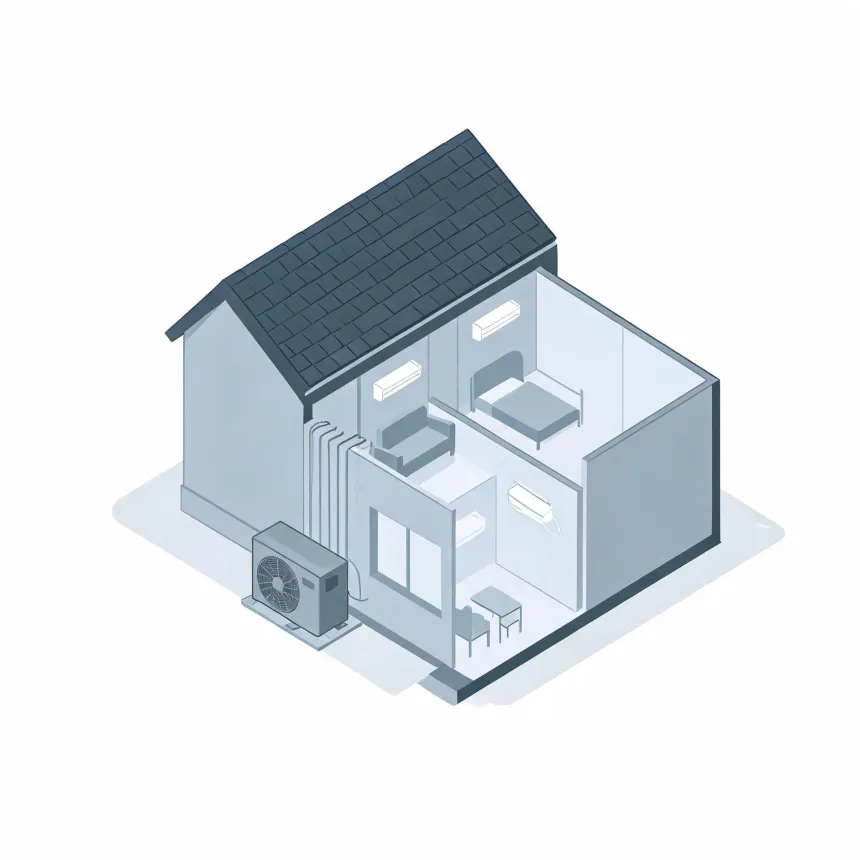
Isometric illustration of a cutaway house with a dark shingled gable roof, showing interior rooms with a bed, chairs and table, three wall-mounted mini-split indoor units connected by line sets to an outdoor condenser unit on a pad outside.
Your system heats September through May and cools July through July.

NOAA nClimDiv, 1991–2020 normals

Massachusetts electricity ran 29.35 cents per kilowatthour in 2024.

A mini split sized right for the room it serves keeps that cost down without needing a larger or pricier unit.

Weather here is normal for the county. Size the mini split for the room, not the storm.

446 severe weather events from 2015 to 2024
10% of homes statewide lost power a day or more in 2024
370 damaging wind events from 2015 to 2024

July is the only month cooling runs here, which does not leave much room to fix a bad install after the fact. A mini split going in before July means the crew can take their time with the line set and the mounting instead of rushing to get cold air flowing. June is worth booking now. Wait until the first hot week and every contractor in the county is already behind on calls.

Any mini split installed here has to meet zone 5A's efficiency minimum

Berkshire County falls in climate zone 5A, a cool zone where heating carries most of the year's load. A mini split going in here has to meet the federal minimum for split-system heat pumps, 14.3 SEER2 for cooling and 7.5 HSPF2 for heating, which narrows the field to units built for this kind of climate.

Find a contractor
A beige split-system air conditioner outdoor condenser unit mounted on metal wall brackets atop a stucco wall.

One month of cooling a year, mild afternoons, not much to wear it down

One month of cooling a year is not much work for a mini split. Even that one month stays mild, with afternoons averaging 78°F through June, July and August. The heating side carries more of the load here, and a mini split paired with the existing furnace or boiler is only picking up shoulder-season hours, not the deep cold. None of that calls for the highest-efficiency unit on the lot. A unit that meets the zone 5A minimum and is sized right for the room will hold up fine under this kind of use.

How many zones the system needs

A single head covering one room costs less to put in than a multi-zone setup running several heads off one outdoor unit. Each extra zone means another line set, another mounting job, and another spot on the outdoor unit's board for the crew to wire up. The number of rooms being conditioned drives this more than anything else about the equipment itself.

What the line set has to cross

The refrigerant lines run from the outdoor unit to each indoor head through a hole in the wall, and how far they travel and what they pass through changes the labor. A short, straight run through one wall is quick work. A run that has to cross framing, go up through multiple floors, or snake around the outside of the house takes longer and uses more line set, and that length adds to the job.

A mini split going in doesn't mean the old furnace or boiler comes out. Most homes here keep it in place to carry the coldest months, so the new system is really an addition, not a replacement. If there's a window unit or a space heater doing the job in one room now, that's what goes away once the head is mounted and running. An old central air condenser is a different case. If it still works, a contractor may leave it tied to the furnace for backup, or disconnect it if the mini split is taking over cooling entirely. Ask what the plan is for anything currently providing heat or cooling to the room before the crew shows up, so nothing gets pulled that you still needed.

The outdoor unit goes on a mounting bracket or a pad, usually against an exterior wall close to where the indoor head sits, since the line set still has to travel between them. Inside, the crew cuts one hole through the wall for the line set, the drain line and the power wire to pass through, then mounts the indoor head and runs those lines out to meet the outdoor unit. Once the lines are connected, the system gets pressure tested, then pulled down with a vacuum pump to remove any air and moisture before refrigerant is released into the lines. Skipping that step leaves moisture trapped inside, and moisture in the lines causes problems down the road, so a contractor won't rush past it. Once the system holds vacuum, the crew charges it, powers it on and checks that the head is actually heating and cooling before calling the job finished.