Electricity here runs 29.35 cents a kilowatt-hour
Massachusetts power costs more than most states charge. A mini split running on that rate makes efficiency matter more than it would somewhere cheaper.
Takes about a minute. No obligation.
Massachusetts power costs more than most states charge. A mini split running on that rate makes efficiency matter more than it would somewhere cheaper.
Two systems can heat and cool the same rooms and cost different amounts to run every month. At this rate, the gap between a low-efficiency unit and a high-efficiency one shows up on the bill long after the install is done.
NOAA nClimDiv, 1991–2020 normals
Half the homes in Plymouth County were built in 1971 or earlier.
An older home in Brockton may not have the ductwork a central system needs, which is one reason homeowners look at mini splits in the first place.




Utility gas heats 46.9% of homes in Plymouth County, more than any other fuel, and fuel oil heats another 31.5%. Most homeowners here are not replacing a furnace with a mini split. They are keeping the gas or oil system for the coldest weeks of winter and adding the mini split to handle the rooms it covers well the rest of the year. Only 12.3% of homes heat with electricity already, so for most people a mini split works alongside the system they have rather than instead of it.
Cooling here is two months of 80 degree afternoons, not a stretch that calls for an oversized unit. A standard size, properly matched to the space, handles what this county actually asks of it. There's no local reason to size up or pay for more than that.
Find a contractor
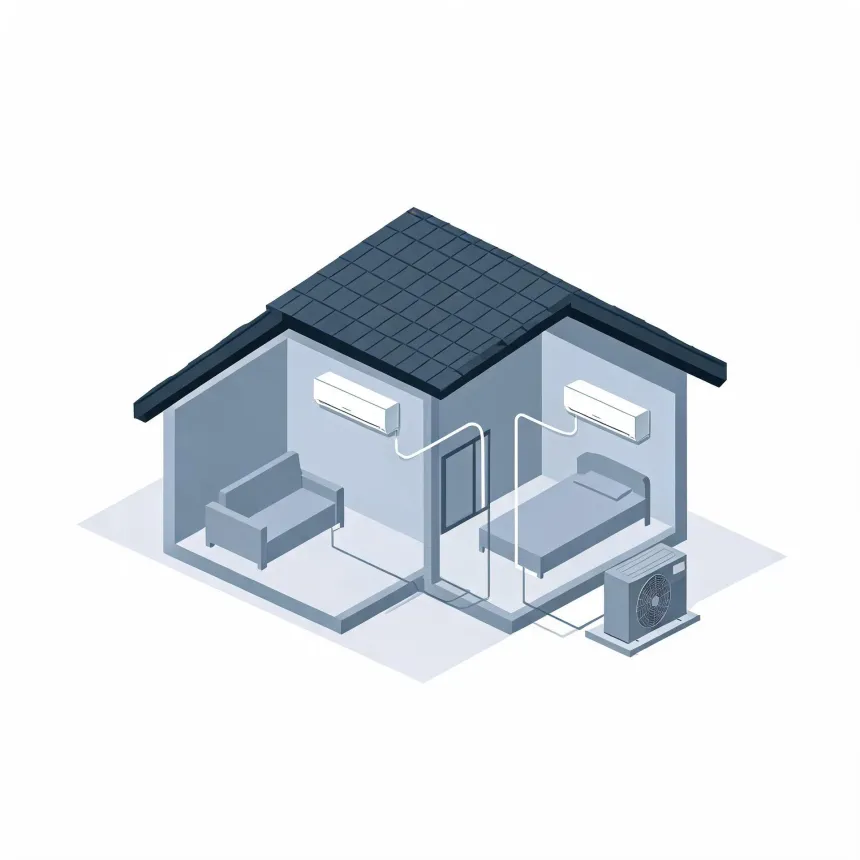
An older home means the installer is working with the walls and rooms as they actually are, not a duct system already laid out for central air. Line sets run from the outdoor unit to each head, placed to fit how the house sits now. There's no existing ductwork to route around or extend, which is one less thing standing between the quote and the install date.
A mini split handles its rooms on its own, so there's no need to disconnect or remove a furnace, boiler or baseboard system that already heats the house. Most installs just add a new line set and an outdoor unit without touching what's there.
Removing an old window unit or a failed ductless system means dealing with refrigerant first. That refrigerant has to be recovered by someone licensed to handle it, not vented, so an old system can't just get unbolted and hauled to the curb.
The rating on the label tells you how much heat the unit moves for the power it draws. A higher number means it moves more heat per unit of electricity. That number comes from a test run under one set of conditions, so the unit won't hit that exact figure every hour it runs. It does better on a mild day and worse on the coldest night, because the colder the air outside, the harder the compressor works to pull heat out of it. What holds up across conditions is the comparison between units. A higher-rated unit will beat a lower-rated one of the same size in the same room, in any weather, even when neither hits its label number exactly. That rating also assumes the unit is sized right for the room it's heating or cooling. Oversize it and it runs in short bursts instead of steady stretches, which wastes power no matter how high the label number is.
Install day starts outside, not in. The outdoor unit needs a spot with clear airflow on all sides and a way to drain condensate, so the crew sorts that placement before anything gets mounted. Inside, the head unit goes up on a bracket, usually high on a wall, and a small hole gets drilled through to the outside for the line set. That line set carries refrigerant lines, a drain line and power wiring together, wrapped and run from the indoor unit to the outdoor one. Once everything's connected, the lines get pulled down to a vacuum to clear out air and moisture before refrigerant ever flows through them, because either one left in the line will hurt how the system runs. Only after that does the installer charge the line, power it up and check that each room is actually hitting the temperature it's set to.