Electricity here runs 29.35 cents a kilowatt-hour
Massachusetts electric rates are among the highest in the country. A mini split's efficiency rating matters more on a bill like that than it would somewhere power is cheap.
Takes about a minute. No obligation.
Massachusetts electric rates are among the highest in the country. A mini split's efficiency rating matters more on a bill like that than it would somewhere power is cheap.
Two mini splits can cost about the same to install and still pull different amounts of power for the same job. At this rate per kilowatt-hour, that gap shows up every month, not just once.
NOAA nClimDiv, 1991–2020 normals
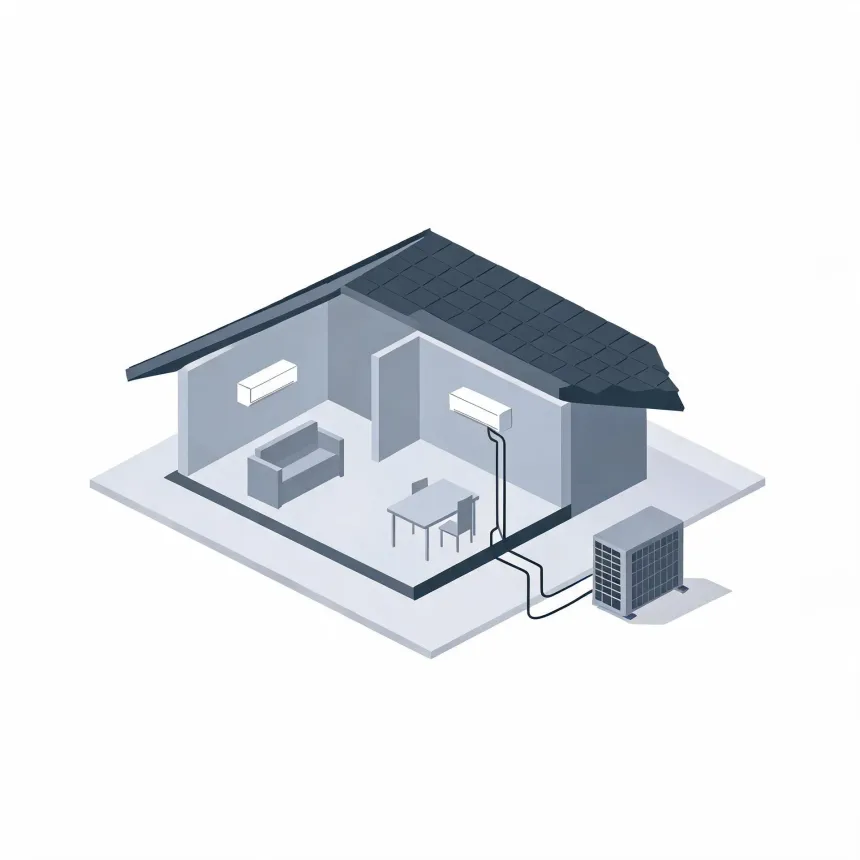
Cape homes run the AC side of a mini split about two months a year, July and August.
A mini split here isn't under much strain, so a well-installed basic system holds up fine.



Barnstable County sits in climate zone 5A, a cool zone where heating is the bigger job over the year. Any ductless mini split installed here falls under the federal split-system heat pump rule, the same one that covers ducted systems. For units built from 2023 on, that means at least 14.3 SEER2 for cooling and 7.5 HSPF2 for heating. There's no separate, lower bar for ductless. Worth checking that a quoted system actually clears both numbers, not just one.
Power costs more here, so an efficient system pays you back on every bill.
Find a contractor
Half the homes in Barnstable County were built in 1977 or earlier, half after. A mini split doesn't care which kind of house it's in. The load is set by the room it's heating and cooling, not the year the place went up. A unit sized right for that room runs the same hours whether the house is older or new. Nothing about the age mix here points toward a bigger compressor or a higher-tier model than the room calls for.
A contractor should size a mini split off a room by room load calculation, not a guess based on square footage or what the last system used. Ask to see the number and which rooms it covers. A unit sized too big cycles on and off and never runs long enough to dehumidify the air. A unit sized too small runs constantly and still can't keep up on the coldest or hottest days.
A mini split needs its indoor filters cleaned and its outdoor coil kept clear of leaves and debris to keep running at the rating it was sold on. Ask whether the installer services the brand they're selling, or whether that falls to someone else later. Some manufacturers also require installation by a certified dealer to keep the warranty valid, so it's worth asking whose name is on that paperwork.
If there's an old system coming out, whoever installs the new one should be the one to deal with it. Old refrigerant can't just go in the trash. It has to be recovered by someone certified to handle it, and a licensed installer already carries that certification. If the old system ran on a refrigerant that's since been phased out, that's one more reason not to let it sit around or get handled wrong. The indoor and outdoor units, the line set, the old mounting bracket, all of that comes out as part of the install, not as a separate cleanup job after. Worth asking upfront whether removal and disposal are included in the quote or billed on top.
What drives the price is mostly the number of indoor heads and the distance each one sits from the outdoor unit. A single zone running a short line set costs less than a multi zone setup feeding rooms on opposite sides of the house. Line sets buried in a wall or run up through tight framing take longer than a straight shot out an exterior wall, and that labor shows up in the bid. The outdoor unit's placement matters too. A spot that needs a long refrigerant line, extra line hide, or a condensate pump to get water away from the house all add work. Electrical also plays into it. If the panel has room for a new circuit, that's one thing. If it needs an upgrade to carry the load, that's a separate job on top of the mini split itself.