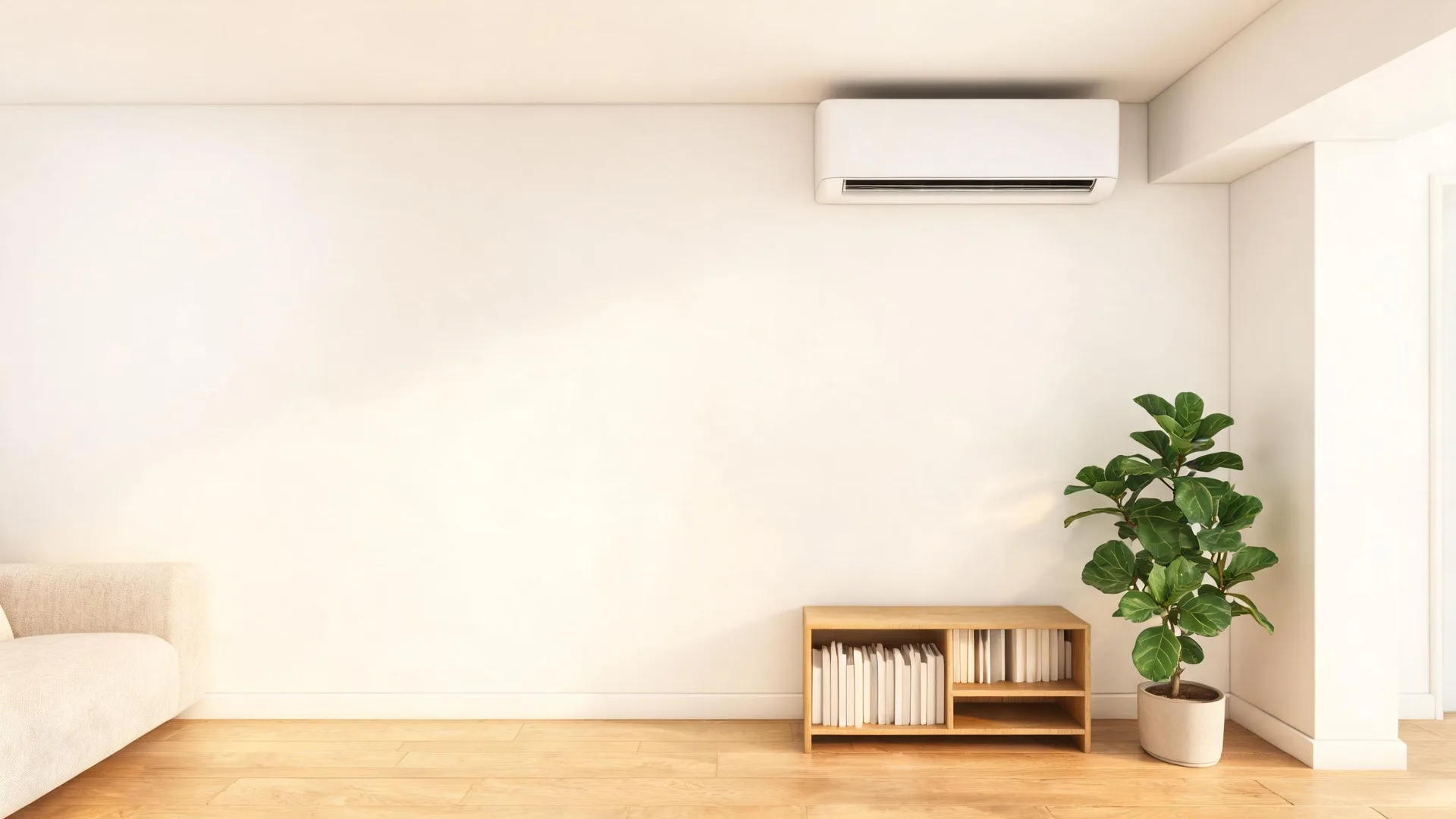
Sized for two months of summer
Cooling runs July through August here, with afternoon highs averaging around 80°F. A mini split sized for that load cools the house fine without needing a bigger unit sitting idle the rest of the year.
Takes about a minute. No obligation.
Cooling runs July through August here, with afternoon highs averaging around 80°F. A mini split sized for that load cools the house fine without needing a bigger unit sitting idle the rest of the year.
Winter is the bigger job in zone 5A, and a standard cold-climate mini split is built for that. There's no local condition that calls for upgrading past that, so a standard install is the right fit here.
NOAA nClimDiv, 1991–2020 normals
Cooling in Amherst runs July through August.
Get the mini split installed by June and it's already running when the heat shows up, not after.




Half the homes in Hampshire County were built in 1969 or earlier. A mini split going into a house that old has to work with what's already there, not with a clean slate. The line set has to run through existing walls or framing, and the indoor unit has to land somewhere that fits the rooms as they were laid out, not as a newer floor plan might allow. None of that rules out a mini split. It just means the install gets planned around the house, not the other way around.
Any mini split going in here has to hit 14.3 SEER2 and 7.5 HSPF2, the federal minimum for split-system heat pumps made since January 2023. That's not a local add-on, it's the floor for the equipment itself. A federal tax credit is available on top of that for qualifying systems.
Find a contractorWalk the route before anything gets ordered. Someone needs to see where the line set will actually run, from outdoor unit to indoor head, through the walls and framing that are already there. That tells you which rooms can take an indoor unit and which can't, no matter what the floor plan would suggest in a newer build. Figure that out first, and sizing and placement follow from it.
A contractor should walk every room and work out heat loss and heat gain before naming a unit size. That number drives which outdoor unit and which indoor heads go on the quote. If nobody mentions a load calculation, ask for one before you compare prices.
Each indoor head cools and heats the room it's in, not the rooms next to it. More zones cost more and give you more control room by room. Fewer zones costs less but means some rooms share one head's output. Ask why the quote has the number of heads it has, not just what they cost.
If the house is losing a central system, whatever was ducted to deliver that heating and cooling stays in place unless someone pulls it out. A mini split doesn't need the ductwork, so old ducts can stay where they are, get sealed off, or come out, depending on what else uses them. If a furnace or boiler is being retired at the same time, that's a separate removal, usually by whoever handles that trade. It's worth asking whether that removal is included in the mini split quote or billed apart from it. An old window unit or through-wall AC is simpler. It gets unplugged, pulled out, and the opening gets patched if needed. None of that removal work changes how the new mini split gets sized or installed. It's just worth asking upfront who's doing it, so it doesn't turn into a surprise after the new system is already on the wall.
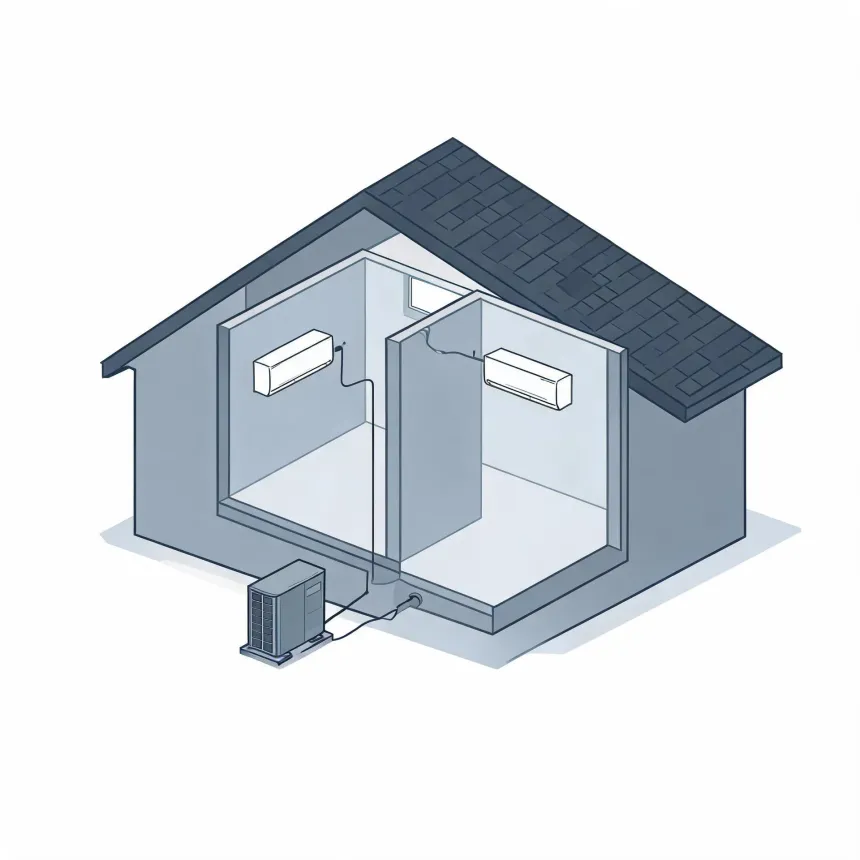
Install day starts with the outdoor unit, usually set on a pad or mounted bracket somewhere close to an exterior wall. From there the crew drills a hole through that wall for the line set, the refrigerant lines and wiring that connect outdoor to indoor. The indoor head gets mounted high on a wall or ceiling, the lines get run and connected, then the whole system gets vacuumed down to pull out air and moisture before refrigerant goes in. After that it's a pressure test to check for leaks, then power on and run it to see that it's heating and cooling the way it should. A single zone is often done in a day. More zones means more indoor heads, more holes, more line sets, so it takes longer.