



What winter here does to a heat pump
Your winter low here averages 23°F. That number matters because a standard heat pump starts falling behind its rating before it even gets that cold, below 40°F, and often needs backup heat below about 35°F. The average night in Plymouth County sits under both marks. So does every one of the roughly 130 nights a year here that hit freezing or below, over half the nights across the eight months the heat runs.
That doesn't mean a heat pump leaves you cold. It means the heat output printed on the box isn't what you get most winter nights here, and on the coldest ones something else has to make up the difference. The furnace doesn't have this problem. Its rated output holds whether it's 32°F outside or 0°F, which happens here about 3 nights a year.
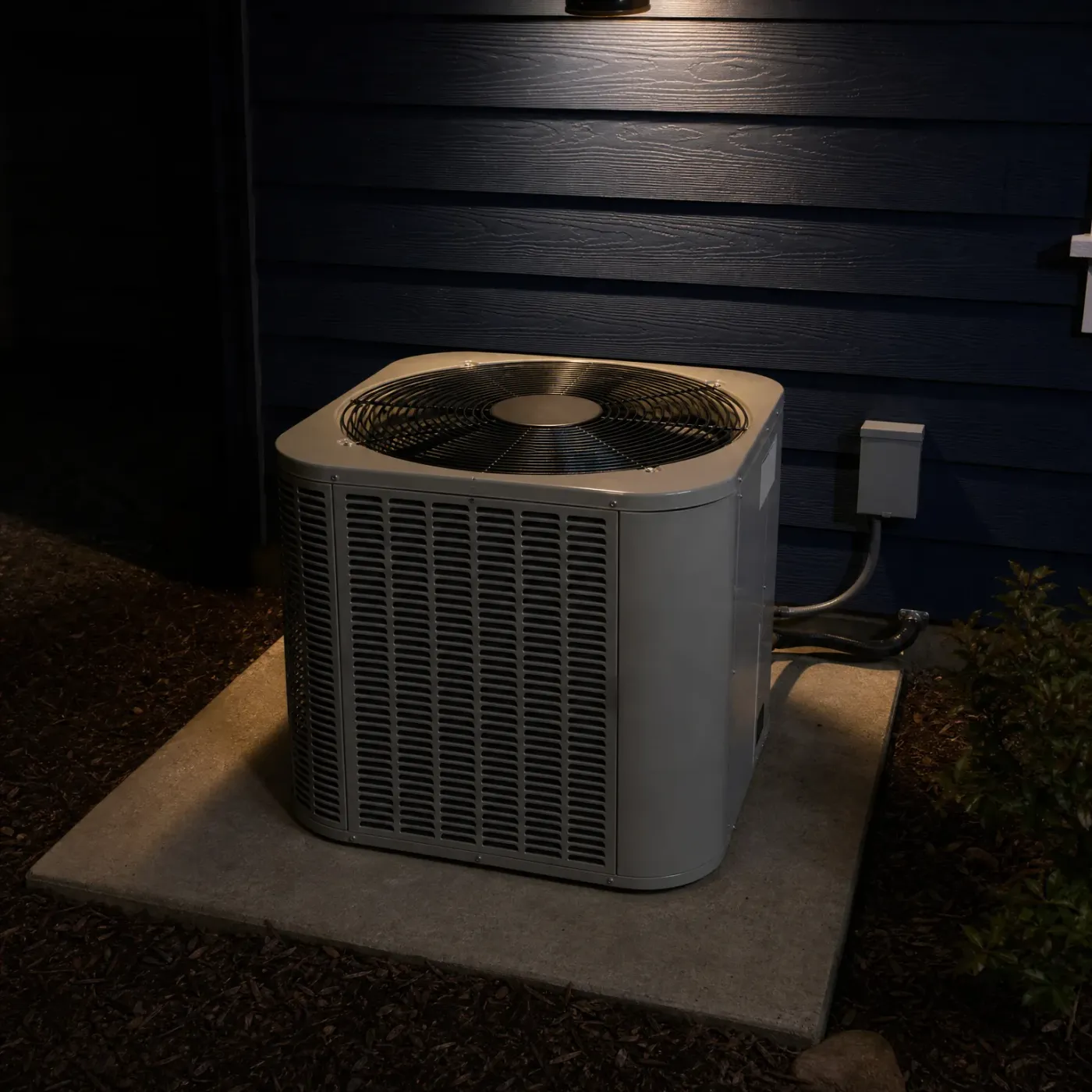
A heat pump built for cold climates is a different machine. To carry the ENERGY STAR Cold Climate mark, it has to keep at least 70 percent of its rated heat at 5°F and still deliver at least 1.75 units of heat per unit of electricity at that temperature, checked by outside testing. In a two-winter field test of prototype cold-climate heat pumps in occupied homes, backup heat covered only a small share of the load between 0°F and 35°F, and the units running on backup alone was rare even above 0°F. A standard heat pump was not built to do that in this county. A cold-climate one was.